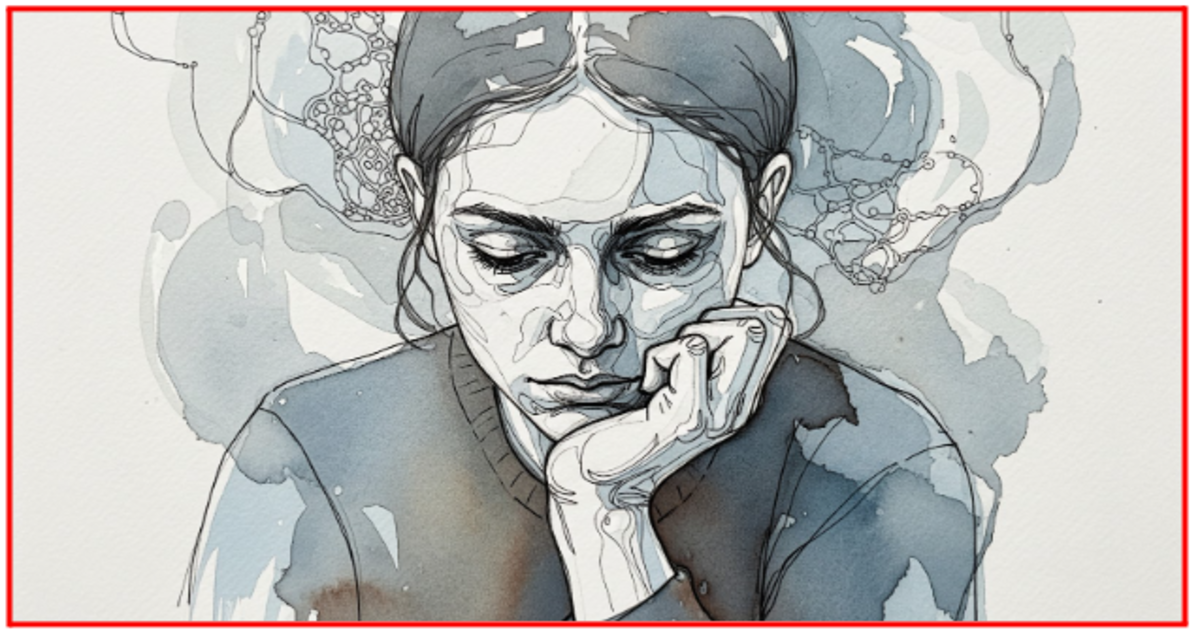
You know the feeling. A conversation ends, and instead of moving on, your brain hits rewind. You replay every word. You rewrite your responses. You imagine what the other person really meant. By midnight, a two-minute exchange has consumed four hours of your mental energy—and you’re no closer to peace than when you started.
That’s not thinking. That’s rumination. And understanding the difference might be the most important mental health distinction you ever make.
The Trap That Feels Like Problem-Solving
Rumination is the mind’s most convincing con. It tells you that if you just analyze the situation one more time, you’ll find the answer. It tells you that worrying about the future is the same as preparing for it. It tells you that replaying your mistakes will somehow prevent new ones.
None of that is true. Research in cognitive neuroscience has shown that rumination activates the brain’s default mode network in a way that loops without resolving. Unlike genuine problem-solving—which moves through stages of defining a problem, generating options, selecting a course of action, and implementing it—rumination circles endlessly at the first stage. It defines and redefines the problem without ever advancing to solutions.
The result? Exhaustion masquerading as effort. Anxiety masquerading as preparation. Paralysis masquerading as careful analysis.
What Rumination Actually Costs You
The damage goes far beyond lost sleep, though it certainly costs you that. Chronic rumination has been linked to increased rates of depression, generalized anxiety, relationship deterioration, impaired workplace performance, and weakened immune function. When your brain is stuck in a loop, every other system pays the price.
Relationships suffer because ruminators often seek constant reassurance—asking partners, friends, and colleagues to confirm that everything is okay, that they didn’t say the wrong thing, and that the decision was right. This pattern drains the people around you and, paradoxically, makes you trust your own judgment even less.
Work suffers because rumination consumes the cognitive bandwidth you need for creativity, focus, and decision-making. You sit in a meeting and can’t concentrate because your mind is replaying yesterday’s meeting. You delay sending an email because you’ve rewritten it eleven times and still aren’t sure it’s right.
The Science of Breaking Free
Here is the good news: rumination is not a personality trait. It is a learned pattern, and learned patterns can be interrupted, redirected, and replaced.
The Rumination Book: Break Free from Overthinking and Reclaim Your Mental Peace provides a structured thirty-day program that does exactly that. Built on evidence from cognitive behavioral therapy, acceptance and commitment therapy, metacognitive therapy, and neuroscience, the program translates clinical techniques into practical daily exercises anyone can follow.
The approach works on multiple levels simultaneously. Cognitive techniques teach you to recognize rumination triggers and restructure the thought patterns that feed them. Physical interventions—including sleep optimization, exercise protocols, and mindfulness practice—address the biological dimension that purely mental strategies miss. Relationship modules help you identify and change the interpersonal patterns that both trigger and sustain overthinking.
Two Insights That Change Everything
First: your brain isn’t broken. Rumination exists because your mind is trying to protect you. It’s a well-intentioned mistake—an overactive threat-detection system that treats every uncertainty as a crisis. When you understand that rumination is your brain doing its job badly rather than evidence that something is wrong with you, shame drops away and practical change becomes possible.
Second: self-compassion outperforms self-criticism. Most chronic ruminators believe that being harder on themselves will fix the problem. The research says the opposite. Practiced self-compassion—treating yourself with the same kindness you’d offer a friend—is one of the most effective tools for reducing rumination. Not because it feels good, but because it interrupts the shame cycle that keeps the loop spinning.
A Program, Not a Platitude
What sets this book apart from the standard advice to “just stop worrying” is its structure. Thirty days. Specific techniques with step-by-step instructions. Real-world scenarios that show rumination in action. Reflection exercises that deepen learning. Progress markers that build confidence.
You don’t need a therapist to start. You don’t need a diagnosis. You just need the willingness to try a different approach to the thoughts that have been running your life.
The Rumination Book is available now on Amazon (ASIN: B0G3M98JZ2). If you’re ready to stop replaying, stop catastrophizing, and start living in the present moment, this is the program that can get you there.







.jpeg)
.jpg)