Homeschool · Grades 4-8 + Trades · The GSU Curriculum
A complete curriculum for grades 4 through 8 — reading, math, writing, science, history, civics, life skills, and the GENO AI tutor — plus a full Trades pathway that prepares older learners for real careers. Built for the families who left a system that wasn't serving them.
No subscription. No login. No "premium" tier waiting at the end of a free trial.
You're Not Alone
Homeschooling is no longer a fringe choice. It is mainstream, growing fast, and increasingly diverse — across race, income, and household type. Whatever brought you to consider it, you are part of a real movement.
American students homeschooled in the 2024-2025 academic year — up from roughly 2 million in 2019.
National Home Education Research Institute (NHERI)
of school-age children in the United States are now homeschooled — and the share is still rising.
Johns Hopkins Institute for Education Policy, 2024-2025
the pre-pandemic growth rate. Researchers now describe this as a fundamental shift, not a "pandemic hangover."
PRiME Center / Johns Hopkins Homeschool Hub
What makes GSU different
If you have priced out a year of homeschool curriculum recently, you already know. The advertised "complete kits" run hundreds to thousands of dollars per child. The faith-based curricula are similar. The classical-education programs are higher. And those numbers don't include the supplemental science kits, the math manipulatives, the writing programs, the standardized test prep, and the dozen smaller costs that creep in by November.
GSU is free. Every subject. Every grade level we cover. Every child you teach. Not a limited free trial. Not a freemium tier with the good stuff locked. Free, as in actually free, because the foundation that operates GSU is a 501(c)(3) nonprofit and our entire mission is to remove the financial barrier between families and the education their children deserve.
The savings matter most for families using Education Savings Accounts (ESAs) from school-choice programs. Those funds can be spent on tutoring, music lessons, speech therapy, sports, supplies, or anything else — instead of on curriculum that GSU already provides for free. We will say more about ESAs below.
Our Approach
A real curriculum that respects your child as a learner — and respects you as the parent who knows your child best.
That sentence does most of the work of explaining what GSU is for the homeschool family. We do not tell you what to teach when. We do not require you to follow our pace. We do not pretend a packaged curriculum can replace your judgment about your own child. What we provide is the raw material of a complete grades 4-8 education, plus a full Trades pathway for older learners who want to build real careers — every subject, every skill, every standard topic — built so you can use as much or as little of it as fits your family.
Some families use GSU as their entire curriculum. Others use specific hubs (math, civics, financial literacy) to fill gaps in another curriculum they are using. Others use GSU as enrichment alongside a private tutor or a co-op. All three are correct. The platform is built to be flexible.
Every Subject Your Child Needs
Each subject hub below is a complete teaching environment — readings, interactive games, GENO-guided practice, and progress tracking. Click any hub to explore it directly.
Reading comprehension at progressive depth. Fiction, nonfiction, primary sources, and the kind of careful reading that makes everything else easier.
For homeschoolGrades 4-8. The cornerstone of every other subject — strong readers learn faster everywhere.
✍️Sentence structure, paragraph building, essays, journal writing, real-world writing tasks, and how to write for an actual reader.
For homeschoolGrades 4-8. Includes parent guidance for evaluating student writing without becoming the harsh red pen.
🔢Number sense, operations, fractions, decimals, geometry, measurement, problem-solving, and the bridge into pre-algebra and algebra.
For homeschoolGrades 4-8. Designed to address the common homeschool gap in math fluency. We treat math seriously and teach it well.
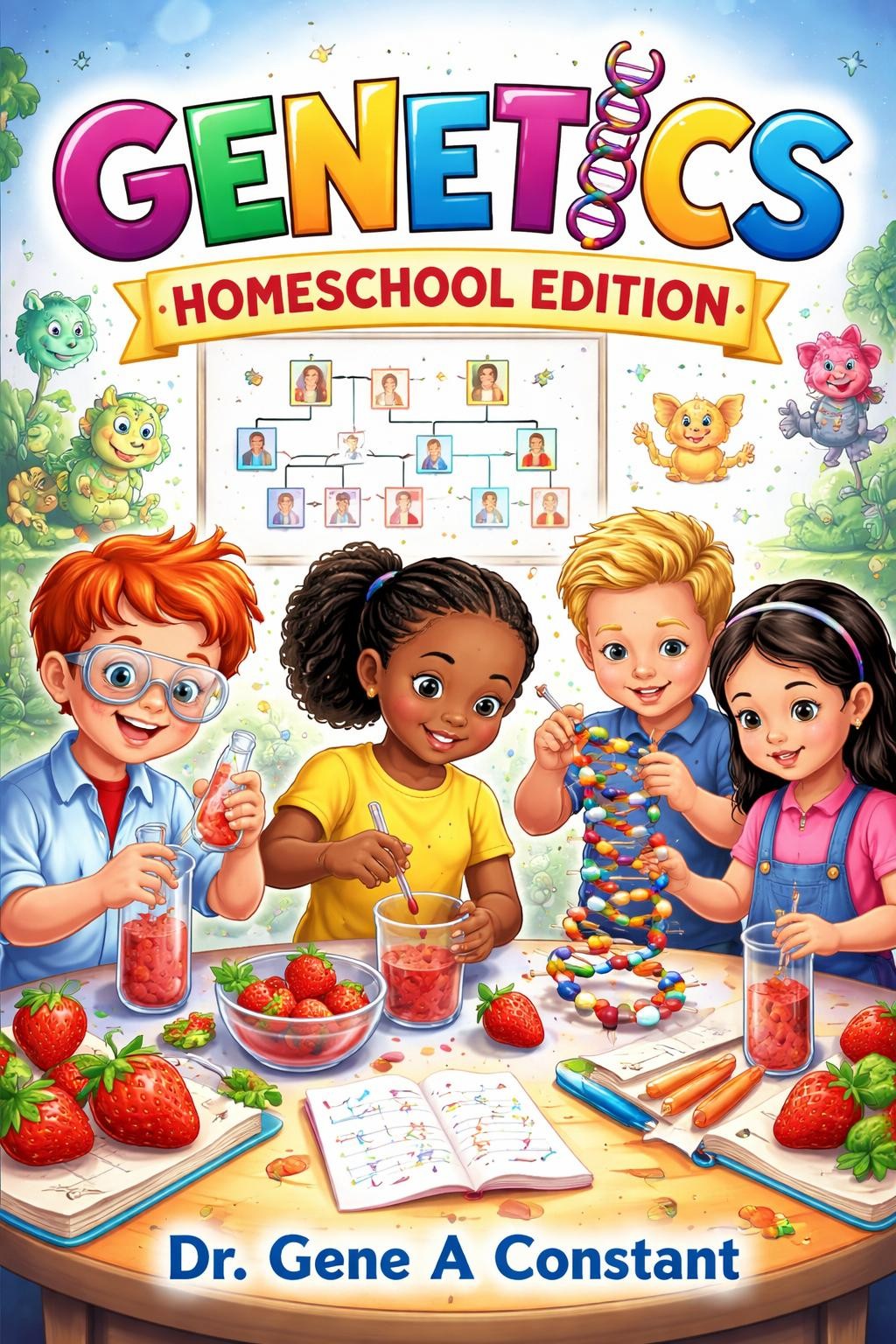
🔬Life science, physical science, earth science, scientific method, hands-on experiments using kitchen materials.
For homeschoolGrades 4-8. Includes printable lab guides for experiments you can do with what's already in your kitchen.
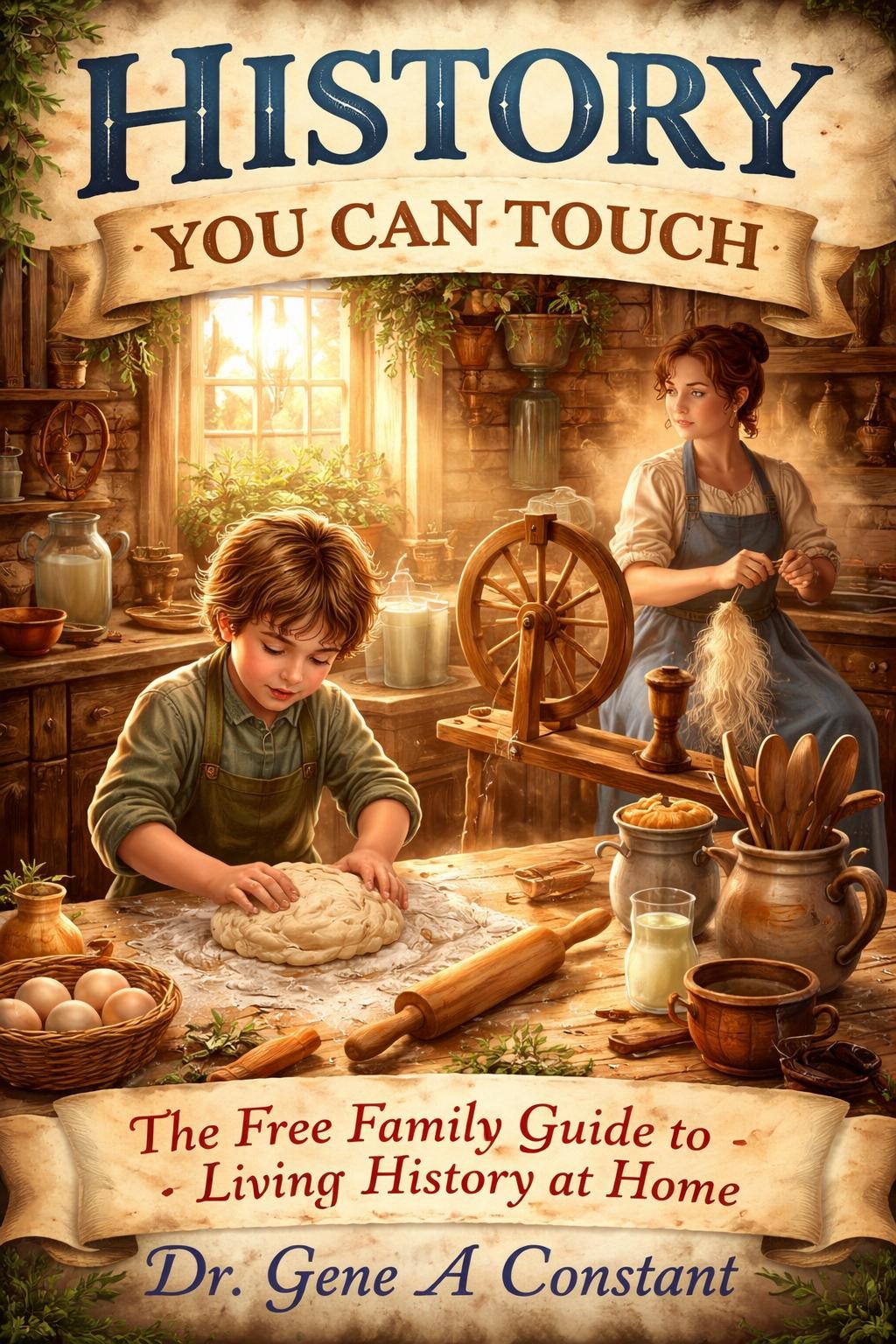
🏛️American history, world history, primary sources, historical thinking skills.
For homeschoolGrades 4-8. Honest history that names what happened. No partisan framing in either direction.
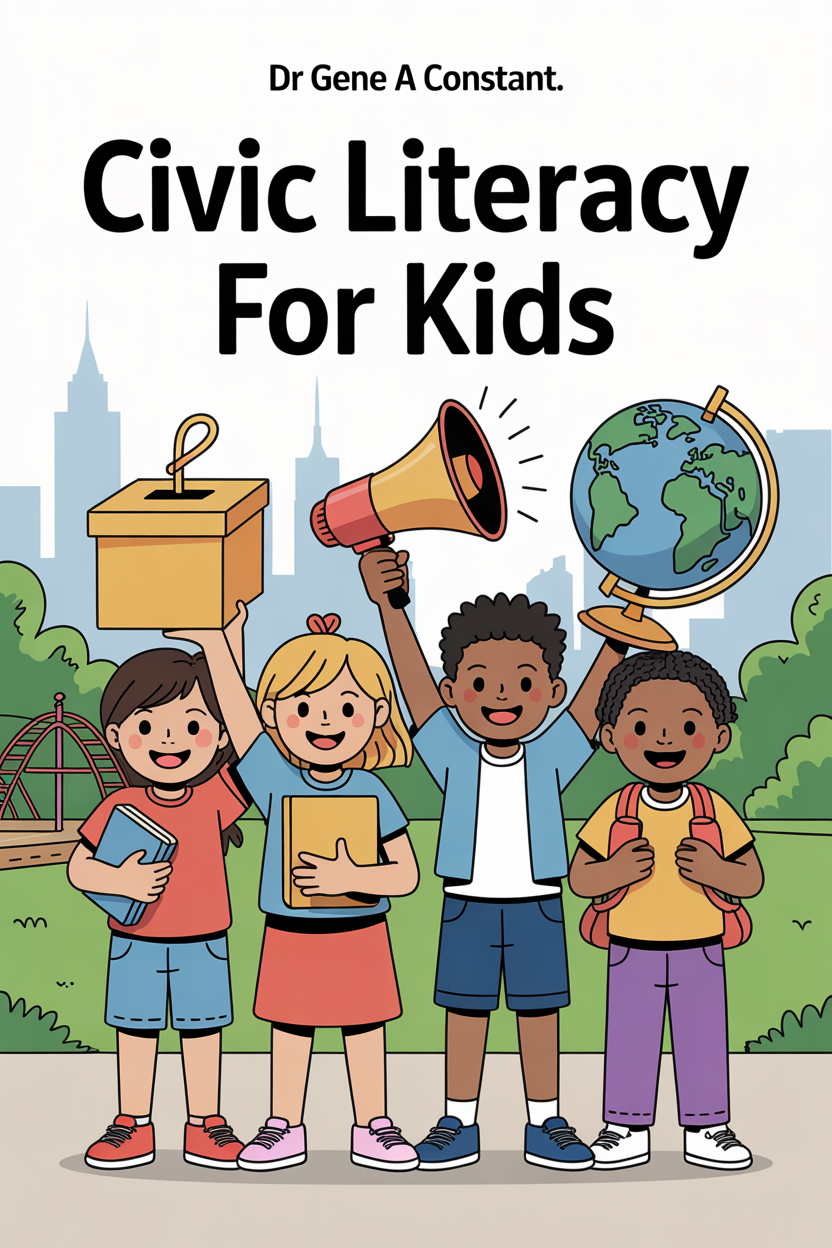
⚖️How government actually works, your rights as a citizen, how to read the news critically.
For homeschoolGrades 5-8. Deliberately non-partisan. Teaches the structures, not the slogans.
🗺️Maps, regions, capitals, climate, cultures, economic geography, the physical world.
For homeschoolGrades 4-8. Strong on the physical-geography fundamentals that build the mental maps for everything else.
💵Earning, saving, budgeting, banking, taxes, credit, the cost of debt — the financial education most adults never got.
For homeschoolGrades 5-8. The "adulting" skills homeschool families consistently rank as a top priority.
🔧Practical skills — basic home repair, automotive basics, plumbing, electrical, gardening, cooking, and the foundations of every major skilled trade.
For homeschoolGrades 4-8 and beyond. The Trades Pathway — see the dedicated section below.
🤝Communication, listening, body language, emotional intelligence, dealing with conflict — the social skills schools rarely teach.
For homeschoolGrades 4-8. Especially valuable for addressing the "homeschoolers don't socialize" myth — by actually teaching the social skills explicitly.
💭Critical thinking, logical reasoning, evaluating evidence, recognizing manipulation, thinking through problems.
For homeschoolGrades 5-8. Possibly the single most important skill for kids growing up in an information-saturated world.
💻Computer literacy, internet safety, basic coding concepts, AI literacy, digital citizenship.
For homeschoolGrades 4-8. Honest about what kids need to know to navigate digital tools safely without being captured by them.
🌐Free language learning in 32 languages — Spanish, French, German, Mandarin, and more — with GENO as the AI conversation partner.
For homeschoolAll ages. Replaces $7-14/month subscriptions to Duolingo, Babbel, and Rosetta Stone with free, patient, always-available practice.
⚡Reading deeply — for kids and adults. Three roads (Good · Better · Best) at progressively deeper levels.
For homeschoolGrades 4-8. Also for parents. Some of GSU's most original work.
🔤Letter sounds, decoding, fluency-building, sight words. For older learners who never got the foundation, and adults who want to build it now.
For homeschoolOlder struggling readers (any grade) and adult learners. Built on the Mississippi Method principles that took that state from 49th to 9th in fourth-grade reading.
💰Real adult budgeting using the Four-Bucket System (Survive · Defend · Build · Enjoy). Practical, not preachy.
For homeschoolGrades 7-8 as a life-skills capstone. Also for the parent — most adults were never taught this either.
🐷Money smarts adapted for younger learners in the GSU range. Earning, saving, the difference between wants and needs.
For homeschoolGrades 4-6. Bridges into Financification and Budget Master for older learners.
For Twice-Exceptional, Neurodivergent, and Gifted Learners
A meaningful share of homeschool families came to homeschooling because the conventional classroom was actively failing their child — too noisy for the sensory-sensitive, too slow for the gifted, too rigid for the neurodivergent, too one-pace-fits-all for the twice-exceptional. GSU's structure is the opposite of that classroom.
Because everything is self-paced, free, and built around mastery rather than seat-time, the platform naturally adapts to learners who need different things:
Honest about what we don't yet cover
Homeschool parents have built-in detection systems for puffery. Rather than promise that GSU is everything to everyone, here is what we are not yet strong on:
We tell you this because the homeschool community deserves honesty. A curriculum that pretends to cover everything usually covers most things poorly. We would rather be excellent at what we cover, honest about what we are still building, and serve grades 4 through 8 with depth — then grow.
A Major Part of GSU
For decades, American education pushed every student toward a four-year college, treating skilled trades as a backup plan. That was a generational mistake. Electricians, plumbers, HVAC technicians, welders, machinists, automotive specialists, and construction professionals build the country, earn well, and increasingly cannot be replaced by AI. GSU treats the Trades as a serious educational pathway — for homeschool families who see what's coming, and for adults who never got the chance.
Tier 1
🛠️For adults who want to fix the leaky faucet, repair the appliance, install the floor, maintain the car, and stop paying $200 for the tradesman's house call when the fix is a $20 part and 30 minutes of work.
Tier 2
🎓For homeschool families teaching grades 4-8 who want practical capability built into the core curriculum. Real skills, taught with the same rigor we apply to math or science. Capability builds confidence; confidence builds character.
Tier 3
🚀For older learners — homeschoolers in their teens, adults considering a career change — preparing to enter community college vocational programs, apprenticeships, or industry certifications without remedial coursework.
Education Savings Accounts
As of 2026, more than a dozen states offer Education Savings Accounts (ESAs) — public funding programs that give homeschool families money for educational expenses. The amounts and rules vary by state. A current snapshot:
Iowa, Indiana, Utah, Arkansas, North Carolina, and others have similar programs. Amounts and rules change frequently — check your state's department of education for current figures.
Most homeschool families with ESA funding spend the bulk of it on curriculum kits and online programs. Because GSU is free, your ESA dollars stay in the family for everything else — tutoring for a struggling subject, music lessons, sports, speech therapy, science kits, field trips, college savings, or simply the household budget.
This is not a marketing position. It is a structural reality of how our 501(c)(3) status interacts with school-choice funding. Use GSU for the academic core. Use your ESA for everything that makes your child's specific situation work.
A Quick Note on Your State's Rules
All 50 states permit homeschooling, but the regulatory environment ranges from "nothing required" to "annual notification, testing, portfolio review, and sometimes parent qualifications." Find your state's tier below — and check our deeper research document for the specifics in your state.
Tier 1
Nothing required of you. Just teach your child. Most parents start here believing it's mandatory; in many states it is not.
Alaska · Idaho · Illinois · Indiana · Michigan · Missouri · New Jersey · Oklahoma · Texas
Tier 2
Submit a one-time letter or annual notice that you are homeschooling. No testing, no portfolio. The form is usually a single page.
Alabama · Arizona · California · Connecticut · Montana · Nebraska
Tier 3
Annual notice plus either standardized testing, a portfolio review, or progress reports. Manageable, but more paperwork.
Arkansas · Colorado · Florida · Georgia · Minnesota · North Carolina · Ohio · Oregon · Virginia · Washington
Tier 4
Notification, mandatory testing or portfolio review, sometimes curriculum approval, and in some states, qualifications required of the parent-teacher.
Massachusetts · New York · Pennsylvania · Rhode Island · Vermont
For the full state-by-state breakdown — including specific testing requirements, portfolio review rules, ESA program details, NCAA athlete eligibility, and the latest 2026 academic outcome data — read our complete homeschool research document.
Read the Full Research →Average ACT score for homeschoolers — vs. 21.0 for the national average. Higher across all subject sections.
Average SAT score for homeschoolers — vs. roughly 1060 nationally. Strongest in reading and writing.
Harvard, Stanford, Yale, Princeton, MIT, and every Ivy League school have published policies welcoming homeschool applicants.
Common Questions
There is no catch. GSU is operated by the Foundation for Global Instruction, a 501(c)(3) nonprofit (EIN 39-2716552). The entire curriculum is free, forever, with no premium tier and no subscription. The foundation is funded primarily by Amazon book sales (177+ titles in our catalog), donations, and grants.
If we ever build a paid product, it will be transparent and optional — and the core curriculum will remain free in perpetuity. This is not a marketing promise; it is the foundation's stated mission.
GSU is built for grades 4 through 8, plus a complete Trades pathway for older learners and adults. The reading, math, writing, science, history, civics, and life-skills content is designed for the 9-to-14-year-old age range with depth and rigor.
For pre-K through 3rd grade, we recommend pairing with a strong early-reading and early-math program. Our Phonics hub serves older struggling readers and adult learners, not first-time emerging readers.
For grades 9-12, GSU is still building. We recommend pairing GSU with Khan Academy (free) for advanced math, dual enrollment at community college for academic acceleration, and our Trades pathway for vocational preparation. We are working toward a complete 9-12 curriculum, but we are honest that we are not there yet.
Both work. Many families use GSU as their complete grades 4-8 curriculum with no supplements. Others use specific GSU hubs (math, financial literacy, civics) to fill gaps in another curriculum they already use.
For early elementary (K-3), advanced high school (9-12), or the three areas we acknowledge as gaps (deeper coding/robotics, visual/performing arts, advanced high-school math), pair GSU with Khan Academy, library resources, or community co-ops. GSU is designed to be flexible — use as much or as little as fits your family.
Yes — and possibly better than any traditional classroom. GSU is self-paced, mastery-based, and free of the seat-time and pacing constraints that frustrate diverse learners. A 2e child can race ahead in their strength subject and take their time on the harder one without anyone being "behind."
GENO, our AI tutor, has unlimited patience and re-explains anything as many times as needed. You as the parent control the environment — light, sound, schedule, breaks — in ways no classroom can. Many of our most engaged homeschool families came to us specifically because their child needed something the conventional school could not provide.
Burnout is real, and it's the single biggest reason homeschool families quit. The cause is almost always the same: parents trying to be teacher, counselor, curriculum designer, evaluator, and chauffeur all at once, while also being the parent.
GSU was designed to remove most of that load. We provide the curriculum, the practice environment, the AI tutor that re-explains anything in 32 languages, the progress tracking, and the lessons. Your job is to be the parent who knows your child best — pacing, encouraging, noticing when something is hard, celebrating when something clicks. You do not have to be a credentialed teacher. You do not have to design lesson plans. You do not have to grade papers at midnight. GENO and the GSU platform handle the heavy academic lifting; you handle the human part.
Yes. Progress through GSU subject hubs is tracked via Firebase (the same secure Google-backed platform used by many education apps). You can pull a progress summary for any student at any time.
We are currently building a Certificate of Achievement system that will issue verifiable, printable certificates when a student completes a subject hub at the mastery level. Public availability target: June 5, 2026. For now, the progress tracking provides documentation suitable for state portfolio reviews where required.
The "homeschoolers don't socialize" concern is one of the most-researched and most-debunked claims about homeschooling. Multiple longitudinal studies show homeschool students score at or above average on measures of social and emotional development.
That said, social skills require practice — and they require exposure to people outside your immediate community. GSU's Humanics hub explicitly teaches communication, listening, body language, and conflict skills. Beyond that, most homeschool families build social time through co-ops, sports, faith communities, scouts, library programs, 4-H, and volunteer work. The opportunities exist; they need to be chosen rather than assumed.
Yes. Research consistently finds that parental teaching credentials do not predict homeschool student outcomes. What matters is engagement, consistency, and the willingness to find the right resources for the right child.
GSU is designed to do most of the heavy lifting on the academic side. GENO, our AI tutor, can re-explain any concept as many times as needed in 32 languages. Your role is to be the parent who knows your child best — pacing, encouraging, noticing when something is hard, and celebrating when something clicks. You do not need to be a credentialed teacher. You need to be present.
Three ways to start
No login. No credit card. No "free trial." Just open one of the subject hubs above and try it with your child. The whole curriculum stays free regardless of how much you use.
Free 501(c)(3) · Foundation for Global Instruction · EIN 39-2716552 · No login. No paywall. Always.
GSU Education Guide • AI Powered