The American Story · In Pictures

It did not begin in 1776.

Thirteen moments from a story that runs twelve thousand years — drawn for the books, and free to read on this site.

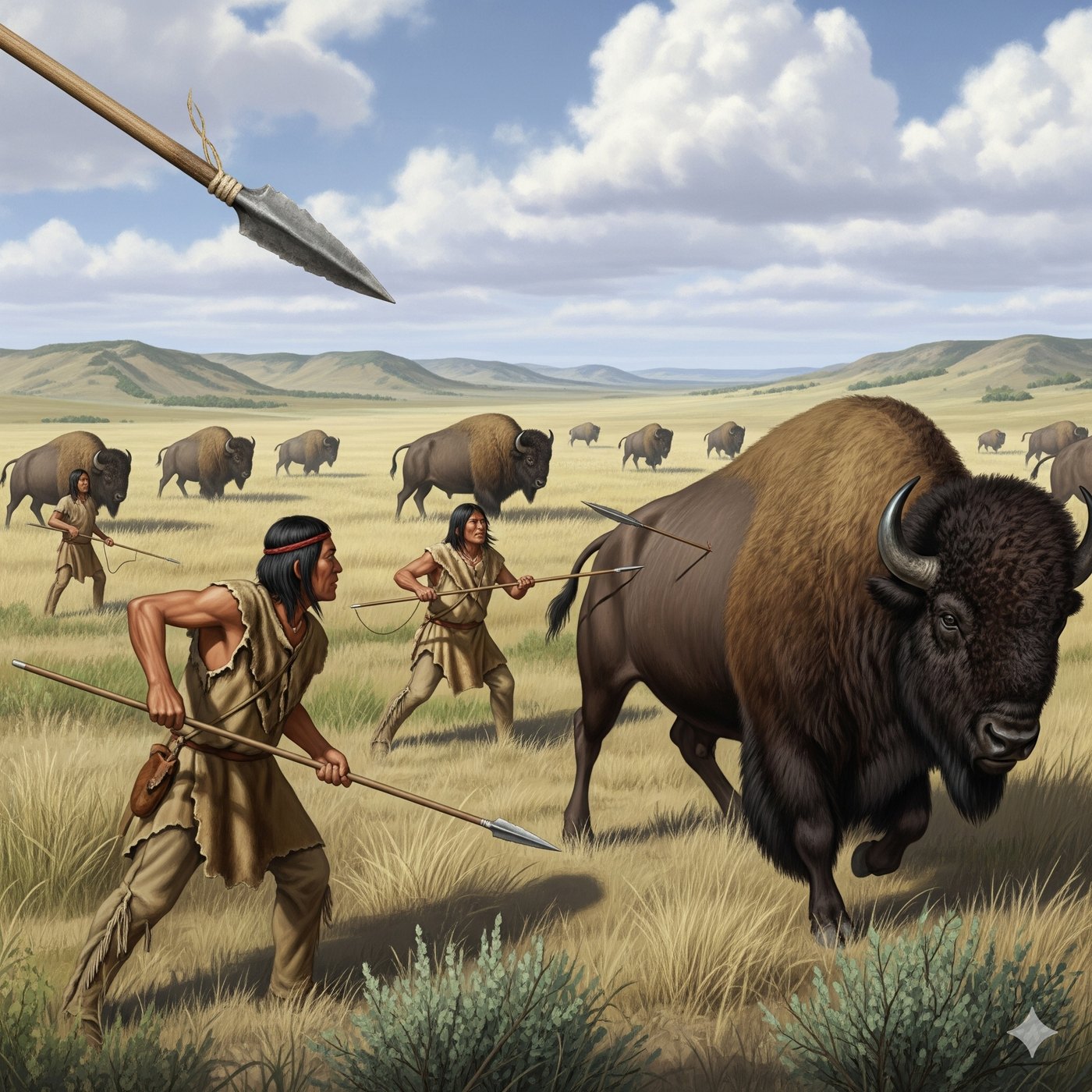
Plains hunters closing on a bison herd with spears beneath an open sky

Before the Ships

The First Americans

Whole economies ran on this animal — food, shelter, tools, thread. Nothing was wasted, because waste was not survivable.

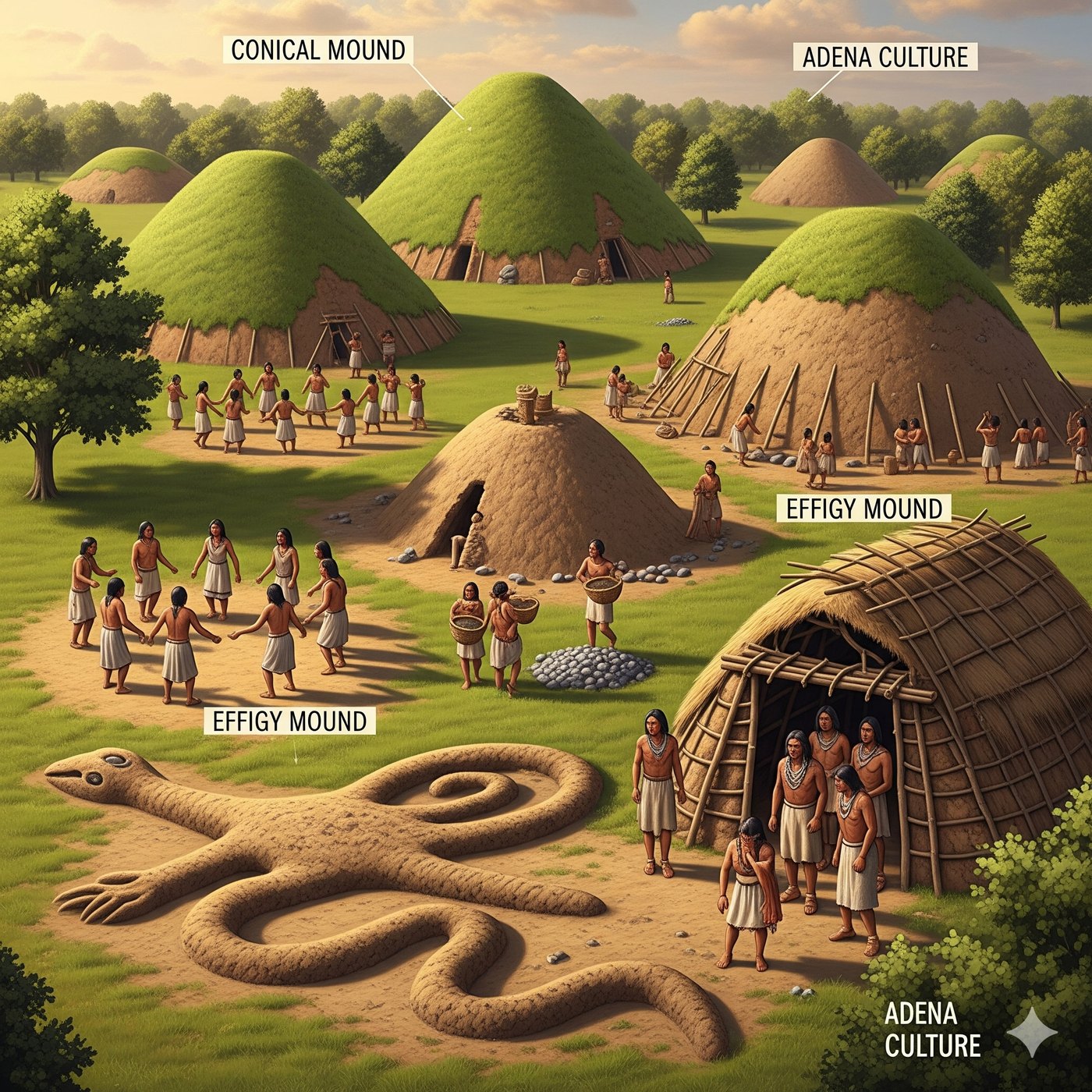
An Adena settlement of conical and effigy earthworks with people gathered among them

The Mound Builders

They Built in Earth, and It Is Still Here

Cities of raised ground, older than most of Europe's cathedrals, engineered without a wheel or a draft animal.

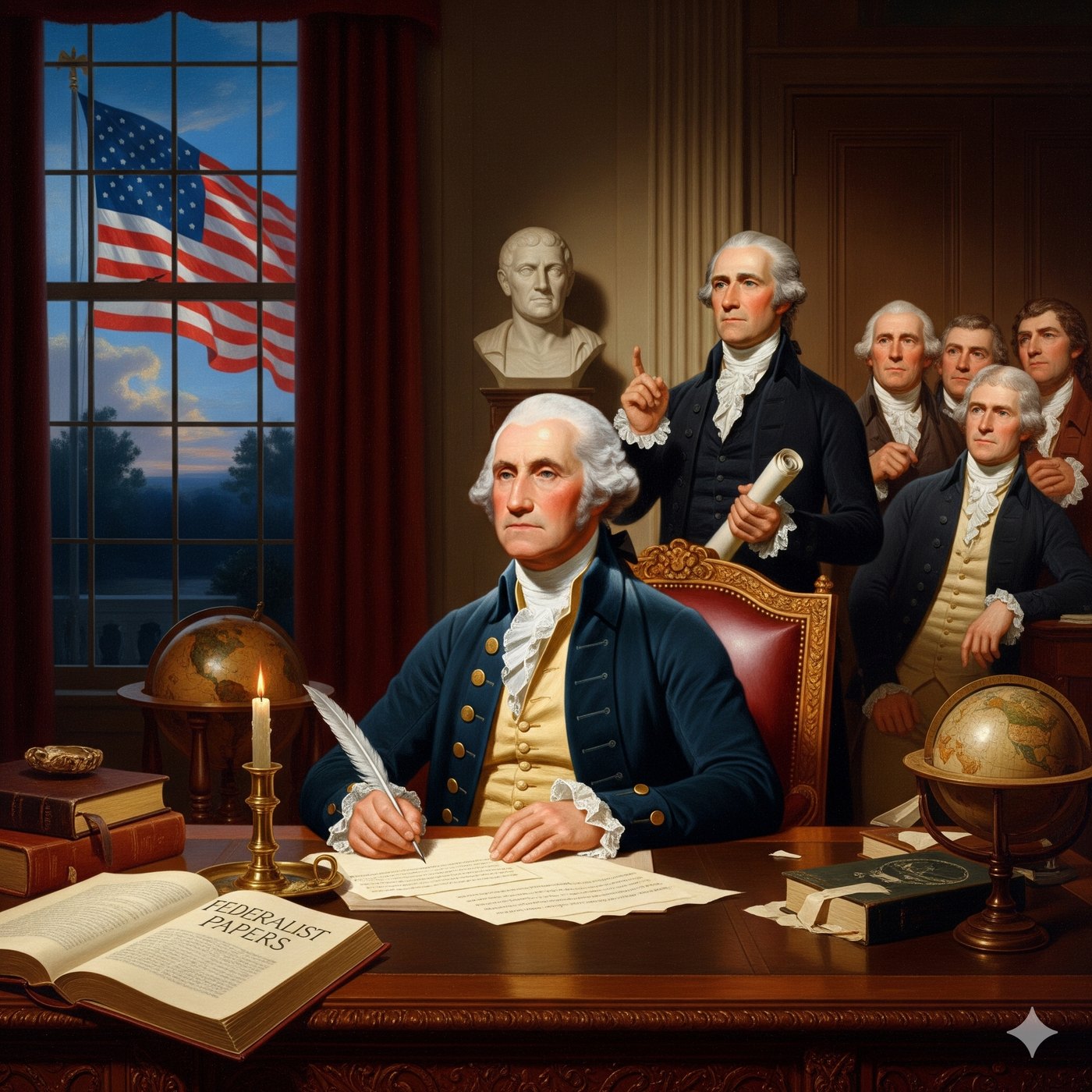
The founding generation at work over papers, with the Federalist Papers open on the desk

The Argument

A Country Written Down

The Federalist Papers were not a founding hymn. They were one side of a public argument, written to win a vote that could have gone the other way.

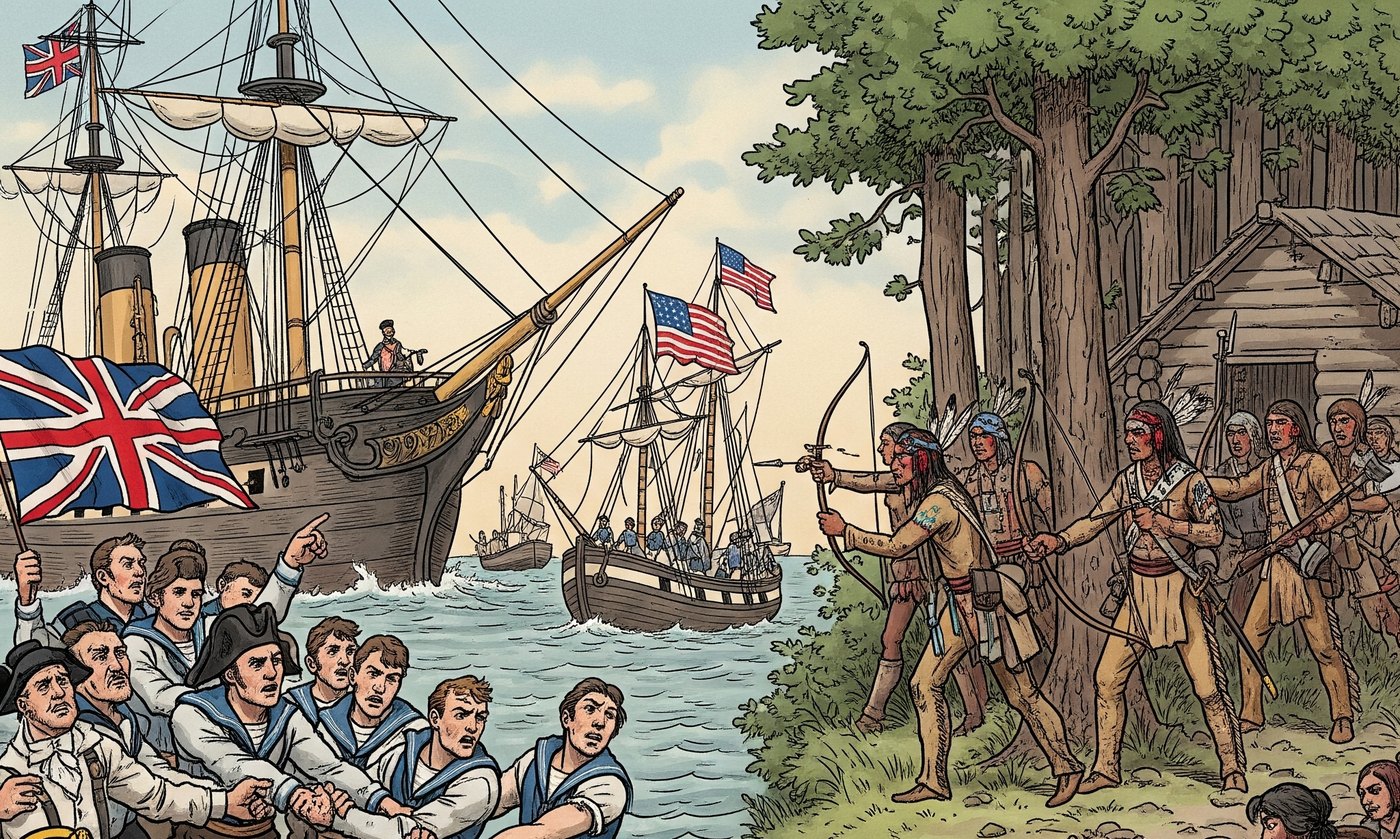
British and American ships offshore while sailors are seized and warriors gather at the treeline

1812

The Second War With Britain

American sailors taken off American decks and pressed into another navy. A young country discovered that independence on paper is not the same as independence at sea.

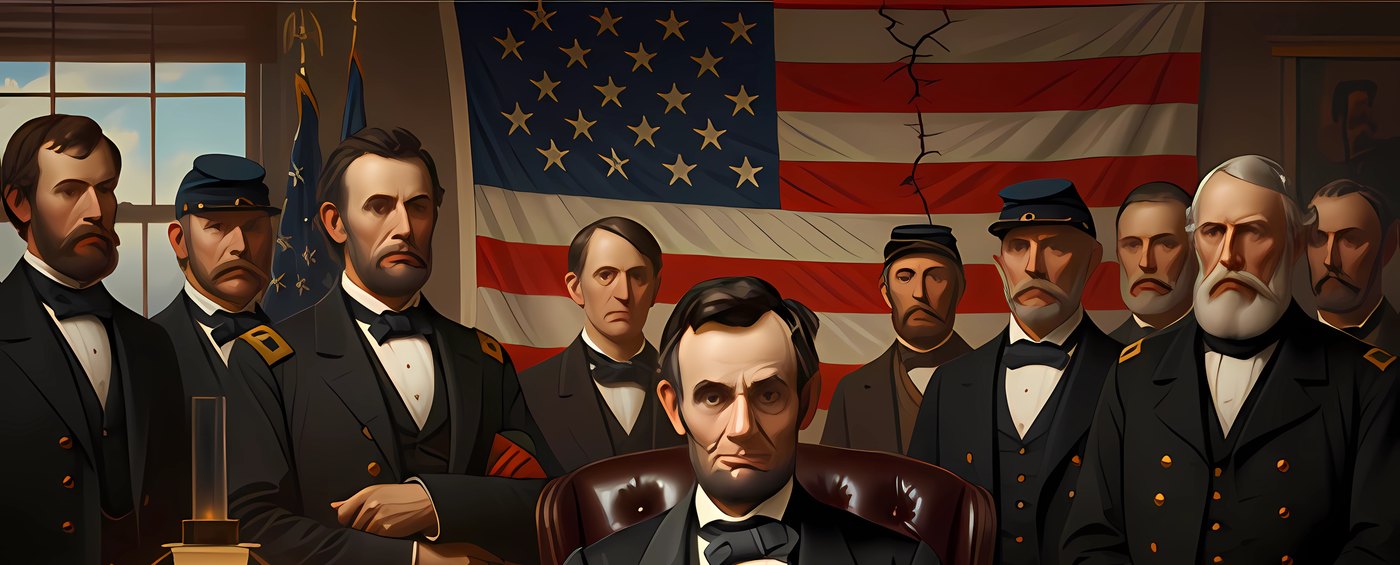
President Lincoln seated before his cabinet and a torn national flag

January 1, 1863

A Signature, and a Flag With a Tear In It

The Emancipation Proclamation changed what the war was for. From that morning the Union armies advanced as armies of liberation, and every mile they took turned the promise into fact.

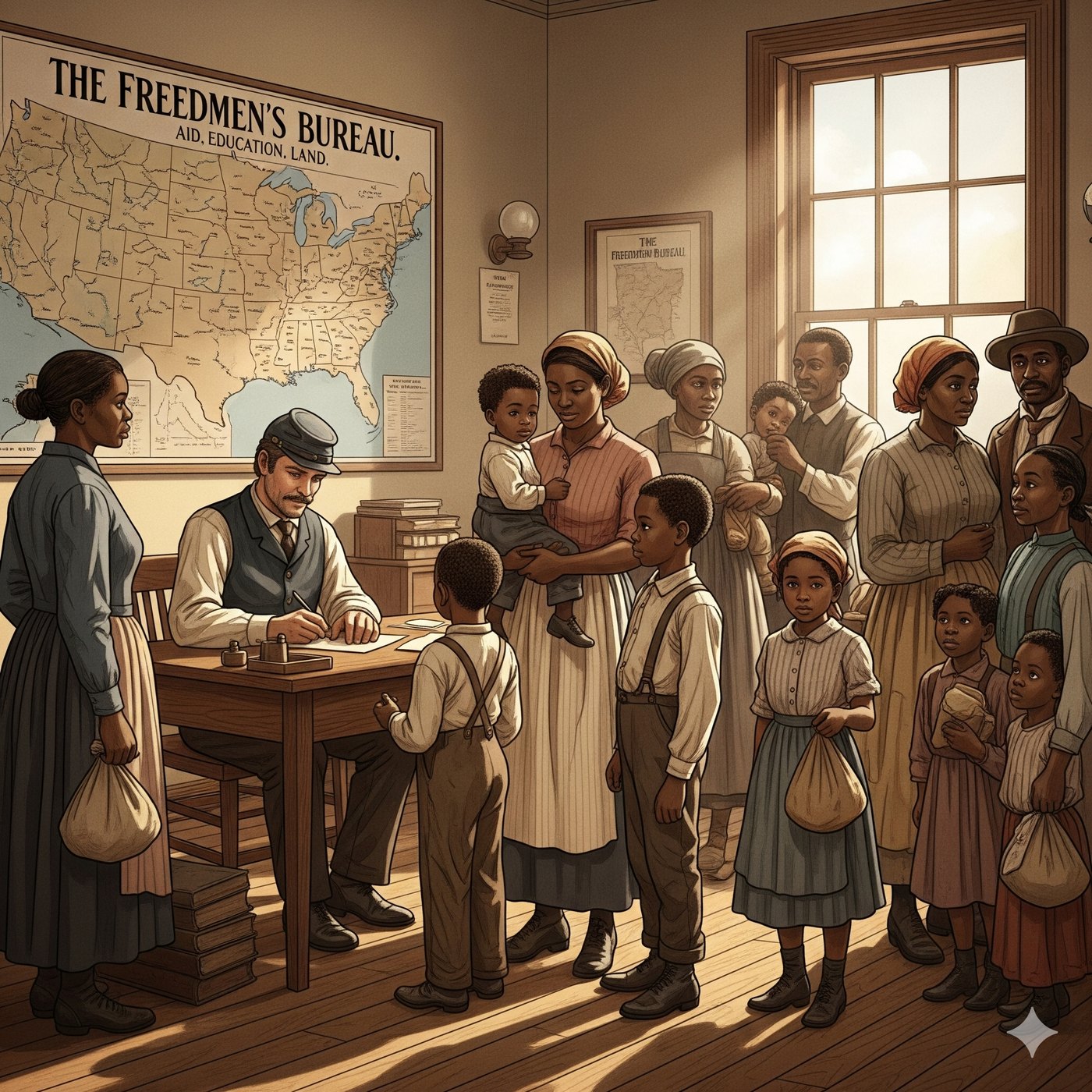
Families waiting at a Freedmen's Bureau office beneath a banner reading aid, education, land

After the War

Aid, Education, Land

Freedom arrived as a line to stand in. What people asked for first, again and again, was schooling — which is the whole reason this university exists.

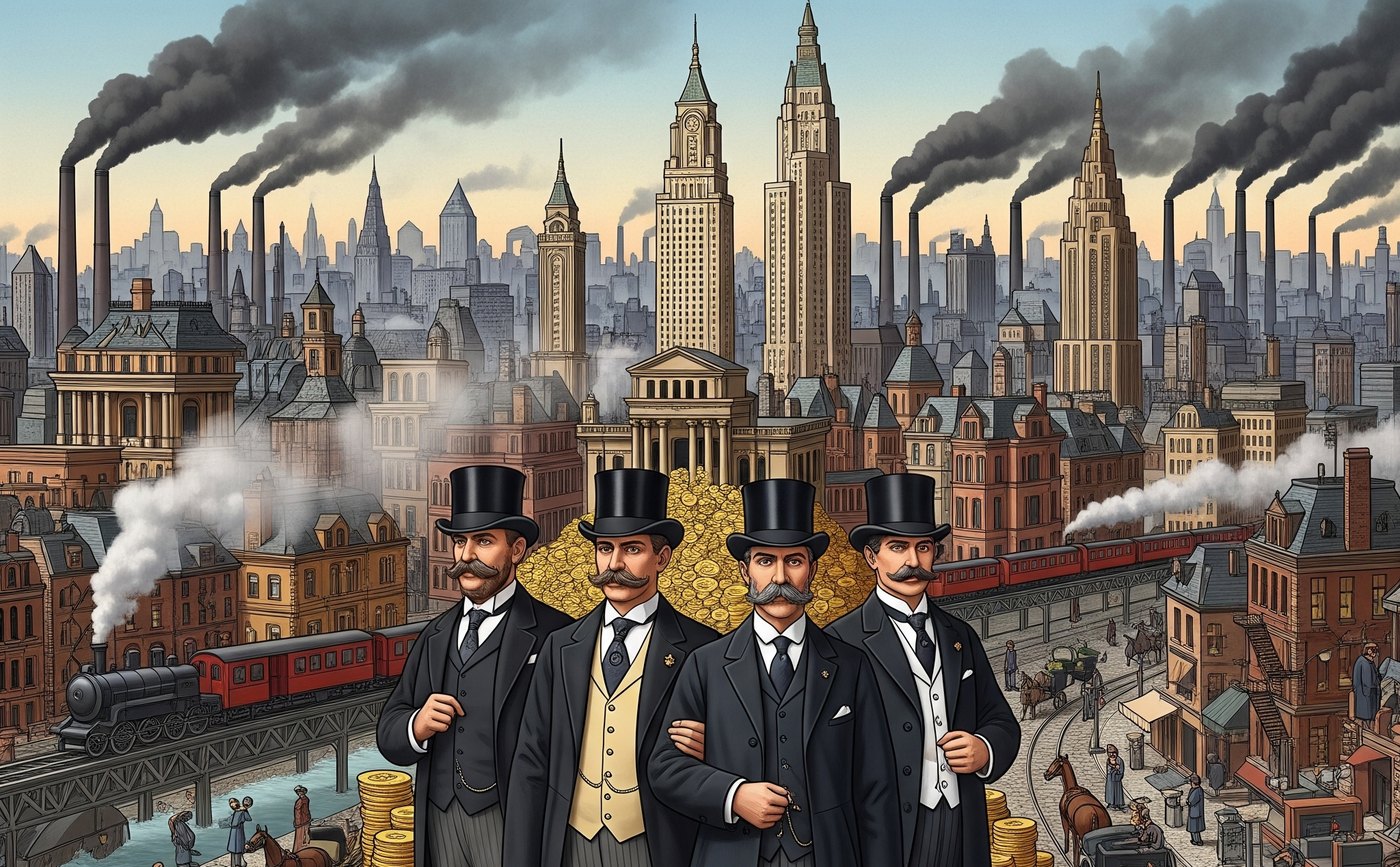
Industrialists in top hats before a smokestack skyline, elevated trains, and heaped gold

The Gilded Age

Gilded Means Thinly Covered

Twain chose the word carefully. Gold leaf over base metal — enormous fortunes above, and the men who laid the rail living six to a room below.

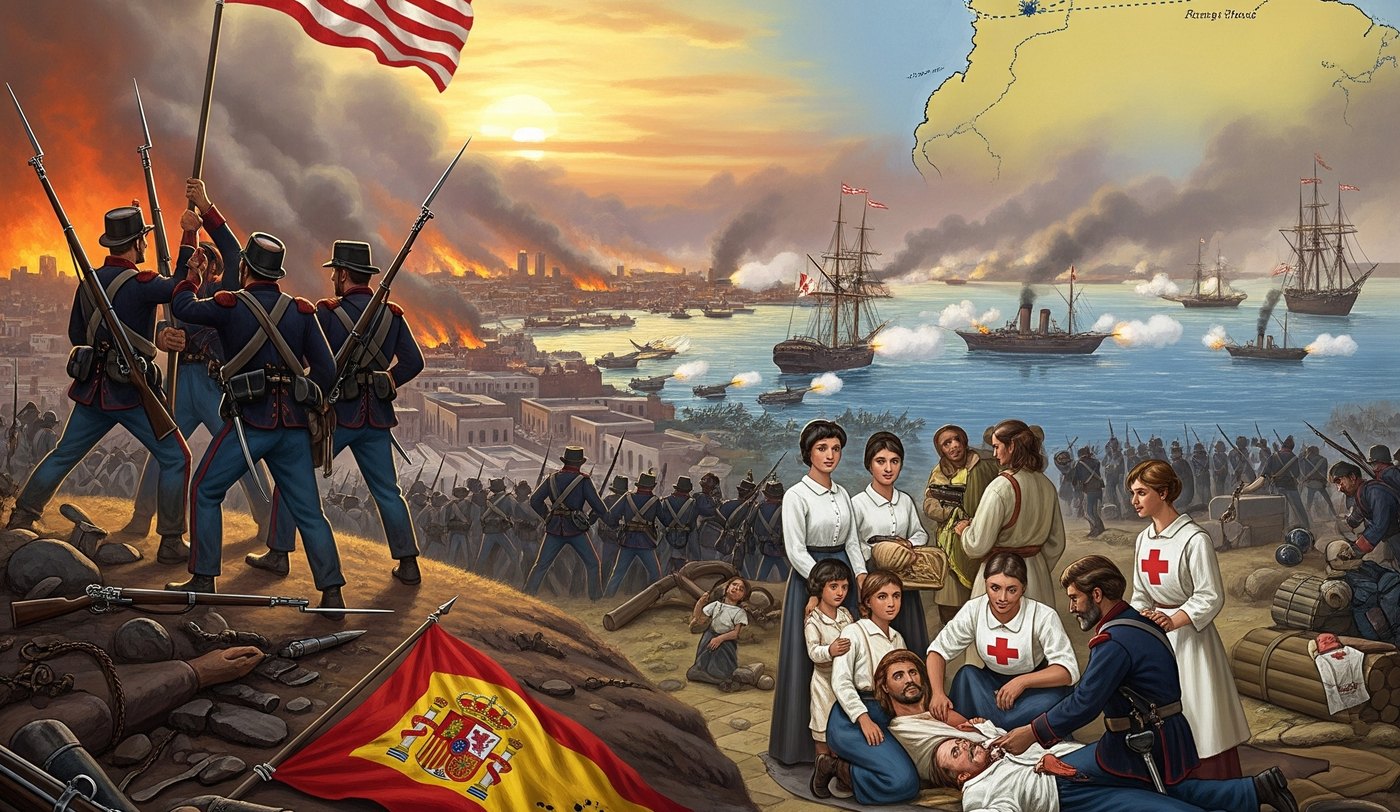
Soldiers raising the flag above a harbor as a fleet exchanges fire and nurses tend the wounded

1898

The Year the Republic Became an Empire

In ten weeks the United States took territory across two oceans — and began an argument, still unfinished, about whether a country founded against empire should hold one.

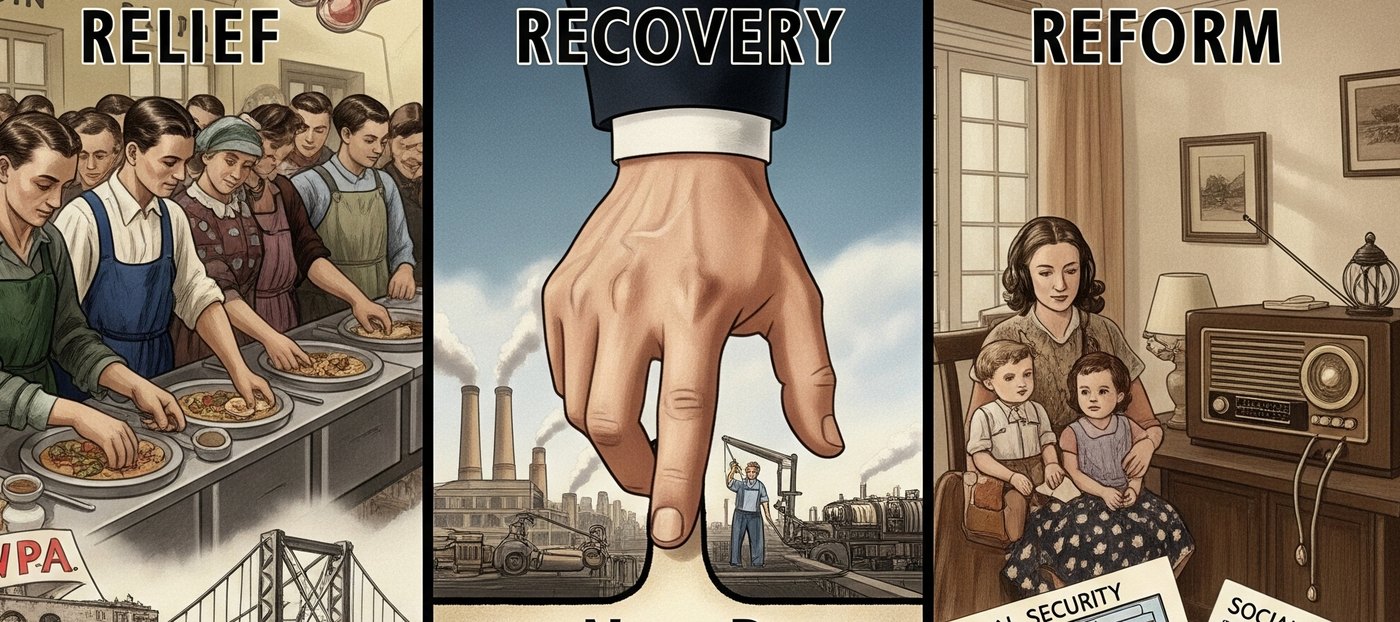
Three panels headed Relief, Recovery, and Reform showing a bread line, industry, and a family at home

The Depression

Relief, Recovery, Reform

Three words that rearranged what Americans expected of their government — and are still argued over on both sides today.

A soldier raising the flag over a ruined skyline as a lit globe rises behind him

After 1945

The Century That Got Named

A country that had been a bystander in 1914 stood, thirty years later, holding the dollar, the science, and the picture screen the world would watch.

The Earth rising above the cratered surface of the moon against black space

1968

We Went to See the Moon, and Saw the Earth

Apollo 8 was sent to photograph a landing site. The picture everyone remembers is the one taken out the other window, unplanned, of home.

President Reagan speaking at the Brandenburg Gate before the Berlin Wall

Berlin, June 1987

Six Words at a Wall

His own advisers cut the line from the draft more than once. He put it back every time. The wall stood twenty-nine months longer, and then it did not.

A memorial composition marking the attacks of September 11, 2001

September 11, 2001

The Morning the Century Turned

Nearly three thousand people did not come home. On one aircraft, passengers who had learned by telephone what was happening decided to act, and the plane came down in a Pennsylvania field.

Publishing Today · History of the Americans Companion Series · Volume 0

THE FULL AMERICAN STORY

Fifteen sovereign books tell the whole American story — from the Great Law of Peace to today's republic. This is the reader's key: fifteen chapters, each a door. Read it alone and receive the whole story in one sitting.

KINDLE $3.99 · ARRIVING ON AMAZON WITHIN HOURS
The Audiobook Reader
Hear the Fifteen Fires

A guided audio tour through the Companion's fifteen doors — press play and let the reader carry you from Onondaga to your own kitchen. Your device's voice does the reading; the story does the rest.

FIRE 1 · The Great Lawgivers
Press ▶ to begin the tour.
1 / 15
Gamification · A Real Bar
Keeper of the Fire

Fifteen questions, one per fire. Every correct answer feeds the council fire; every miss is honest about why, and names the book that holds the answer. No bar is lowered here.

Do It Right Now · Free · No Account

The Timeline Gauntlet

History is not a pile of dates — it is a chain of causes. Five questions on what made what possible: which came first, which door opened which, and which order the American story actually ran. Every answer teaches the chain, hit or miss.

Five questions draw fresh from a pool of twenty. Reasoning about order and cause — not date trivia.

Want any chain explained out loud? GENO, the free AI tutor in the corner of this page, is available 24/7 — a robot you can actually TALK to, in 83 languages.

US History · Historification · The American Story

History that belongs to you.

The American story, told whole — from the Iroquois Confederacy that shaped the Constitution to the digital revolution — across more than a dozen titles, anchored by the five-volume History of the Americans. Written plainly, for families, students, and citizens who want their history first-hand, not filtered.

Why we built it this way: "Every person on Earth is born with an American spirit: an untamed yearning for a better tomorrow." A people who know their own story cannot be talked out of it. These books exist so the story is owned, not borrowed.
12+ Titles Live
5 Volume Flagship
4th Grade to Adult
32 Languages w/ GENO
Browse the Shelves ↓ Certification · July 4, 2026
Vol IVFrom WWII victory to the digital revolutionLive
Vol IIIFrom Reconstruction through World War IILive
Vol IIThe story continuesLive
Vol IWhere the American story beginsLive
For KidsThe whole story, for the youngest historiansLive
The Flagship · Five Volumes

History of the Americans.

The spine of the hub — the founder's own favorite work — telling the American story in five volumes, with a kids' edition so no reader is left waiting to grow into it.

Volume IFounder's Favorite

History of the Americans (Vol. 1 of 5)

Where the American story begins — the opening volume of the flagship series, and the book Dr. Constant names first among his 194 donated titles.

Volume IIThe Series

History of The Americans II

The story continues — volume two of the five-volume arc, carrying the narrative forward in the same plainspoken voice.

Volume IIIThe Series

From Reconstruction Through World War II

The nation rebuilt, tested, and called to the world stage — Reconstruction to V-J Day in one volume.

Volume IVThe Series

From WWII Victory to Digital Revolution

The American century in full — victory, the space age, and the digital revolution that reshaped everything.

Kids EditionYoung Readers

History of the Americans for Kids

The whole story, sized for the youngest historians — because the American spirit is not an adults-only inheritance.

Series CompanionThe Spirit

A Nation's Call

America's enduring spirit of courage, vision, and miracles — the companion volume on what animates the whole story.

Before the Founders

The Lawgivers Shelf

The OriginAdult

The Great Lawgivers

How the Iroquois Confederacy shaped democracy, governance, and the American Constitution — the older roots of the American idea.

The OriginGrades 4–5

The Great Lawgivers — 4th & 5th Grade Edition

The true story of the Peacemaker, told for classrooms and family read-alouds.

The StoryHistorical Fiction

An Iroquois Chief and a British Princess

The Lawgivers' world brought to life in historical fiction — where the history lives in its people.

The West

The Frontier Shelf

The HistoryThe Cowboy

The Last Horizon

A history of the American cowboy — the working life behind the legend.

The IconThe Cowboy

The American Cowboy

An enduring icon of freedom and frontier spirit — why the figure still matters.

The LessonSelf-Reliance

The Talent of Self-Reliance

The frontier's hardest-won lesson: the promise of "collective security" always ends in the spreading of misery.

History as Warning

The Sovereignty Shelf

The PatternCivic Sovereignty

The Straw Man

Modern authoritarianism and the history of dictatorship — recognizing the pattern before it completes.

The PresentCivic Sovereignty

The Escalation Code

Putin's playbook and the looming shadow of WWIII — history's lessons applied to the headlines.

The PresentCivic Sovereignty

The Undeclared War

NATO, Russia, and the silent struggle shaping our future.

The EssayAmerican Legacy

The Second American Civil War (2024)

An essay on American exceptionalism — and what a house divided risks.

The StandCivic Sovereignty

Let This Not Be Our Alamo

A line drawn in the present, with the full weight of the past behind it.

The PeopleFreedom Series

Coming to America: The Great Melting Pot

The untold history of immigration — how arrivals became Americans.

As an Amazon Associate, GSU earns from qualifying purchases — every cent funds free education.

Coming to this hub

Honest commitments, posted publicly. The US History Certificate of Comprehension joins the GSU certification program after its July 4, 2026 launch — /certification is the one page listing every subject where the honor is offered.

  • Live nowWisdom Bridge comprehension checkpoints
  • July 4, 2026GSU Certificate of Comprehension program opens
  • Future waveUS History certification, drawn from the flagship series
  • In productionFree study materials and teach-by-doing history games
GENO, the GSU AI tutor

No one remembers alone.

GENO AI Tutor available 24/7 — a robot you can actually TALK to. Ask about any era, any figure, any chapter — GENO walks the story with you in 32 languages. Find GENO in the corner of every page on this site.

Questions, answered

Where should I start?With the founder's favorite: History of the Americans, Volume I. The five-volume series is the spine of the hub; the Lawgivers, Frontier, and Sovereignty shelves branch from it. Young readers can start with the Kids edition or the 4th & 5th grade Lawgivers.

What ages are these for?The catalog runs from 4th grade to adult. The Kids edition and the Great Lawgivers school edition serve grades 4–5; the flagship volumes and the Sovereignty shelf are written for teens and adults.

Is there a US History certification?It joins the GSU Certificate of Comprehension program after the program's July 4, 2026 launch. The /certification page is the sole source listing every subject where the honor is offered. Wisdom Bridge checkpoints are live today.

Why does a sovereignty university teach history?Because a people who know their own story cannot be talked out of it. Dr. Constant's frame for the whole catalog: every person on Earth is born with an American spirit — an untamed yearning for a better tomorrow. History is where that spirit learns its own name.

Free · Plain-Language Glossary

GSU History Dictionary

History is not a list of dates to memorize — it is a skill: the power to weigh a source, spot a bias, and follow cause to effect. These are the words a historian actually uses, in plain language, free for anyone. Learn them and you stop merely receiving history and start questioning it — which is the whole point of a sovereign education.

Primary Source A record made by someone who was actually there — a letter, a photograph, a law, a diary, an artifact from the moment itself. The GSU Perspective: The closest you can get to the past without a time machine. GSU teaches you to reach for these first, and to read them with your eyes open.
Secondary Source An account written later by someone who studied the primary sources — a textbook, a biography, a documentary. The GSU Perspective: Useful, but one step removed. Every secondary source is an author's interpretation, and a good student always asks whose.
Historiography The history of how history itself has been told — how the same events get written differently across generations. The GSU Perspective: History changes as the people writing it change. Knowing that is the difference between memorizing a story and understanding who told it.
Bias The slant a source carries from its author's beliefs, interests, or position — the thumb on the scale. The GSU Perspective: Every source has a point of view; the skill is not to reject it but to account for it. It's the same muscle GSU's courtroom reading game drills.
Corroboration Checking a claim against other independent sources before you trust it. The GSU Perspective: One source is a rumor; three that agree are evidence. Corroboration is how a historian — or a juror — separates fact from claim.
Chronology The ordering of events in the sequence they actually happened — the backbone of any true account. The GSU Perspective: Get the order wrong and cause and effect collapse. Chronology is the first thing the History of the Americans series sets straight.
Cause and Effect The chain by which one event makes another more likely — why things happened, not just when. The GSU Perspective: Dates are trivia; causes are understanding. GSU teaches history as a chain of decisions, each made by people who could have chosen otherwise.
Context The surrounding conditions — the beliefs, limits, and pressures of a time — that make a past action understandable. The GSU Perspective: Without context, the past looks like madness. With it, you see people doing the best they could with what they knew.
Anachronism Judging or describing the past using the facts, words, or standards of a later age. The GSU Perspective: The most common error in casual history. GSU teaches you to meet the past on its own terms before you sit in judgment of it.
Revisionism Re-examining accepted history in light of new evidence — honest when it follows the facts, dishonest when it denies them. The GSU Perspective: There is a world of difference between correcting the record and erasing it. A sovereign mind can tell which is which.
Propaganda Information deliberately shaped to persuade rather than to inform, often by what it leaves out. The GSU Perspective: The first casualty of every conflict is the truth. Learning to spot propaganda in the past is how you learn to spot it in the present.
Eyewitness Testimony A firsthand account from someone who was present — vivid and valuable, but never automatically reliable. The GSU Perspective: Memory bends, and witnesses have stakes. GSU teaches you to honor testimony and to question it at the same time.
Provenance The traceable origin and chain of custody of a document or artifact — where it came from and how it reached us. The GSU Perspective: A source with no provenance is a source you cannot trust. Knowing where evidence came from is half of knowing whether it is real.
Oral Tradition Knowledge, history, and law passed down by spoken word across generations, before or instead of being written. The GSU Perspective: Much of humanity's story was carried in memory and voice. GSU honors the oral histories the written record left out.
Civilization A large, organized society marked by cities, government, writing, specialized work, and a shared culture. The GSU Perspective: Civilizations rise, endure, and fall by patterns you can learn. History of the Americans traces one such arc across five volumes.
Empire A single state that rules many different peoples and territories beyond its own homeland. The GSU Perspective: Every empire promises order and exacts a price. GSU teaches you to read both sides of that bargain.
Sovereignty The right of a people to govern themselves, answering to no outside power. The GSU Perspective: The idea this entire University is built on. The Sovereignty Shelf follows the long, costly fight to win it and to keep it.
Republic A form of government where authority rests with the citizens and the representatives they elect, not a crown. The GSU Perspective: A republic is harder to keep than to found. GSU studies history so each generation knows what it inherited — and what it could lose.
Frontier The shifting edge between settled and unsettled land — a zone of danger, opportunity, and collision. The GSU Perspective: The frontier forged a national character of self-reliance. The Frontier Shelf — the cowboy, the pioneer, the last horizon — lives here.
Revolution A fundamental and often rapid overturning of a political or social order. The GSU Perspective: Revolutions are studied not to be repeated, but to be understood — what they cost, and what they were truly for.
Reconstruction The hard work of rebuilding a society's institutions and bonds after war or collapse. The GSU Perspective: Winning a war is one thing; rebuilding afterward is another. GSU's history of Reconstruction asks how a nation knits itself back together.
GENO GSU's AI tutor — available 24 hours a day in 32 languages to talk through any source, era, or term with you. The GSU Perspective: Reading a hard primary source? Ask GENO to walk you through it. He is one tap away on every page of the hub.
Books in American History & History of the Americans

See all 198 titles →

History of the Americans, Vol. 1

History of the Americans

$3.99 Kindle

The Great Lawgivers

Great Lawgivers

$3.99 Kindle

American Cowboy Heritage

American Cowboy

$3.99 Kindle

The Second American Civil War

American History

$3.99 Kindle

View Complete Library — 198 Titles →
The Historification Shelf

Fifteen Books. One Fire.

Every title on the shelf is $3.99 on Kindle — and every sale funds the tuition-free university.

The Great Lawgivers Lawgivers · 4th & 5th Grade 偉大な立法者たち · Japanese Birth of a Nation, Reclaimed The Architecture of Autonomy History of the Americans I Volume II Volume III Volume IV For Kids The American Cowboy The Last Horizon Old Glory The Talent of Self-Reliance USA: Without Apology

Browse the Full Library →

Why We Play · The GSU Advantage

At GSU, play is not a break from learning — it is the engine of it. Every game on this page was built on one conviction: a learner who is smiling is a learner who is staying. Where others sell lectures, we hand you the same knowledge as a game you can win — free, unlimited, in your pocket, forever.

Play until the skill becomes reflex. Then prove it to the world with a free, publicly verifiable Certificate of Comprehension — no account, no cost, ever.