Skills that make you hard to replace.
Every other skill at GSU runs through this one. You can be a brilliant tradesperson and lose every job because you cannot manage a difficult client. You can be financially literate and still lose a fortune to someone who read you better than you read them. Humanics is the layer that turns every other competence into a life.
Four pillars of being good with people.
From family to workplace to community — the skills your diploma quietly assumed you already had.
Relationships
Be the person people can rely on.
Building trust, navigating disagreement, repairing rupture, and the patient work of being someone other people can count on — skills that translate from family to workplace to community.
Communication
Dialogue understands; debate only wins.
Reading nonverbal cues correctly, verbal-nonverbal congruence, active listening, conflict resolution — and the difference between debate (winning) and dialogue (understanding).
Emotional IQ
Regulate without suppressing.
Recognizing your own triggers, reading emotion in others without projecting, and using empathy as a tool for connection rather than performance.
Digital World
Be a real person where nuance gets punished.
How tone collapses in text, why social media rewards the worst version of every conversation, and the etiquette of email and video calls.
The Relationships Shelf
The 90-Day Relationship Transformation
A complete couples system — ninety days, one relationship rebuilt on deliberate practice.
Advanced Conflict Resolution Strategies
The 90-Day system's advanced volume — for the conflicts that outlast the easy advice.
Relationship Conflict Resolution
Master every type of relationship conflict — family, friends, coworkers, partners — with one repeatable craft.
Couples Conflict Resolution
Transform relationship arguments into deeper connection — the fight as raw material, not wreckage.
The Communication Shelf
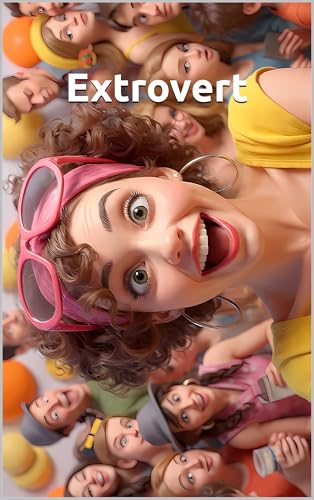
EXTROVERSION: How to Be an Extrovert
The essential guide to social confidence and communication skills — extroversion as a learnable craft, not a birthright.
Body Language Decoder
Read posture, gestures, eye contact, and proximity across 25+ real-world scenarios — a job interview, a negotiation, a first date. Free to play, no login.
Read the Room
The art of communication, the science of body language, and the intelligence that makes you dangerous — the Decoder's companion volume.
📕 On Amazon SoonThe Emotional IQ Shelf
Emotional Intelligence Over IQ
Why EQ beats IQ in career success — the argument, the evidence, and the practice.
The Emotional Intelligence Quick Book
Master self-awareness and people skills — the fastest on-ramp on the shelf.
Emotional Intelligence for Leaders
EQ where the stakes are highest — leading people through pressure, change, and conflict.
The 15-Minute EQ Blueprint
Master your emotional landscape in fifteen minutes a day — small reps, compounding returns.
Anger Management
The definitive CBT and mindfulness workbook for emotional regulation, stress relief, and calmer relationships.
Building Emotional Capacity
An evidence-based DBT, ACT, and mindfulness workbook — capacity built exercise by exercise. Paperback edition.
As an Amazon Associate, GSU earns from qualifying purchases — every cent funds free education. The fourth pillar, the Digital World, has a complete hub of its own at /digitification.
Coming to this hub
Honest commitments, posted publicly. /certification is the one page listing every subject where the Certificate of Comprehension is offered.
- Live nowWisdom Bridge comprehension checkpoints + the full Humanics library
- Magic of SixA teach-by-doing game for every title on this page — that is how GSU teaches
- July 4, 2026GSU Certificate of Comprehension program opens
- Future waveHumanics certification — people skills, verified
Humans mentor here.
GENO never sleeps, but a human Civilization Builder changes a life — and nowhere more than in people skills, which are learned from people. Learners: raise your hand. Veterans, retirees, professionals: become one — one hour a week makes you somebody’s turning point.
No one grows alone.
GENO AI Tutor available 24/7 — a robot you can actually TALK to. Rehearse a hard conversation, decode a confusing interaction, practice saying the difficult thing kindly — in 32 languages, any hour, with zero judgment. Find GENO in the corner of every page on this site.
Questions, answered
What is emotional intelligence?EQ is the ability to recognize, understand, and manage emotions in yourself and others — self-awareness, self-regulation, motivation, empathy, and social skill. Research consistently finds EQ a stronger predictor of success than IQ in most careers and relationships.
Can emotional intelligence be taught?Yes. Unlike IQ, which is relatively fixed, EQ can be developed at any age through practice: learning your triggers, building regulation strategies, and practicing empathy. Humanics provides structured practice for all of it.
Is communication really 93% nonverbal?No — and we refuse to teach the myth. The famous 7-38-55 numbers come from real UCLA research by Albert Mehrabian, but they applied only to feelings and attitudes when words and tone conflict, not to all communication. What is true: nonverbal signals matter enormously, especially when they contradict the words. We teach what the research actually says.
Where should I start?With the pillar that costs you the most today. Struggling at work: Communication and the Conflict shelf. Struggling at home: Relationships and the 90-Day system. Exhausted by your own reactions: Emotional IQ.
Is there a Humanics certification?It joins the GSU Certificate of Comprehension program after the program’s July 4, 2026 launch. The /certification page is the sole source listing every subject where the honor is offered.