Live Now · Free · 501(c)(3)

The Readification Comprehension Certification is open.

Prove what you can actually read — not how long you sat in a classroom. Free. Anonymous. Publicly verifiable. The first of twelve GSU certifications now live; eleven more launch on Independence Day, July 4, 2026.

No login walls. No tuition. No paywall — ever.

Get Your Free Certification
Readification · The Reading Helix

Reading is the bridge to freedom.

Eight pillars. Four hundred questions. Bronze, Silver, Gold, Platinum tiers on every climb. A free AI tutor in 32 languages who never loses patience. No login, no paywall, no agenda — just the science of how reading actually works, made playable.

8 Pillars
400+ Questions
32 Languages
$0 Forever
1 2 3 4 5 6 7 8 The Reading Helix
Free · Watch · Hear · Play · Read

The Reading Library

Every volume of the Reading Helix is free, four ways. Watch the short film, hear Dr. Constant read Chapter One, climb the game that drills the skill, and download the entire book as a free PDF. No login. No cost. Start anywhere — the helix climbs in order, but every rung stands on its own.

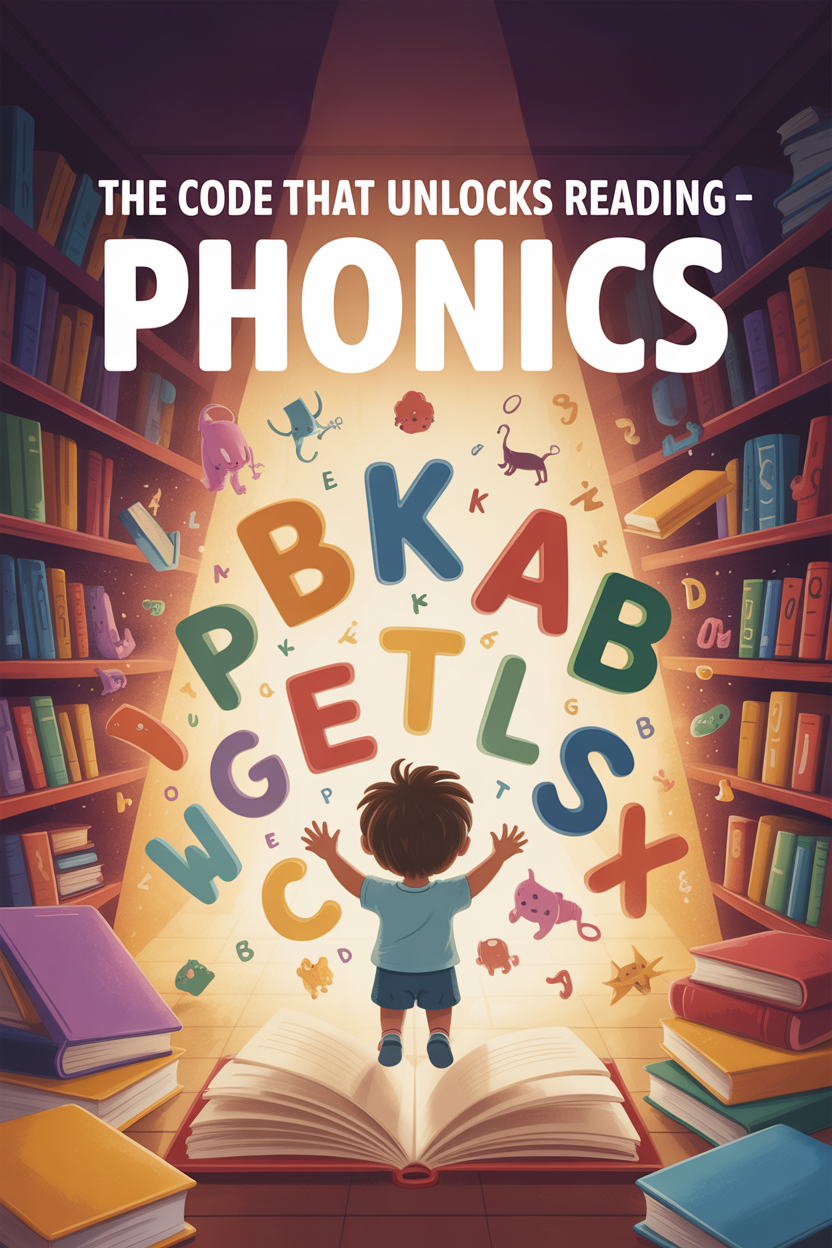
Reading Helix · Volume 2

The Code That Unlocks Reading: Phonics

Sound becomes print, predictably.

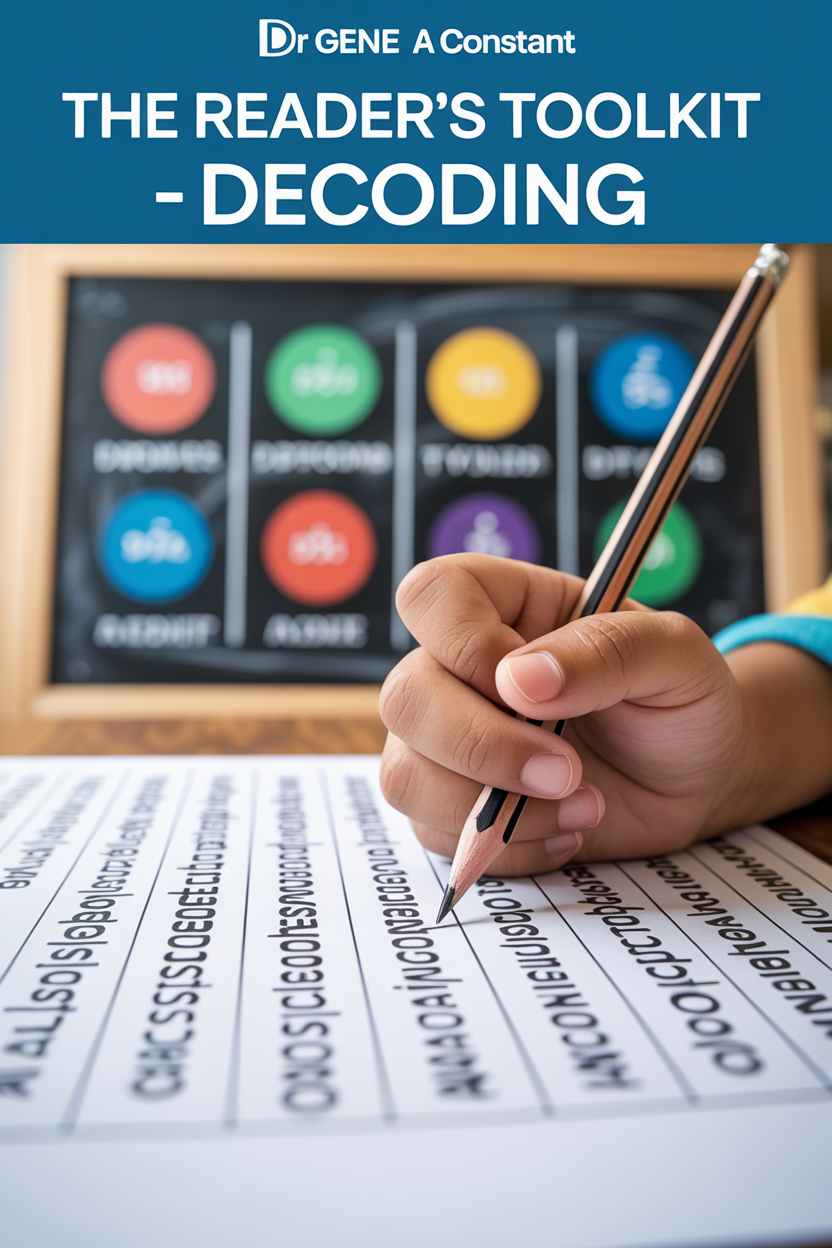
Reading Helix · Volume 3

The Reader's Toolkit: Decoding

Turn what you know about letters into reading you can trust.

Reading Helix · Volume 5

The Words You Know: Vocabulary

The words that open the rooms.

More volumes climb the Helix — from the first sounds to full comprehension. Play the master game that spans every skill, then prove it with a free, verifiable certification.

Climb the Reading Helix Earn Free Certification
The Science of Reading

How Reading Actually Works

Roughly a third of American students cannot read at grade level, and the gap between strong and struggling readers keeps widening. The cause is decades of methods that asked children to guess at words from pictures and context. The fix is the one thing that has always worked: teaching the code directly. Everything GSU builds for reading rests on this research — and all of it lives right here, free.

Why Phonics Works

Phonics teaches a reader to decode words by connecting sounds to letters. Instead of guessing, the learner builds the foundation that makes reading automatic. Sixty years of evidence stand behind it:

Dr. Jeanne Chall — Harvard, 1967

Her landmark review found systematic phonics produces stronger readers than guessing-based, whole-language methods.

The National Reading Panel — 2000

A U.S. government meta-analysis of decades of studies confirmed explicit phonics as one of the essential pillars of learning to read.

Dr. Mark Seidenberg — Neuroscience

Brain research shows the reading brain is a pattern-learning machine: it masters reading through clear, repeated exposure to the code, not through guesswork.

The Five-Step Method Behind Every GSU Reading Tool

1 · Listen

Hear the word spoken aloud — the sound comes before the print.

2 · Say

Repeat it yourself, so your mouth learns what your ear just caught.

3 · Hear the Sounds

Break the word into its individual sounds — its phonemes.

4 · Map to Letters

Connect each sound to the letter or letters that spell it.

5 · Understand

Tie the decoded word to its meaning. Reading is meaning, not just sound.

Reading for Every Learner

Children ages 4–8

Build reading from the ground up with age-appropriate words and encouraging, explicit instruction.

Struggling & older readers

It is never too late. Go back to the code, fill the gaps no one taught you, and read with confidence.

Homeschool families

A complete, research-backed reading sequence — phonics to comprehension — free, with a tutor built in.

English learners

Connect English sounds to English letters with clear audio guidance from GENO in 32 languages.

Keep Reading

From the GSU Bookstore

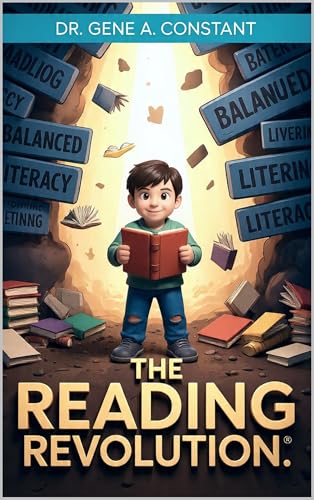
The Reading Helix is free forever. When a young reader is ready for more, these companion titles from Dr. Constant build the courage and confidence that turn a reader into a capable person. Every purchase supports free education for everyone.

GSU Young Reader Series

Brave Sprouts

A magazine-style activity book for ages 8–12 that builds genuine confidence through hands-on challenges — money, kitchen skills, problem-solving, and a 30-day capability challenge. It respects young readers instead of talking down to them.

View on Amazon →
For Parents & Kids

The Courage to Try

Teaching children that failure is part of success. A warm, encouraging read that turns fear into courage and helps kids embrace the stumbles that learning to read — and learning anything — requires.

View on Amazon →

As an Amazon Associate, GSU earns from qualifying purchases. Proceeds fund free education.

New on the Reading Helix

The eight-volume Reading Helix keeps growing — and your transcript travels with you.

READING HELIX · VOLUME 7

Reading to Question — Critical Reading

Read like a juror: weigh the claim, test the evidence, and decide for yourself. Volume 7 of the eight-volume Reading Helix turns reading into a thinking skill.

GENO GENO has read the entire book — every chapter, not a preview — and will discuss any part of it with you, free.
Read the page Paperback coming soon
YOUR TRANSCRIPT

The Climber’s Passport

One page that gathers every game you climb and every badge you earn across the whole campus — saved to any device and printable as a certificate. Proof of progress you own.

GENO Your best scores appear automatically from your own play — nothing to set up.
Readification · Honest Answers

Questions, answered.

Everything a learner, parent, or teacher asks before the first climb. No login required to read any of it — or to start.

What is Readification?+
Readification is Global Sovereign University's free reading program, built on the science of how reading actually works. It runs across eight pillars — from phonemic awareness and phonics through morphology, fluency, vocabulary, comprehension, and critical reading — and teaches each one by doing, not by lecturing.
Is it really free?+
Yes — free forever, no login, no paywall, no ads. Global Sovereign University is a 501(c)(3) nonprofit, supported by donations and book sales so the reading never carries a price tag.
Who is Readification for?+
Anyone learning to read or strengthening the skill — new readers, adults who were failed the first time, homeschool families, and English learners. The path is the same; the pace is yours.
What is the Reading Helix Climb?+
It's the free game at the heart of Readification. You don't answer multiple-choice trivia — you do the reading skill to climb. Play is endless, and your rungs earn Bronze, Silver, Gold, and Platinum tiers as you go. Scores save as you climb.
Do I need an account or a download?+
No login, no app, no download. Open the page and start. Your progress is saved anonymously — we never ask who you are.
What is the Readification Comprehension Certification?+
It proves what you can actually read — not how long you sat in a classroom. Free, anonymous, serial-numbered, and publicly verifiable. It's the first of twelve GSU certifications now live, with eleven more launching July 4, 2026.
Can GENO help me with reading?+
Yes. GENO AI Tutor is available 24/7 — a robot you can actually talk to. He'll sound out a word, explain a passage, or quiz you out loud, in 32 languages, and he never loses patience. Meet GENO →
What if I don't have internet?+
The whole campus fits on a flash drive. University on a Stick carries Readification — games, books, and lessons — fully offline, free to download and copy forever. Get the Stick →
Free · Plain-Language Glossary

GSU Reading Dictionary

The words teachers and researchers use when they talk about reading — explained in plain language, free, for anyone. Each entry tells you what the term means and why it matters. This is the vocabulary of the Science of Reading, the field that explains how the human brain actually learns to read.

Phoneme The smallest unit of sound in spoken language. The word "cat" has three: /k/ /a/ /t/. The GSU Perspective: Think of phonemes as the atomic building blocks of spoken language. Reading begins in the ear, not the eye — children must hear these invisible sound units before letters mean anything.
Phonemic awareness The ability to hear, identify, and play with the individual sounds in spoken words — with no letters in front of you. In Action: If you ask a child to say "stop" without the /s/ sound, and they say "top," they are demonstrating this. It requires mental gymnastics with sound alone and is the single strongest early predictor of who will learn to read easily.
Phonological awareness The broader awareness of the sound structure of language — rhymes, syllables, and word parts — with phonemic awareness as its finest grain. The Umbrella Skill: Think of this as the overarching category. It involves clapping out syllables or recognizing rhymes, setting the stage for the more advanced, microscopic work of phonemic awareness.
Grapheme A letter or group of letters that stands for one sound. In "ship," the letters "sh" are one grapheme for the sound /sh/. The Visible Code: If a phoneme is the sound you hear in the air, a grapheme is its anchor on the page. Recognizing that multiple letters can work as a single team is a major milestone in breaking the English code.
Phonics Instruction that teaches the link between graphemes (letters) and phonemes (sounds) so a reader can work out words. The Codebreaker's Key: English is a complex alphabetic code, not a series of pictures to be memorized. Phonics hands the child the master key to that code, giving them the independence to unlock thousands of unfamiliar words.
Decoding Turning printed words into speech by applying letter-sound knowledge — "sounding it out." The Engine of Reading: This isn't guessing based on a picture or the first letter. It is the precise, left-to-right translation of symbols into speech. Strong decoders don't guess; they analyze.
Encoding The reverse of decoding: turning the sounds you hear into written letters. This is spelling. The Ultimate Test: If decoding is reading the map, encoding is drawing it from memory. It requires a deep, secure knowledge of the phonics code and is one of the truest indicators of a child's foundational literacy.
Blending Pushing separate sounds together to read a word: /m/ /a/ /p/ becomes "map." The Assembly Line: Knowing individual letter sounds isn't enough; the brain must smoothly stitch them together. Blending is the "aha" moment when disparate pieces fuse into a meaningful word.
Segmenting Breaking a spoken word back into its separate sounds. This is the key move behind spelling. The Disassembly Process: Imagine pulling a Lego castle apart into its individual bricks. Before a child can spell the word "frog," they must be able to stretch it out and hear the hidden /r/ hiding behind the /f/.
Orthographic mapping The brain's process of storing a written word for instant, effortless recall by bonding its sounds, letters, and meaning together. The Neurological Shift: This is the exact mechanism that turns a struggling reader into a fluent one. Once mapped, the brain processes the word in less than a twentieth of a second, freeing up mental energy for true comprehension.
Sight words Words a reader recognizes instantly, without sounding out. With enough practice, nearly every word a person knows becomes a sight word. Busting the Myth: A damaging misconception is that sight words must be rote-memorized as whole shapes using flashcards. In reality, a true sight word is built through decoding and orthographic mapping.
Morpheme The smallest unit of meaning in a word. "Unhelpful" contains three: un- + help + -ful. The Meaning-Makers: While phonemes deal only in sound, morphemes deal in significance. Adding just one morpheme like "pre-" changes the entire timeline of a word, transforming vocabulary exponentially.
Morphology The study of morphemes — how prefixes, roots, and suffixes build and change words. The Vocabulary Multiplier: English is highly morphological. Once a reader understands that "struct" means "to build," they immediately have the skeleton key to unlock "construct," "destruction," and "infrastructure."
Fluency Reading with accuracy, a comfortable pace, and natural expression. The Bridge to Meaning: Fluency is not about speed-reading; it is about cognitive bandwidth. A reader who expends all their energy laboriously decoding has no attention left over to understand the story.
Prosody The rhythm, stress, and rise-and-fall of reading aloud — reading that "sounds like talking," not robotic. The Music of Language: Prosody proves that a reader understands what they are reading. Pausing at commas and raising pitch for a question shows the brain is processing meaning, not just barking at print.
Vocabulary The store of words a person knows and uses. The Currency of Comprehension: A child can decode flawlessly, but if they read the word "canopy" and don't know what it means, comprehension halts. Vocabulary is an ever-expanding bank account built through wide reading.
Comprehension The whole point of reading: building meaning from the text. The Ultimate Goal: Reading is not merely the act of saying words off a page; it is a profound exchange of ideas between the author and the reader. It is the destination that all other reading skills are driving toward.
Background knowledge What a reader already knows about a topic before they start. The Invisible Advantage: If two children read a passage about baseball, the one who knows the rules of the game will comprehend it far better. Knowledge sticks to existing knowledge like velcro.
Syllable A unit of pronunciation built around one vowel sound. Chunking long words into syllables makes them readable. The Chunking Strategy: Faced with a multisyllabic monster like "hippopotamus," a developing reader can easily panic. Knowing how to slice words into manageable chunks makes the impossible suddenly readable.
The Simple View of Reading A research framework: Reading Comprehension = Decoding x Language Comprehension. The Multiplication Rule: Notice the equation uses multiplication. If a child has zero decoding (0 x 10 = 0), or zero language comprehension (10 x 0 = 0), comprehension fails. Both pillars must be fiercely protected.
GENO, the GSU AI tutor

Don't just read these definitions — learn them. GENO is a tutor you can talk to, 24/7. Tap him in the corner and ask, "GENO, explain orthographic mapping like I'm new to this," or "What's the difference between a phoneme and a grapheme?"