Economics
Economics isn't about money — it's about choice. Every person, family, and nation faces the same problem: unlimited wants, limited means. Learn how people really decide, how markets coordinate millions of strangers without a boss, and how to read the forces shaping your paycheck, your prices, and your freedom. Plainly, and free.

Start with one idea: scarcity
There is never enough time, money, or stuff to do everything. That single fact — scarcity — is the root of all economics. It forces trade-offs, and every trade-off has a hidden price: the next-best thing you gave up to get it. Master that one habit of thought, and the rest of economics is just watching it play out at larger and larger scales.
The core of economic thinking
Scarcity & Trade-offs
Every choice costs you the next-best alternative — its opportunity cost. Thinking in trade-offs, not absolutes, is the first economic skill.
Supply & Demand
Price is a conversation between how much exists and how badly it's wanted. Learn to see the two forces behind every price tag.
Incentives
People respond to rewards and penalties — often in ways no planner intended. Change the incentive and you change the behavior.
Money & Inflation
Money is a tool for trade and a store of value — until too much of it chases too few goods. Understand why your dollar buys less over time.
Trade & Specialization
When people do what they do best and trade for the rest, everyone ends up richer. The reason your town isn't trying to make everything.
Markets & Freedom
Prices carry information no committee could gather. See how free exchange coordinates millions of choices — and what happens when it's overridden.
From theory to your own life
Economics explains the why. These free GSU campuses put it to work in your own household and ambitions — the how.
Wealthification
Ten interactive levels that turn economic principles into personal command of money — budgeting, banking, debt, investing, compound interest, taxes, and legacy. Microeconomics you can feel in your own wallet.
Enter the Wealthification Arcade →Entrepreneurship
The owner's mindset: value creation, assets versus liabilities, and how businesses actually make money. Where economic thinking becomes a way to build something of your own.
Think Like an Owner →
Stuck on a concept? Just ask GENO.
GENO AI Tutor — available 24/7, a robot you can actually TALK to. Ask him to explain supply and demand with a lemonade stand, or why inflation eats savings — he'll teach it your way, in your language, as many times as you need. Free, no login, ever.
Ask GENO about economicsThe Little Economist Trilogy — free to read
Three companion books carry a child from their very first coin to running a whole economy. Read any of them free — and remember: GENO has memorized every word of all three. He can read any chapter aloud and talk it through with you or your child, in any language, any time.
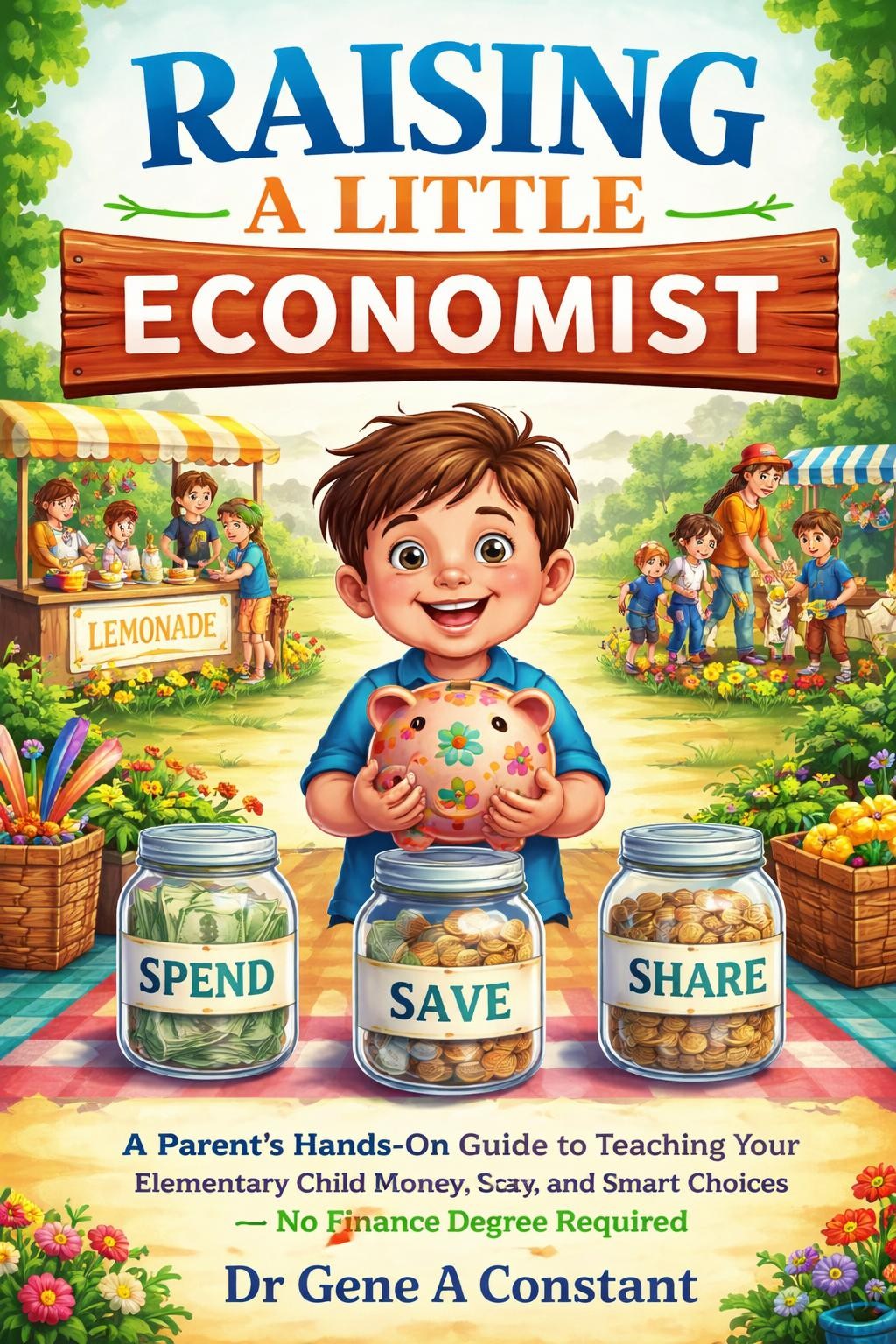
Raising a Little Economist
For parents. Teach your elementary child money, scarcity, and smart choices — no finance degree required.
Read free (PDF) →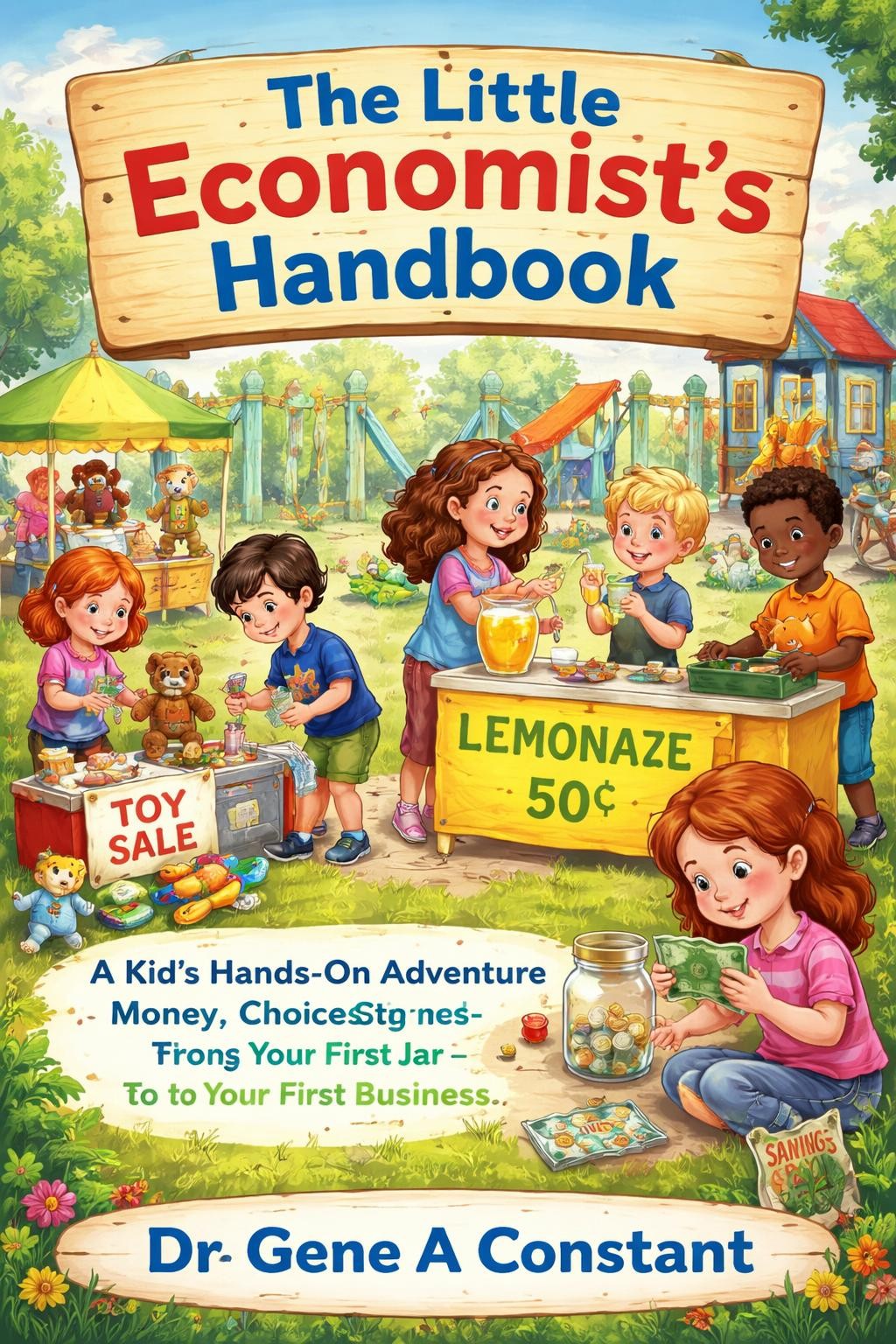
The Little Economist's Handbook
For kids. A hands-on adventure in money, choices, and starting things — from your first jar to your first business.
Read free (PDF) →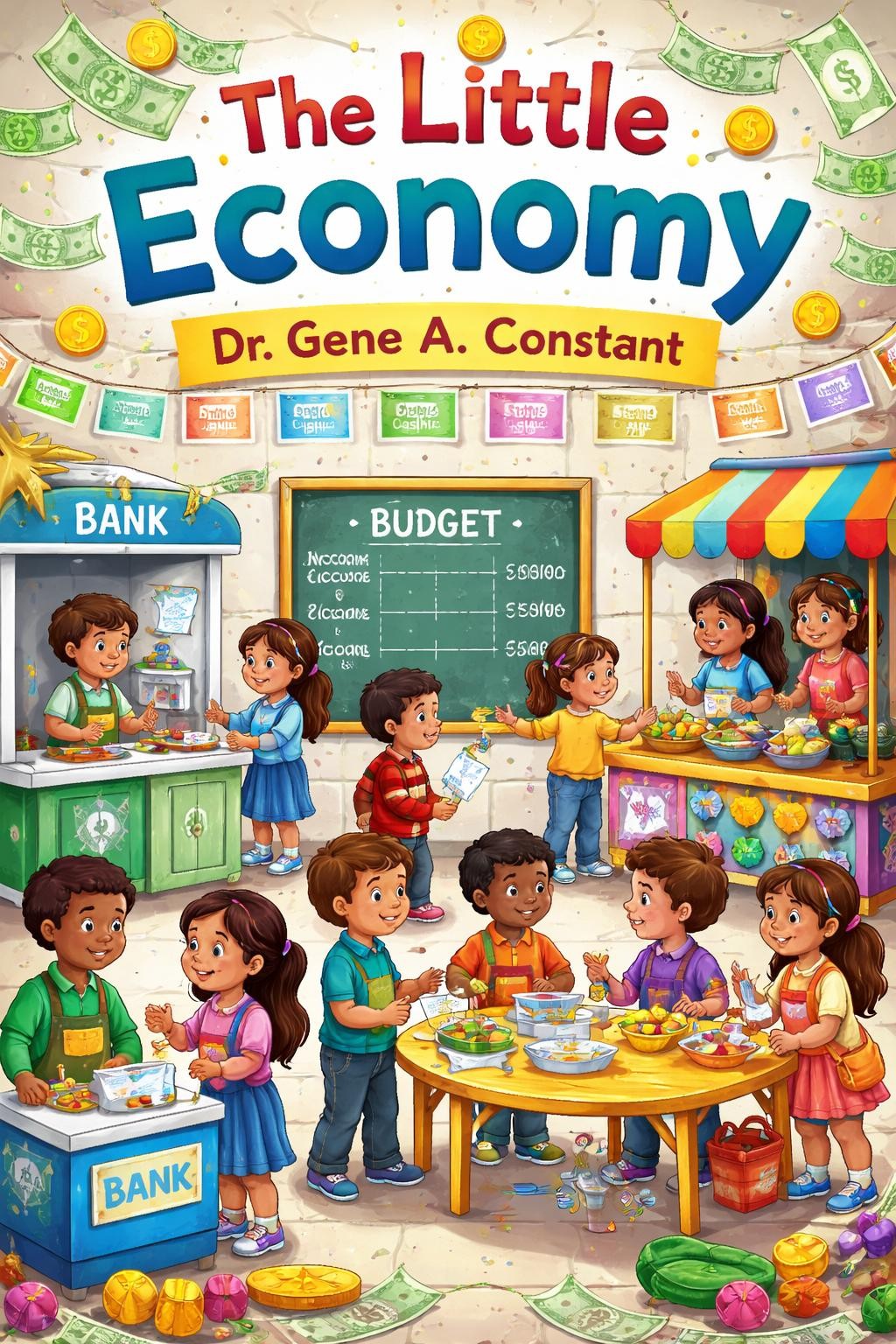
The Little Economy
For homeschools & co-ops. A hands-on money system to run a real working economy with a whole group of kids.
Read free (PDF) →Money Before Middle School
The evidence behind the trilogy: why children's money habits are largely set by age seven, what parents actually want schools to teach, and the cure GSU is building. Verified research, in plain language.
Read the study →The full gamified Economics track
A complete interactive Economics curriculum — levels, challenges, and a Helix Climb game — is being built now to sit alongside the trilogy. Check back soon.
GSU Economics Dictionary
The vocabulary of economics, in plain words. Tap any term you don't know into GENO and he'll explain it your way.
- Scarcity
- There is never enough time, money, or stuff to do everything. The root of all economics, and the reason every choice has a cost.
- Opportunity Cost
- The next-best thing you give up when you make a choice. The real price of anything is what you didn't pick.
- Supply
- How much of something is available to buy. When supply is low and people still want it, the price tends to rise.
- Demand
- How much people want something and are willing to pay for it. Strong demand pushes prices up; weak demand pulls them down.
- Incentive
- A reward or penalty that changes how people behave. Change the incentive and you change the choice.
- Inflation
- When prices rise over time and each dollar buys a little less. Often caused by too much money chasing too few goods.
- Interest
- The price of borrowing money — or the reward for saving it. Money that earns money, growing over time.
- Budget
- A plan for your money: what comes in, what goes out, and what to keep. Spending with intention instead of by accident.
- Profit
- What's left after you subtract the cost of doing business from the money you take in. The reward for creating value.
- Entrepreneurship
- Spotting a need and building something to meet it — taking a risk to create value other people will pay for.
- Trade
- Exchanging what you have for what you want. Done freely, both sides walk away better off than before.
- Specialization
- Doing what you do best and trading for the rest. The reason a town — or a world — can make things no one person could.
- Market
- Any place buyers and sellers meet. Prices in a free market carry information no single committee could ever gather.
- Saving
- Choosing not to spend today so you have more — and more choices — tomorrow. The habit that builds freedom.
- Credit & Debt
- Borrowed money you must pay back, usually with interest. Good debt helps you build; bad debt just costs you.
- Taxes
- Money collected from earnings to pay for shared things — roads, schools, fire trucks — that none of us could buy alone.
Frequently Asked Questions
At what age should kids start learning about money?
Earlier than most people think. Cambridge research found that a child's core money habits — planning, self-control, delaying gratification — are largely formed by around age seven. The early years are the richest soil, which is why the trilogy starts with the youngest learners.
Are the books really free?
Yes. All three books in the trilogy are free PDF downloads, and the entire Economics campus is free forever. Global Sovereign University is a donation-funded 501(c)(3) nonprofit — a hand up, not a handout.
I'm not good with money myself. Can I still teach this?
Absolutely. Raising a Little Economist is built for parents with no financial training. The lessons are everyday activities — three jars, a five-dollar store run, a lemonade stand — not lectures you have to be an expert to give. And GENO can walk you through any of it.
What's the difference between the three books?
They form one arc. Raising a Little Economist teaches the parent. The Little Economist's Handbook puts the lessons in the child's hands. The Little Economy shows homeschools and co-ops how to run a real working economy with a whole group of kids.
Who is GENO?
GENO is GSU's AI tutor — available 24/7, a robot you can actually talk to. He has memorized all three economics books, every chapter, and can read any of them aloud, answer questions, and explain any concept in your language, as many times as you need.
Is this politically or religiously slanted?
No. This is universal economics — scarcity, choice, trade, value — the same principles every family and nation faces. Our only agenda is capability: helping people become harder to deceive, harder to trap, and free to stand on their own.


