Science Without the Fear — or the Fees.
Science is the subject homeschool parents name like a debt — the one that seems to demand a laboratory, equipment, and a degree you weren't given. The truth: real science begins with a question, a habit of careful looking, and a kitchen table. From there, a free pathway runs all the way to a college-ready transcript. This campus is that pathway.
The Sovereign Explorer — Drive the Solar System
Fly the eight planets around the Sun in any browser, free. The read-aloud chapters and Bronze/Silver/Gold certificates arrive later this year. Today, the driving is real.
Wonder. Logic. Rigor.
Three stages, each with its own job — and its own forbidden shortcuts. Drilling facts into a seven-year-old teaches mainly that science is a chore; skipping the method at twelve makes the transcript years a panic. Climb in order.
Observe Everything
Nature study, the journal, life cycles, weather, rocks, states of matter — and not one memorization drill. The job of these years is to keep the questions coming.
The Method Itself
Hypothesis, variables, controls, honest measurement, and the lab report — clear thinking in six labeled parts. The leap every family can take at a table.
The Transcript Years
Four credits to be competitive, two lab sciences, thirty documented hours each — and three proven roads to deliver them. Solvable. Completely.
Most Colleges Want TWO Lab Sciences — Not a Lab in Every Course.
Biology and Chemistry, roughly thirty documented hours each, and three proven roads to get there: the co-op, the legitimate virtual laboratory, and the microscale kitchen lab. The wall has doors. The complete walkthrough is in the books below.
The Science of Learning.
Six deep-research articles from the GSU Vault on how brains actually acquire knowledge — the neuroscience, the decision architecture, and the traps.
How Your Brain Learns
Deep reading vs. short-form video, the DLPFC, and the Stavanger Declaration. Read →
Learned Helplessness Neurobiology
The mPFC–DRN–LHb circuit, ketamine, psilocybin, the 3 Ps model. Read →
Architecture of Decisiveness
OODA Loop, Cynefin, WRAP, and the neuroscience of decision fatigue. Read →
Cognitive Sovereignty
AI companion apps, neurorights, and the parasocial trap. Read →
Critical Thinking & Its Utility
Paul–Elder's 8 elements & 9 standards, Bloom's Taxonomy, Socratic method. Read →
The Substratum of Being
Winnicott's true/false self, Sartre, IFS parts, the digital panopticon. Read →
Three Books. One Climb.
Start free at the kitchen table. Climb to the complete wonder-to-transcript manual. Summit the laboratory requirement itself.
 Free Class · Start Here
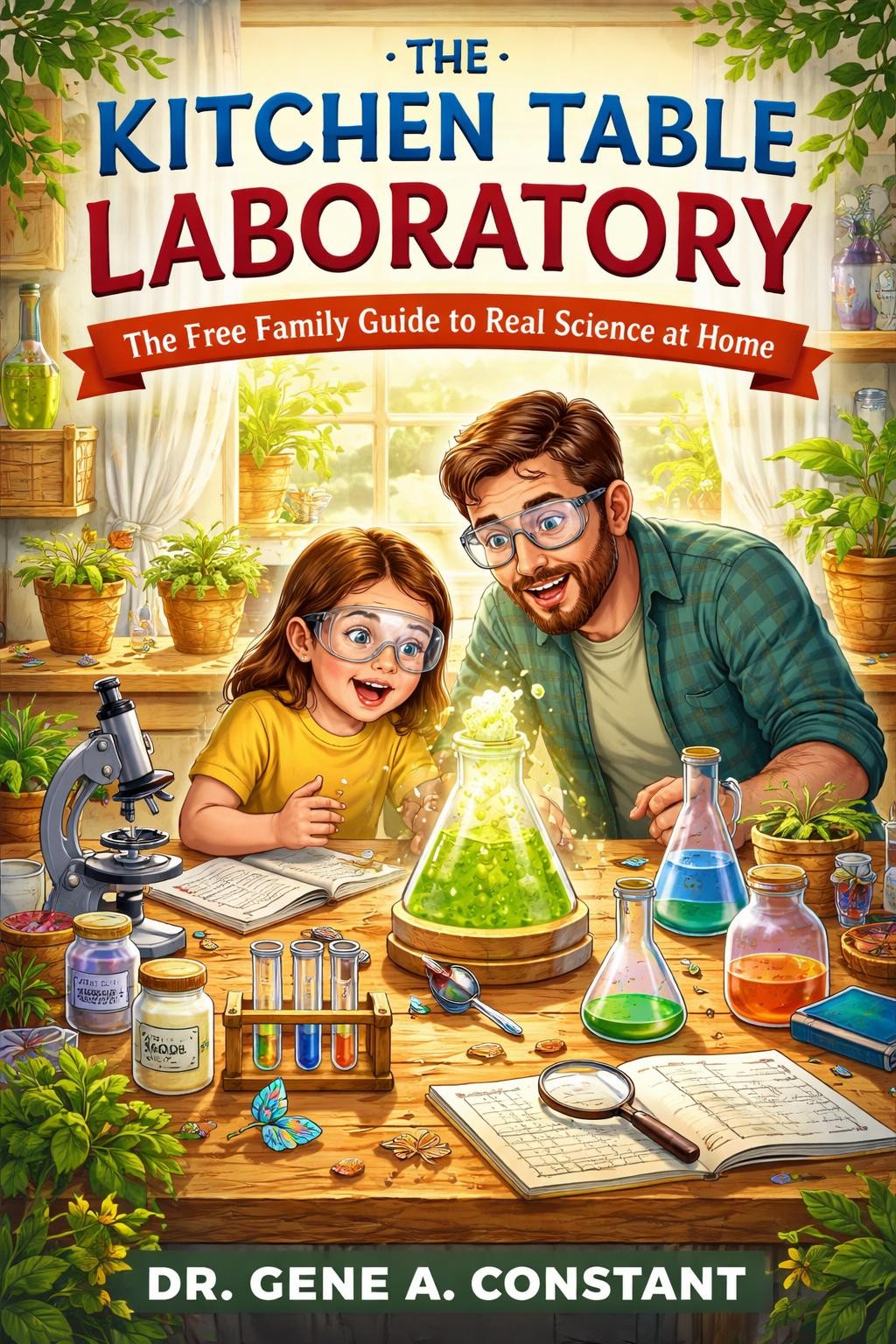
The Kitchen Table Laboratory
The open-and-go family guide: wonder-first early years, the method taken by the hand, grocery-store experiments, and the free ecosystem map nobody hands parents. Start hands-on today with Biology: How Life Works, our free eight-lesson homeschool class.
Take the Free Class →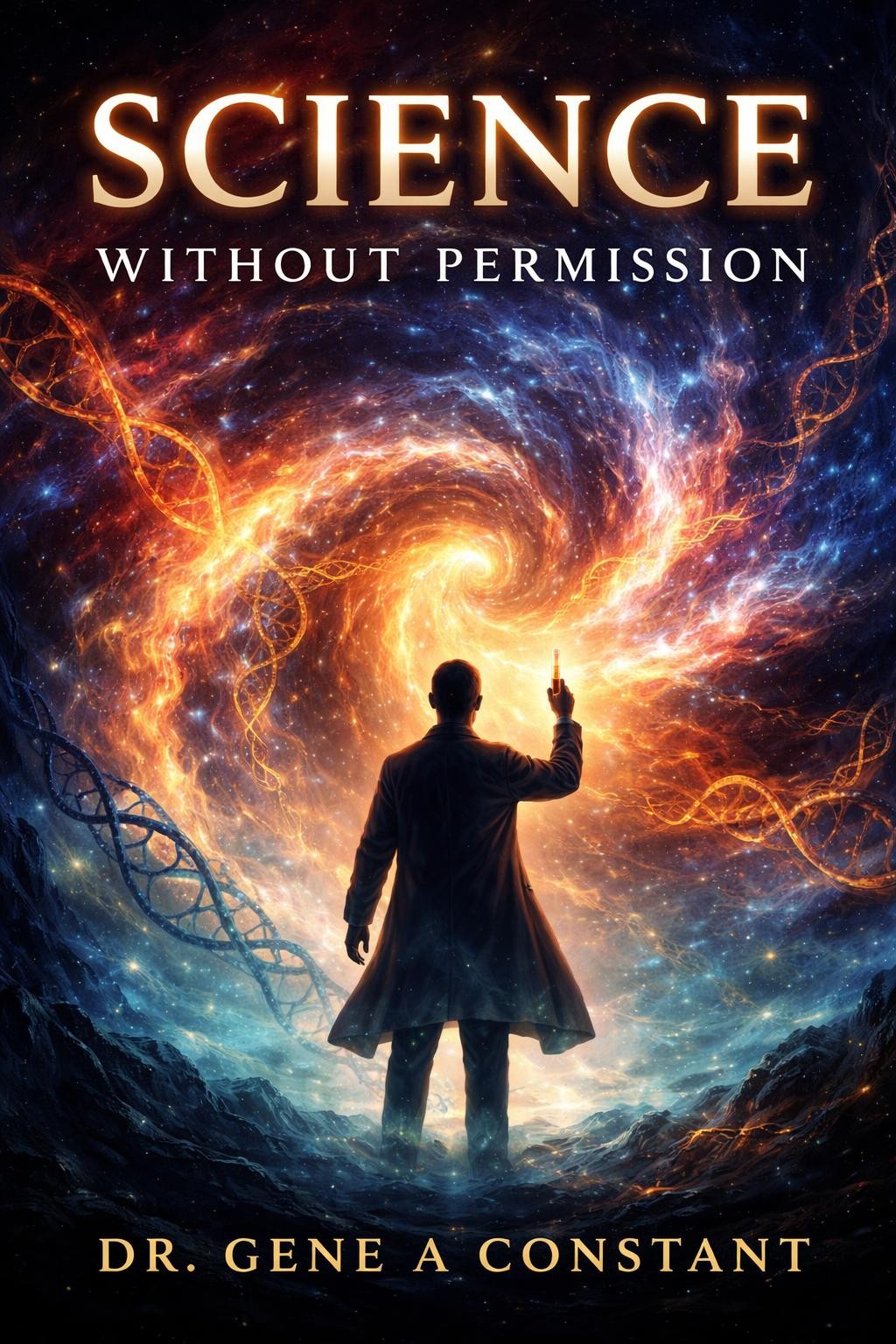 The Flagship
Science Without Permission
The complete operating manual: the ladder, the two-lab truth, the state-by-state rules, and the free pathway through all of it. Nature checks no permission slips.
Get the Book →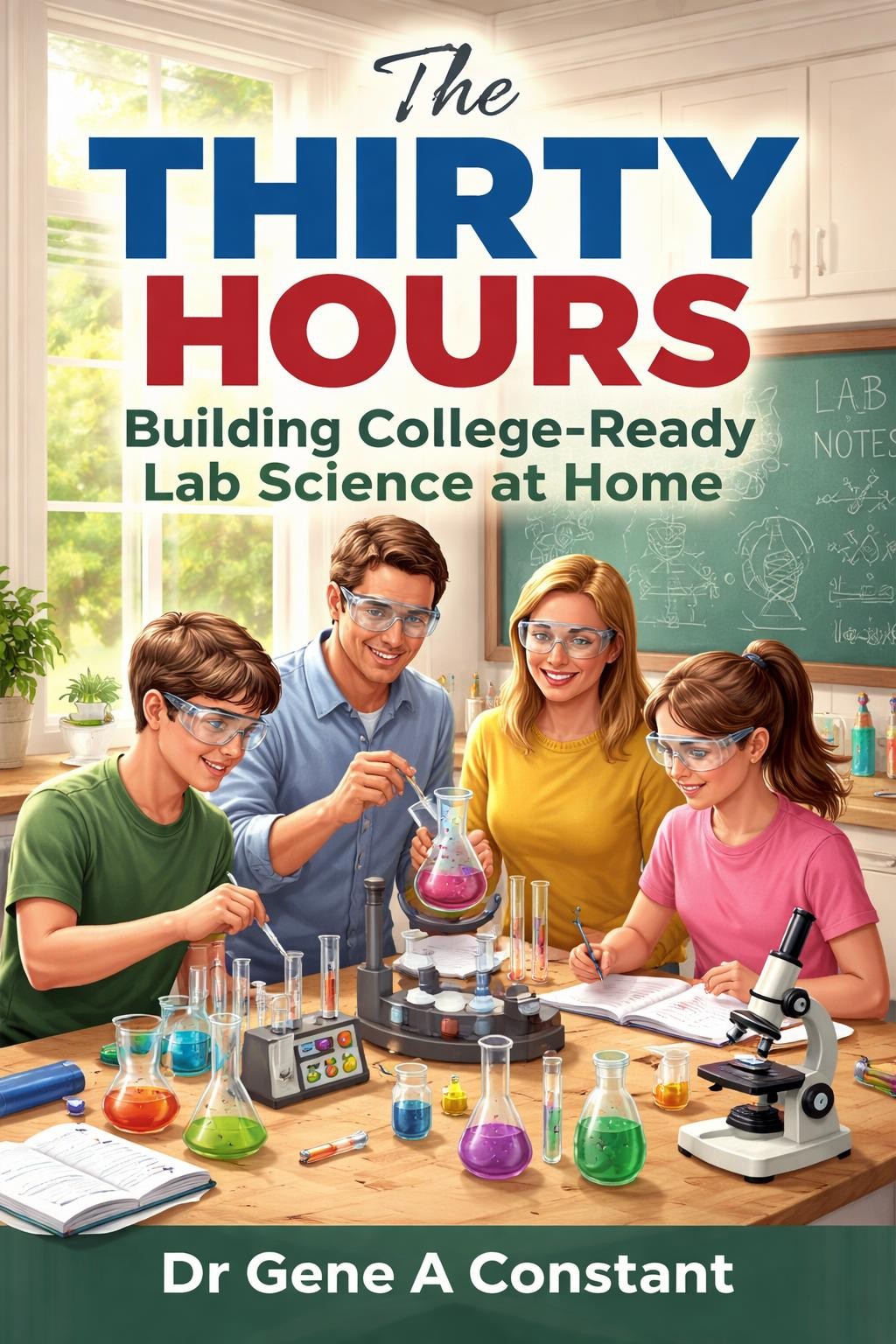 The Summit Volume
The Thirty Hours
The laboratory requirement, solved completely: three roads, fully costed, hour-by-hour sequences, and the paper trail that survives an admissions office.
Get the Book →Signal vs. Swarm.
Six more articles from the GSU Deep Research Vault on separating real research from headlines, and honest argument from grandstanding.
The Misinformation Ecosystem
LLM propaganda swarms, deepfake detection, Community Notes lag. Read →
You Are What You Read
Media capture, the digital twin, Stanford's 3-year shift in one week. Read →
Verbal Resilience
Mill's Harm Principle, antifragility, Lincoln–Douglas — the science of argument. Read →
Architecture of Moral Display
Grandstanding, satiation, and the costly-signaling literature. Read →
Critical Thinking Hub
The whole GSU toolkit for thinking well. Open →
The Deep Research Vault
The full archive, always growing. Open →
The Map Nobody Hands Parents.
A complete free science ecosystem already exists — built by universities and research institutions — but it's scattered. Here is the honest map. None of these are GSU products; all of them are free, legitimate, and worth your family's time.
Free Virtual Laboratories
University-built browser simulations for the physics and chemistry you can't safely cook at home — start with PhET (University of Colorado) →
Citizen Science — Real Research
Your child's backyard observations become research-grade data used by working scientists: iNaturalist → and SciStarter →
The GSU Knowledge Layer
Our free games drill the knowledge under the labs — method, safety, measurement, and the sciences themselves. The Library →
The Science Games.
The Method MachineComing Soon
Run experiments by doing: form the hypothesis, control the variable, read the data, draw the verdict — the scientific method as gameplay.
Lab Safety GauntletComing Soon
Spot the violation, sequence the protocol, earn the goggles.
Cell Climb & Newton's PlaygroundComing Soon
Build the cell from membrane to mitochondria; predict the physics, then test it.
States & ChangesComing Soon
Matter, phase changes, and the particle model — by hand.
Earth Systems ClimbComing Soon
Weather, the rock cycle, the water cycle, plate tectonics — the planet as machinery.
Already on the Shelves
Science-adjacent games live in the Library today — play free, no account. Enter the Library →
GENO AI Tutor available 24/7 — a robot you can actually TALK to.
Ask him why the sky is blue at the exact moment your child asks you — or to walk a lab procedure step by step before the glassware comes out. Out loud, in 83 languages, free, from the corner of every page on this site.
Science FAQ
Does every high school science course need a lab?
No — and this myth causes more homeschool panic than any other. Most colleges require two lab sciences, almost always Biology and Chemistry, with roughly thirty documented hours each as the accepted convention. Selective STEM programs raise the bar; community-college pathways lower it. The Thirty Hours covers the complete solution.
I'm not a scientist. Can I really teach this at home?
Yes. For the first eight grades, children need wonder, observation, and honest questions — no credentials required, and the free Biology class walks your child through it step by step. From middle school onward, the method and the documents matter more than the parent's background, and The Kitchen Table Laboratory teaches you alongside your child.
Are virtual labs legitimate for a transcript?
Often, yes — well-documented use of university-built simulations like PhET is accepted by many colleges as satisfying lab requirements, and they're free. The honest exceptions: some selective STEM programs prefer hands-on hours, which co-ops and microscale home kits cover. Science Without Permission maps which road fits which goal.
Is everything here really free?
Yes — the Biology class, the games, the free-ecosystem map, and GENO tutoring are free forever with no account required. GSU is run by The Foundation for Global Instruction, a 501(c)(3) nonprofit. Two companion books are on Amazon for families who want the complete deep-dive — but the campus costs nothing.
What about my state's homeschool science requirements?
The rules are a patchwork — four tiers from no-notice states to quarterly-report states — and every tier is satisfiable by an organized family with the right documentation habits. The complete state-by-state guidance lives in Science Without Permission, and the free Kitchen-Table Record Kit at /record-kit keeps the records.


