English Is a Code.
Your Family Can Learn to Read It.
Spelling was never about memory. About seventy-four sound-spellings and a short list of honest rules unlock the language — and the method that teaches them is free here, forever. No accounts. No fees. No lists that evaporate by Tuesday.
The Pencil Goes Last.
The science of spelling is settled: words are stored by welding spoken sounds to written letters — sound first, always. The finest commercial programs built on this science cost $150 a level. The science doesn't charge. Neither do we.
HEAR · SAY · TAP
The word is spoken, echoed in the child's own voice, and tapped out sound by sound, finger to thumb — sounds before symbols, every time. This is where the welding happens.
BUILD
Letter tiles — red vowels, blue consonants — make spelling physical before it's ever penciled. The hands learn the code; the brain keeps what the hands learn.
WRITE
Only now does the pencil move. Fifteen minutes a day in this strict order, and "memorizing" gives way to mapping: words that retrieve themselves, for life.
Five Free Books. One Staircase.
Start free at the kitchen table. Build the architecture of every word. Climb to the complete code. Dig in the ruins for the history inside English words. And when the climb is hard, a fifth book walks beside the learner the stairs are toughest on. All five are free to read in your browser, with a Listen button on every chapter.
 Free to Read · Start Here
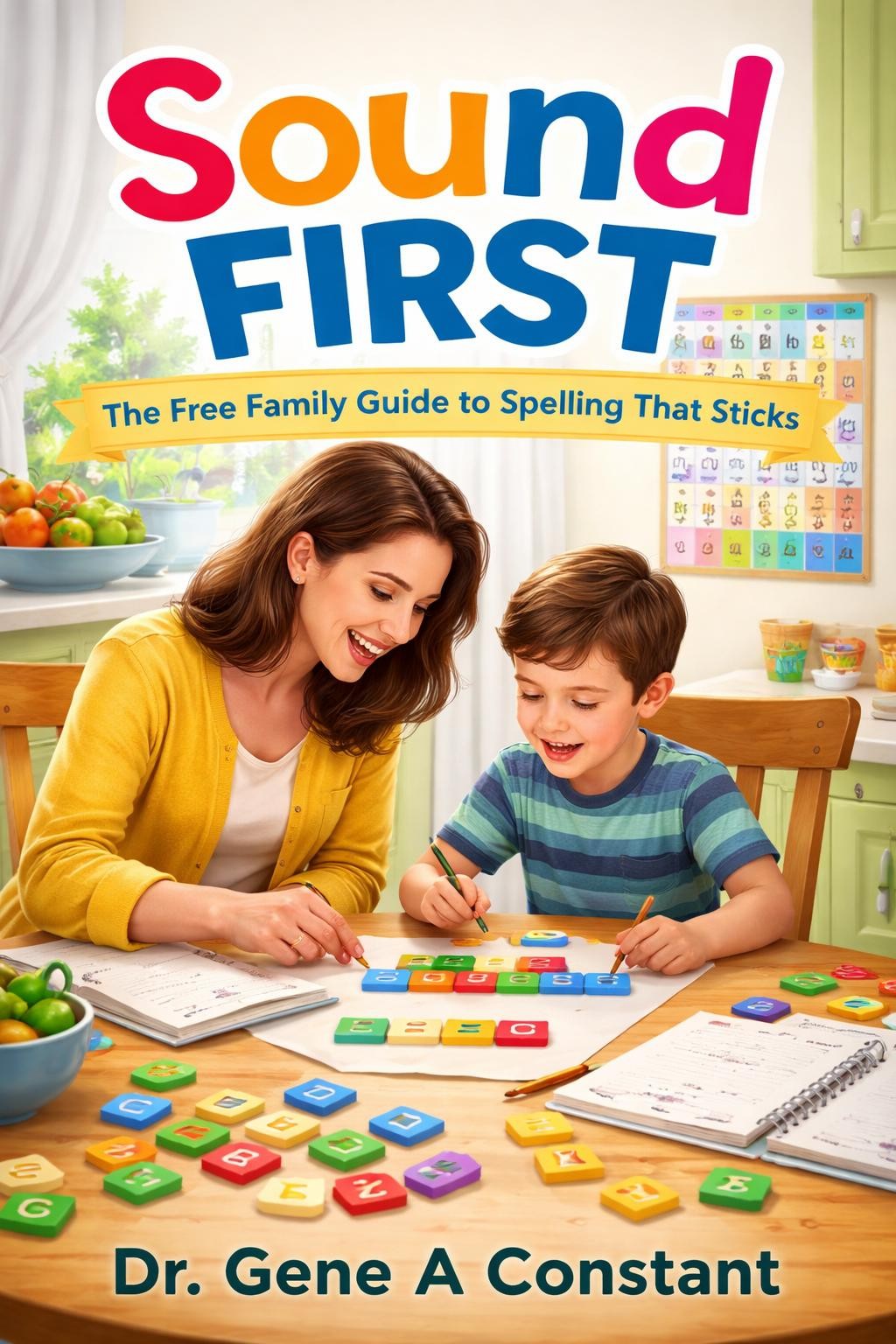
Sound First
The scripted, open-and-go family guide: the five-step method, zero preparation, fifteen minutes a day. Free forever, because literacy shouldn't have a cash register.
Read Free → Play it → Free to Read · The Architecture
Morphones
Morphology is the architectural blueprint of language. See how prefixes, roots, and suffixes click together — so spelling stops being memorization and starts making sense.
Read Free → Play it →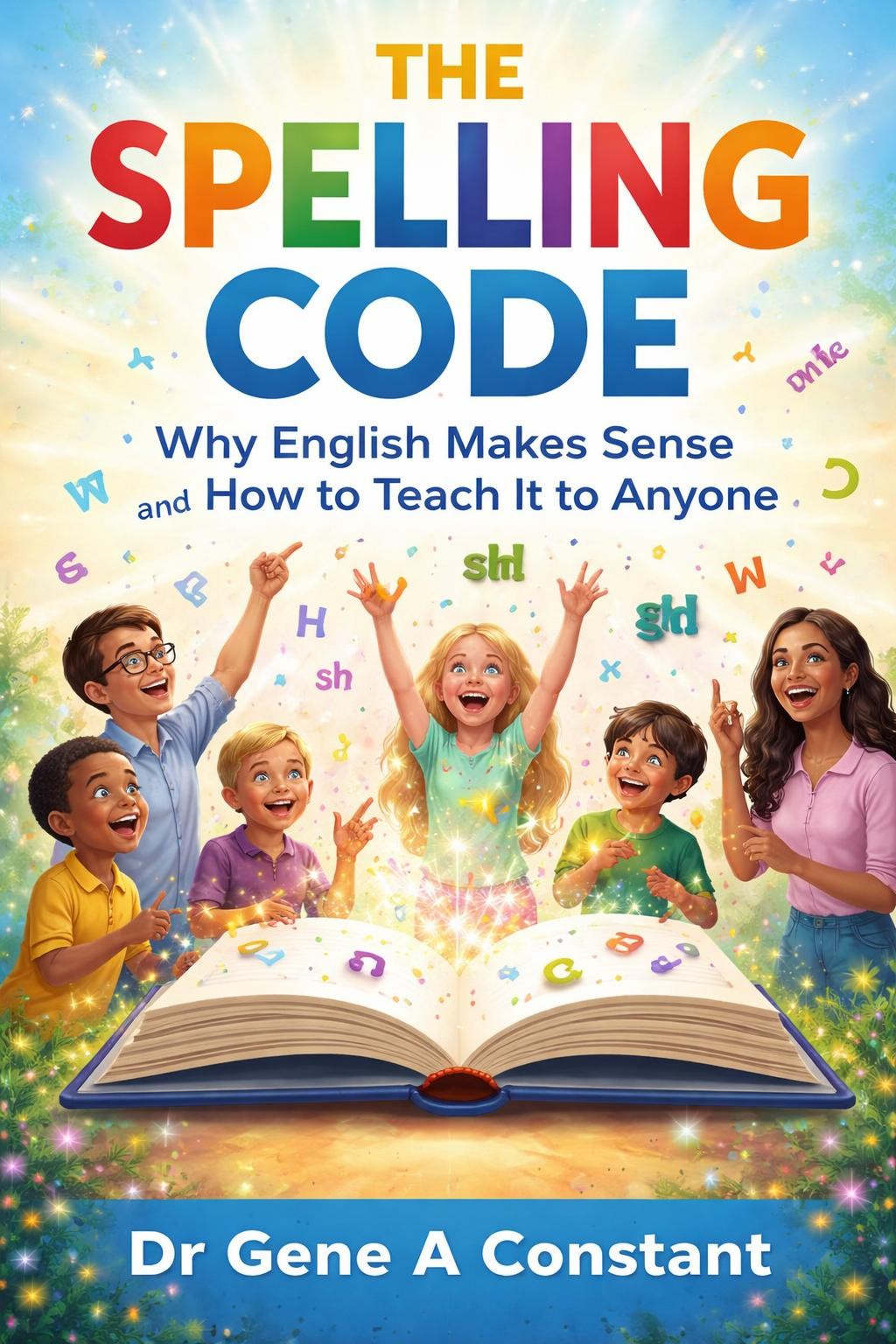 The Flagship
The Spelling Code
Why English makes sense and how to teach it to anyone: the seventy-four keys, the rules behind the "exceptions," and the complete blueprint for every age.
Read Free → Play it →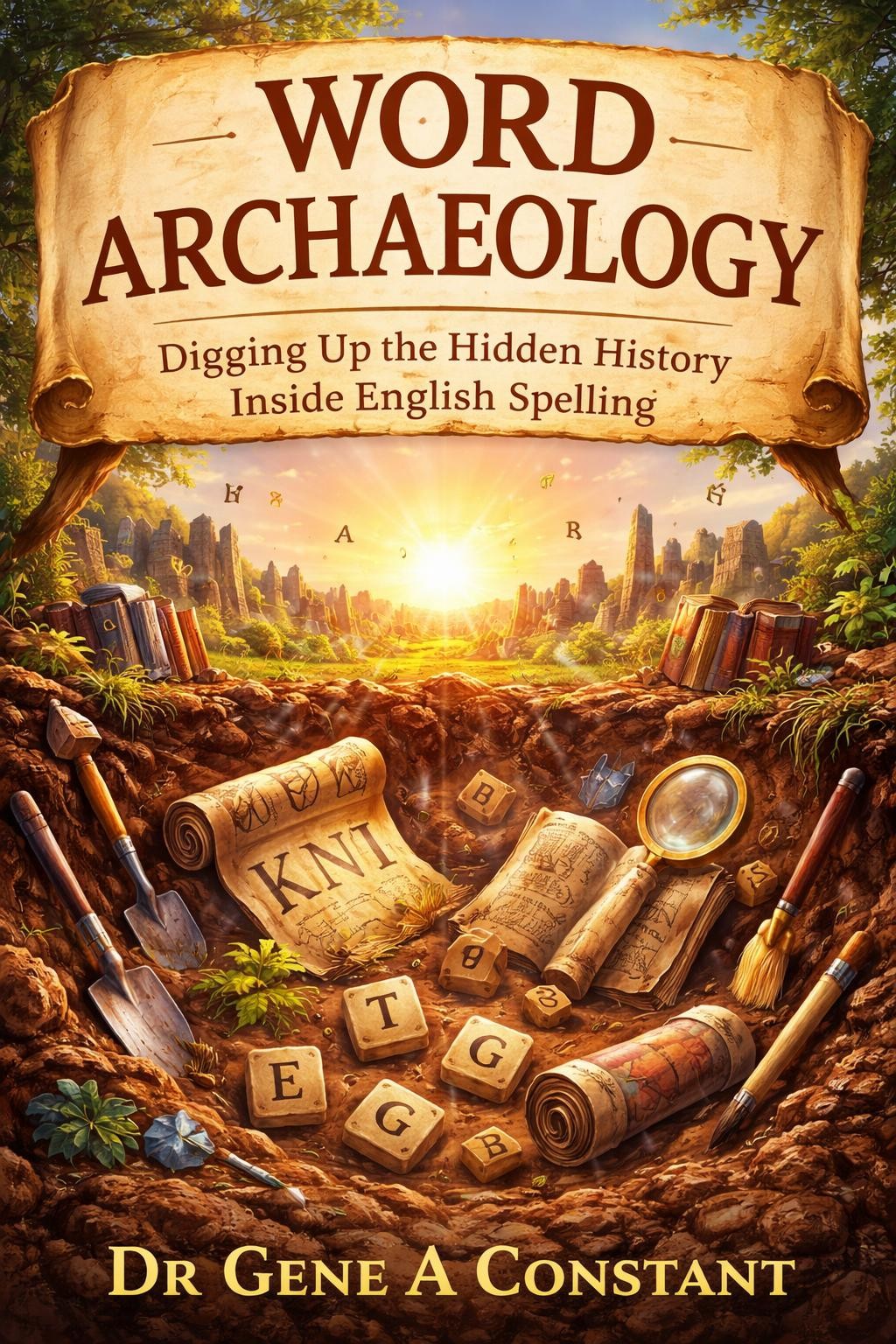 For Older Learners
Word Archaeology
Every English word is a ruin. Morphemes, word sums, Latin bedrock and Greek strata — spelling as excavation, for learners ready to dig.
Read Free → Play it →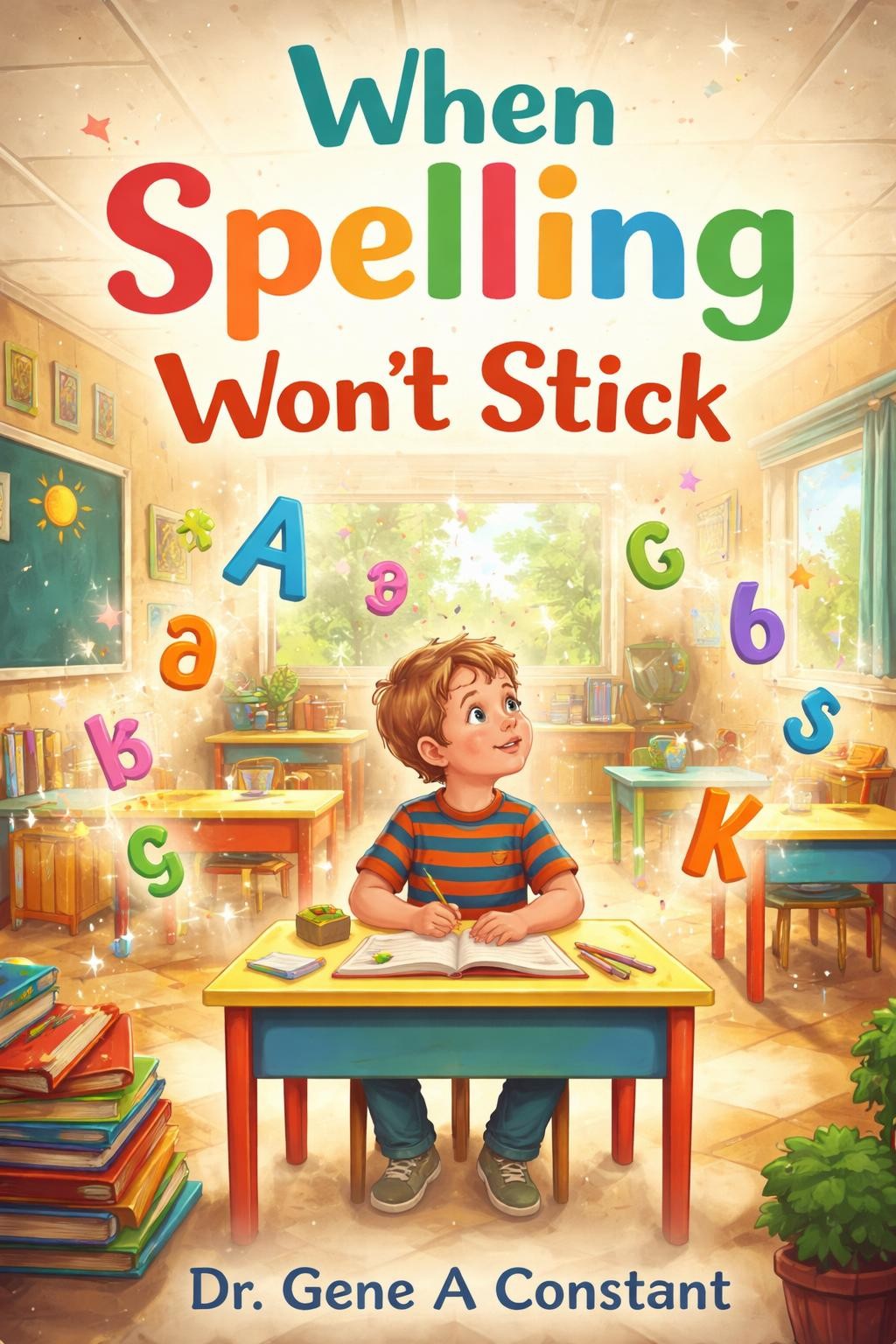 Free to Read · For When It's Hard
When Spelling Won't Stick
For the child who sounds it out, copies it five times, and still misspells it Monday. The dyslexia- and dysgraphia-friendly guide: the same multisensory science the costly programs use, rebuilt as fifteen calm minutes a day — no testing, no shame.
Read Free → Play it →The Spelling Games.
Teach-then-play, infinite, and free — no accounts required. Each game drills one layer of the code.
The Spelling Forge
The core drill: hear it, build it, forge it permanent. Play in the Library →
Word Family Factory
One pattern, a whole family of words — the factory that proves the code repeats. Play in the Library →
Bridge to Big Words
From sounds to syllables to the long words that stop being scary. Play in the Library →
Latin Powerhouse & Greek Connection
The bedrock and the strata: roots that unlock a dozen words at a time. Play in the Library →
Phonogram ForgeComing Soon
All seventy-four keys of English, drilled to reflex — the code, complete.
Tile Builder & Rule ClimbComing Soon
Digital letter tiles for the BUILD step, and the rules — FLOSS, Double, Drop, Change — as an infinite climb.
Earn the Spelling Certification.
When your speller is ready, sit the free Spellification Comprehension Certification — thirty questions, earn Silver or Gold, and walk away with a serial-numbered certificate anyone can verify by number. No account, no fee, no catch.
Take the Spelling Certification →
GENO AI Tutor available 24/7 — a tutor you can actually TALK to.
Ask him how to say a word, explain any rule on this page, or quiz your speller — out loud, in 83 languages, free, from the corner of every page on this site.
Spellification FAQ
Is English spelling really logical? Everyone says it's full of exceptions.
Roughly seventy-four sound-spellings cover the overwhelming majority of the language, and a short list of real rules governs most of the rest. The famous "exceptions" usually dissolve when the actual rule is taught — *have* ends in E because English words don't end in V. That's law, not chaos, and a seven-year-old can learn it in an afternoon.
What is the sound-first method?
Five steps in strict order: HEAR the word, SAY it back, TAP its sounds finger-to-thumb, BUILD it with letter tiles, and only then WRITE it. The order matters because the brain stores words by mapping spoken sounds to letters — the method scientists call orthographic mapping. Fifteen minutes a day is enough.
Is everything here really free?
Yes — all five books are free to read in your browser, and every game and GENO tutoring are free forever, with no account required. Global Sovereign University is run by The Foundation for Global Instruction, a 501(c)(3) nonprofit. The books are also sold on Amazon for families who'd rather hold them, and every sale funds the free learning.
Will this work for my older child — or for me, an adult?
Yes. The method was forged a century ago for struggling learners and turned out to be the best way to teach everyone, at any age. Older learners and adults often climb fastest, and Word Archaeology extends the method into roots and word history — where spelling becomes genuinely fascinating.
My child has been labeled a "bad speller." Can this help?
There is no such talent as spelling, dealt at birth like brown eyes — there is only code that was taught or code that wasn't. The sound-first method descends directly from instruction built to rescue dyslexic learners; it is explicit, systematic, and multisensory. Start with the free guide, fifteen minutes a day, and let the method make the argument.


