Lesson 5 of 8 · Chapter 5
Branch Electrical and Fixture Safety
“The bathroom outlet does not work.” “The kitchen breaker keeps tripping.” “The light flickers.” These are among the most common calls in an apartment, and the most tempting to close with a reset. But a protective device that has opened may have responded correctly to a hazardous condition. The work is to find out why, stay inside the technician’s authorized scope, and leave the circuit safer than it was found.
Step one
Read the material
Five ideas. The first is what GFCI and AFCI devices do, and the hazards that turn a dead outlet into a safety event. The second is the disciplined reset. The third is the breaker panel and the limits of a technician’s scope there. The fourth is load, and why a breaker that keeps tripping is never fixed with a bigger breaker. The last is wall devices and lighting, where the visible fault is often not the real one.
Idea one
Protective devices and the hazard questions
A GFCI reduces shock risk by watching the balance of current on a circuit and opening fast when current finds an unintended path, through water, damaged insulation or a person. An AFCI, usually a breaker, watches for the electrical arcing that damaged cords, loose connections and failing wiring produce. Both can disable outlets and equipment in another room. The technician must resist the temptation to treat every complaint as a simple reset. A protective device that has opened may have responded correctly to a hazardous condition.
Intake starts with hazards: smoke, a burning odor, sparking, buzzing, heat or discoloration at an outlet or switch, melted plastic, a damaged cord, water near electrical equipment, or anyone who has felt a shock or tingling. Any of these changes the ticket from a routine loss-of-power complaint into a potential electrical safety event. The resident stops using the outlet or circuit, and should not be instructed to keep pressing reset buttons, plug and unplug equipment repeatedly, remove outlet covers, or use extension cords as a permanent substitute for failed power.
Smoke, active sparking, fire or a strong burning odor means the property’s emergency procedure. Water on an outlet, panel or cord makes the area unsafe: technicians never stand in water to isolate power, the water source is contained first, and a qualified electrician may be needed before the circuit returns to service.
Idea two
The disciplined reset
A dead receptacle is often protected by a GFCI somewhere else: one bathroom’s GFCI may feed another bathroom, a garage, exterior outlets, or the receptacle under a kitchen sink. So a dead outlet is not assumed to be a failed outlet. And the ticket history matters: a kitchen GFCI that has tripped three times this month with nothing plugged in requires more than a reset.
Before resetting, unplug portable items on the circuit, so an appliance fault can be separated from a wiring or device fault, and inspect the GFCI for cracks, heat damage, moisture or a reset button that will not stay in. Resetting should be deliberate, not repetitive. Press it once, test it with its test button, and watch. A GFCI that will not reset may have failed or may detect a downstream fault. It should not be forced. A GFCI that resets but immediately trips again requires additional investigation; pressing reset again and again in hopes it will hold exposes residents to an unresolved hazard.
If the circuit holds with everything unplugged and trips when one appliance is connected, that appliance is the evidence: remove it from service and explain it respectfully. And never trade protection for convenience. Technicians should never replace a standard breaker with another type, alter panel wiring, defeat an AFCI or GFCI function, install oversized breakers, or bypass a protective device. Restoring power without protection is not a service solution.
Idea three
The breaker panel and the limits of scope
The panel is not simply a box of switches. It is where power divides into circuits and where warning signs become visible. The goal is not to make every maintenance technician into an electrician. It is to recognize normal conditions, identify warning signs, protect residents and escalate accurately. In many properties a technician may open the panel door, read labels, check breaker positions and reset a breaker once after assessment. Removing the dead-front cover, testing energized conductors, changing breakers or tightening lugs may require a qualified electrician.
Scope the outage first: one receptacle, one room, the whole apartment, or several apartments at once, which points to a building-level condition. Keep the panel accessible; one hidden behind storage delays an emergency response. Water deserves particular attention: do not assume that drying the exterior of the panel makes it safe. A panel exposed to significant moisture needs a qualified electrician before normal service returns.
Labels matter. “Lights” or “plugs” is not an adequate directory entry when a technician must isolate a circuit quickly. A tripped breaker may not look off at all; its handle may sit only slightly toward center. It generally must be moved firmly to full off and then back on, and only after asking what was running when it opened.
Idea four
Load, and why a bigger breaker is never the fix
A circuit serves a limited load. A kettle, toaster, microwave and air fryer on one kitchen small-appliance circuit can open its breaker to keep the wires from overheating. But technicians should not assume every overload is resident misuse: ordinary appliances on a poorly labeled or aging layout can do it too. If the breaker holds after one reset and several heating appliances were running together, explain using them one at a time. If it opens again with one ordinary appliance or no apparent load, investigate further.
The breaker protects the wire, not the resident’s convenience. Installing a larger breaker because a circuit keeps tripping, without confirming the conductor size and circuit design, can let the wiring overheat before the breaker opens.
Load balancing across the two legs of a 120/240-volt panel is a qualified evaluation with load calculations, not a field adjustment. Moving breakers to “balance” a panel by trial and error can break multi-wire circuits and violate the panel’s requirements. Document suspected imbalance and recurring overload patterns, and escalate. If a breaker keeps tripping, say so plainly: leaving it off protects the circuit while qualified evaluation is arranged.
Idea five
Wall devices and lighting
The visible device is where the resident notices the problem, not always where it lives. A dead receptacle may sit below a tripped GFCI; a flickering light with a burning odor or heat at the switch is not a lamp problem. A replacement outlet that fails a month later should prompt a broader circuit inspection rather than another quick swap.
A loose receptacle deserves more than a tightened cover plate. The cover plate is not designed to secure the device itself. A device that moves when a plug is pulled stresses its connections and invites overheating or arcing. De-energize the correct circuit and verify absence of voltage with approved equipment, because turning off a wall switch does not necessarily remove power from all conductors in a box. Scorched wiring, damaged insulation, aluminum conductors or multiple circuits in a box are escalated. A standard receptacle should not be substituted for GFCI protection where GFCI protection is required.
For lighting, start simple: the switch, the lamp and its compatibility. LEDs can flicker or buzz on an incompatible dimmer or in an enclosed fixture that traps heat, and a lamp should not exceed the fixture’s marked maximum wattage. Several lights flickering together points upstream. A ceiling fixture with water staining means a leak to find first. And technicians should not disable an alarm merely to stop a nuisance sound. A note that says only “reset GFCI” does not provide enough information if the same issue returns.
Step two
Work it with your hands on it
The Dead Bathroom Outlet. One visit to unit 312: a dead outlet whose protection is in another room, a GFCI that will not hold, a kitchen breaker, and a loose bedroom receptacle. Decide each one the way the chapter asks. The circuit map shows what is actually protected, what is live, and what has been defeated.
The call. Unit 312: “The outlet in my second bathroom does not work.” What happens at intake?
The dead outlet. It shows no damage. The GFCI in the primary bathroom is tripped.
Before the reset. A hair dryer and a phone charger are plugged into the protected outlets.
The reset. The GFCI resets, then trips again at once.
The evidence. With everything unplugged the GFCI holds. It trips the moment the hair dryer is plugged in.
The kitchen. The resident adds that the kitchen breaker trips when the kettle, toaster and air fryer run together. It holds after one reset.
The bedroom. A receptacle moves in the wall when a plug is pulled out.
The work order.
Hands on it, off the screen. Find the GFCI outlets where you live, usually in the bathrooms, kitchen, laundry or outside. Press TEST on one and walk through the home noting every outlet that goes dead. Then press RESET. You have just mapped what that device protects.
Open your breaker panel door, without removing any cover. Read the directory. Could someone isolate your kitchen outlets from it quickly? If an entry just says “plugs”, write down what it should say.
Step three
Prove you understood it
One question per idea, a new situation every time. Miss one and you are sent back to the idea it was testing.
All five solid.
You can treat a tripped protective device as evidence, find the GFCI that protects a dead outlet, reset deliberately and let the evidence find the faulty appliance, stay within a technician’s panel scope, explain an overload without blaming anyone, refuse the bigger breaker, and secure a loose device the right way. Chapter six takes up water intrusion and IoT shutoffs.
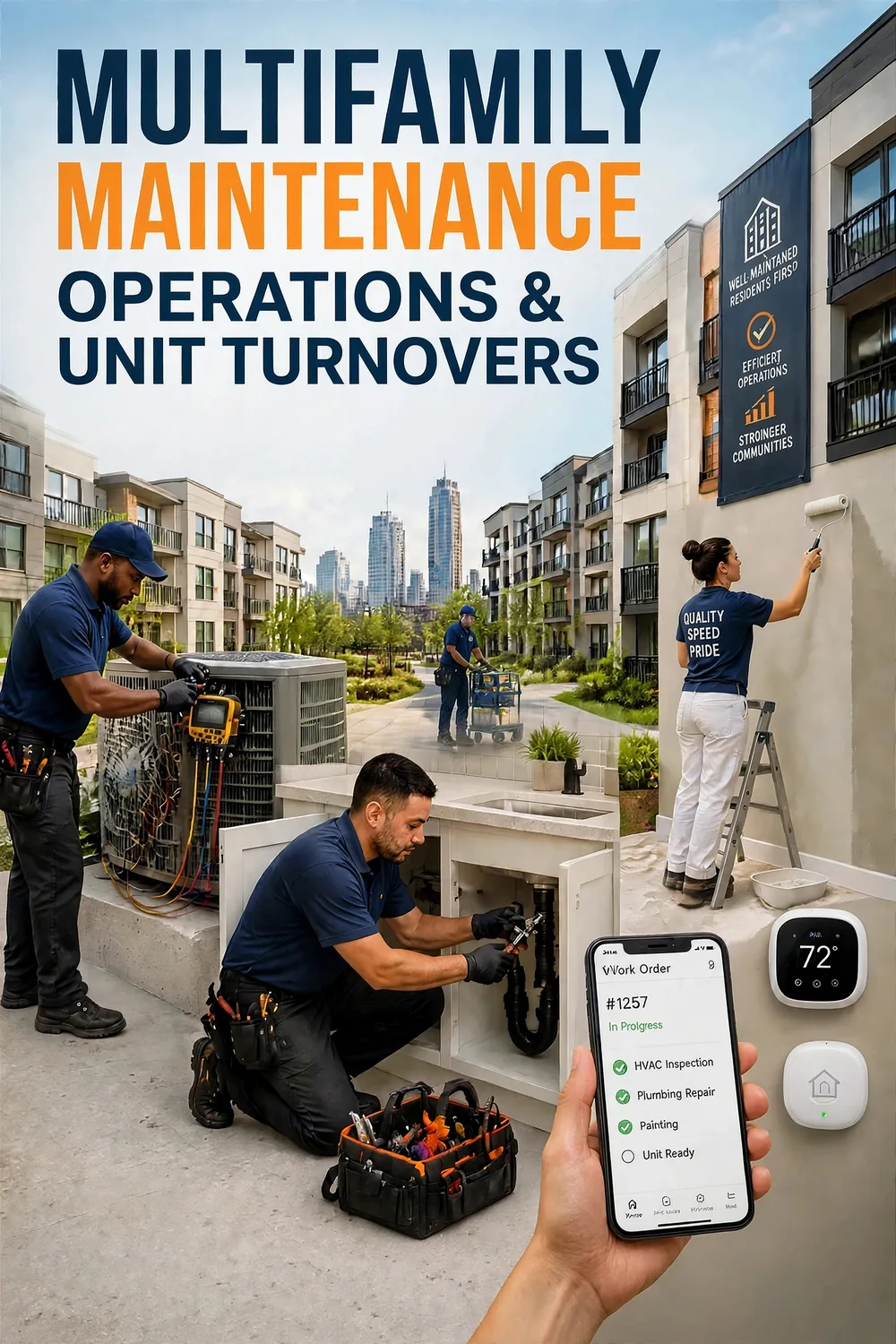
Multifamily Maintenance Operations & Unit Turnovers
Lesson five of eight, from chapter five. Written by our founder, Dr. Gene A Constant, and donated to the Foundation. Published by Global Sovereign University Press.
Buy a copy - it funds a free seatGSU is a 501(c)(3) nonprofit and book sales are its only income. A purchase is not a tax-deductible donation. As an Amazon Associate, GSU earns from qualifying purchases. This lesson is free and always will be.