Lesson 2 of 12 · Chapter 2
The Refrigeration Cycle
Lesson one taught you to trace heat through a building. This one follows that heat into the equipment: where it enters the refrigerant, where work is added, where it leaves, and how to read the cycle like a map instead of a poster.
Step one
Read the material
Five ideas. The first names the three stations. The next two explain the trick that makes the cycle work: phase change, controlled by pressure. The last two turn that into what you measure and how you read it.
Idea one
Three stations: evaporator, compressor, condenser
In cooling mode the system picks up heat from indoor air and rejects it outdoors. It does that by circulating a refrigerant through three components that do most of the heavy lifting. The evaporator is the indoor coil, a controlled boiling environment. Its job is not simply to be cold; it must be cold enough, across enough surface area, with enough airflow, to absorb heat at the required rate. It also protects the compressor, because by the outlet the refrigerant should be fully vapour. Liquid does not compress, and a compressor that tries can break valves or wash oil out of bearings.
The compressor is the work input. It takes low-pressure vapour and squeezes it into high-pressure, high-temperature vapour, which is what lets the condenser push heat out even on a brutally hot day. Many beginners think the compressor creates heat; it adds energy by doing mechanical work. Compressors run hot because compression is work, so a hot compressor is not automatically failing. The skill is telling normal hot from abnormal hot.
The condenser is the outdoor coil, where the refrigerant condenses to reject heat. It rejects the building’s heat plus the energy paid for at the compressor, which is why the air leaving the top of a running outdoor unit is hotter than the air around it. The compressor does not remove heat; it enables the direction of heat flow you need by adding work.
Idea two
Phase change is the trick
Stop picturing refrigerant as “cold stuff” and start picturing it as a moving container for energy. When a substance changes phase, it can absorb or release a lot of heat with little change in temperature. That is latent heat, the same idea you met with moisture on the coil in lesson one.
In the evaporator the refrigerant boils from liquid to vapour while absorbing heat from indoor air. In the condenser it condenses from vapour to liquid while releasing heat outdoors. The big heat transfer happens during the phase change, not during the simple warming or cooling of a liquid or vapor. That is why the evaporator can hold a stable cold surface while the load changes minute to minute: the evaporator is not mainly cooling down refrigerant, it is boiling it.
And it is why the refrigerant is not being used up. Its job is to change state and carry energy, not to be consumed.
Idea three
Pressure sets the boiling point
Refrigerants have a saturation relationship: at a given pressure, they have a corresponding saturation temperature at which boiling or condensing occurs. Raise the pressure and the saturation temperature rises; lower it and it falls. So pressure is not just a number you record. It sets the temperature level at which the refrigerant can absorb or reject heat.
Indoors you want low evaporating pressure, so the refrigerant boils cold enough to pull heat out of the air. Outdoors you want high condensing pressure, so it condenses hot enough above outdoor air to push heat out, because heat moves from hot to cold, not by preference but by law. The compressor maintains that pressure difference. The low side runs from the metering device outlet through the evaporator to the compressor inlet; the high side runs from the compressor discharge through the condenser to the metering device inlet.
The metering device creates the pressure drop that sets up cold boiling again. Some liquid flashes to vapour right after it, not because it picked up heat from the house, but because the refrigerant is rebalancing at the lower pressure. That flash gas is a normal consequence of the pressure drop, not a fault.
Idea four
Superheat and subcooling: evidence the phase change finished
At the evaporator outlet the refrigerant should be vapour, slightly warmed above its boiling temperature. That small offset is superheat, and it is evidence that the phase change from liquid to vapor has finished before the refrigerant returns to the compressor. It protects against liquid floodback, one of the fastest ways to turn “it runs but it’s not cooling” into “it ran until it didn’t.”
At the condenser outlet the refrigerant should be liquid, cooled a little below its condensing temperature. That is subcooling: evidence the condenser finished condensing and fed a solid column of liquid to the metering device. You will learn to calculate both later. For now, know what they mean.
The same thinking applies to a frozen coil. Low airflow means less heat reaches the refrigerant, so the coil can drop below freezing; low charge can underfeed the coil and ice its inlet. The ice itself is not a diagnosis. The reason the coil got that cold can be airflow, charge, restriction or controls.
Idea five
Reading the map, not the poster
The cycle diagram is only useful if you read it like a map instead of a poster. Place four core measurements on it: suction pressure, head pressure, suction line temperature and liquid line temperature. Then compare what the diagram predicts with what you see.
If suction pressure is low and superheat is high, the evaporator is not being fed enough refrigerant or is seeing less load: low charge, a liquid line restriction, a metering device underfeeding, or low airflow. If suction is high and superheat low, it is being fed too generously: an overfeeding metering device, an overcharge depending on design, very high indoor load, or airflow too high. Low subcooling points toward low charge, flash gas in the liquid line, or a condenser not completing condensation; high subcooling toward excess refrigerant backing up in the condenser or a liquid line restriction. The diagram does not hand you a single answer. It narrows the search, and it keeps you from blaming the compressor by default.
A dirty condenser shows the chain in action: heat rejection is restricted, so the refrigerant runs at a higher saturation temperature and pressure, and the compressor pays with higher head pressure and amp draw. You did not change the laws; you increased resistance.
Step two
Work it with your hands on it
The Cycle Map. Set the two readings a technician takes at the evaporator outlet and the condenser outlet, and watch where the map points. It names only what the chapter names. Where both readings agree it shows the overlap, and even then it tells you to confirm, not conclude.
Suction pressure and superheat
Subcooling at the condenser outlet
Hands on it, off the screen. On a hot day with your air conditioner running, find the two copper lines at the outdoor unit. Without touching anything electrical, notice that the larger insulated line is cool and may sweat, and the smaller one is warm. You are feeling the low side and the high side.
Then stand beside the unit and feel the air leaving the top. It is hotter than the air around you: your house’s heat plus the energy you paid the compressor to add.
Step three
Prove you understood it
One question per idea, a new situation every time. Miss one and you are sent back to the idea it was testing.
All five solid.
You can name what each station does, explain why phase change and pressure make the cycle work, say what superheat and subcooling are evidence of, and read the map without blaming the compressor by default. Next: back to the class for lesson three.
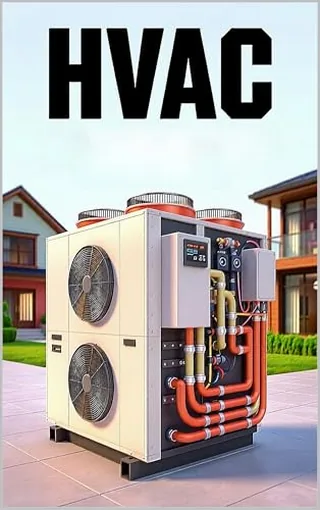
The HVAC Apprentice’s Field Guide
Lesson two of twelve, from chapter two. Written by our founder, Dr. Gene A Constant, and donated to the Foundation. Published by Global Sovereign University Press.
Buy a copy — it funds a free seatGSU is a 501(c)(3) nonprofit and book sales are its only income. A purchase is not a tax-deductible donation. This lesson is free and always will be.