Lesson 3 of 20 · Chapter 3
The Eight Pillars of Modern TPM
TPM is often drawn as a building held up by eight pillars. This chapter of the book goes deep on the first three, the ones every plant starts with: Autonomous Maintenance (operators caring for their machines), Planned Maintenance (maintenance as a reliability system, not a calendar), and Focused Improvement (teams that remove chronic losses for good). This lesson follows the book and teaches those three, starting with the floor they all stand on: 5S. The later pillars come in later lessons.
Choose how you want to learn
You can change this any time. Every level does the same hands-on steps. Press Listen on any part to hear it read aloud.
- 1 · The 5S floor
- 2 · A machine that talks
- 3 · Boundaries and time
- 4 · Planned maintenance
- 5 · Three horizons
- 6 · Focused improvement
- 7 · Try it at work
- 8 · Your card
- 9 · Check yourself
Part 1
The floor under every pillar: 5S
Before any pillar, there is a floor. In most TPM programmes that floor is 5S: five habits that keep a work area organised. The names come from five Japanese words.
Sort: take away what does not belong at the machine. Set in order: give every tool, part and manual a fixed home. Shine: clean it every day. Standardize: write down and show what the clean, sorted area should look like. Sustain: keep it from sliding back.
Shine matters most for maintenance, because in TPM cleaning is inspection. The person who wipes down a gearbox is the first to see the oil seep, the cracked guard or the loose bolt.
The chapter is clear that 5S is not tidiness for its own sake. A cluttered, dirty area hides abnormality, and TPM is built on making abnormality visible. The order matters too: standardization turns the first three habits into a written and visual baseline, and sustain is the discipline that stops that baseline sliding back.
Skipping the floor has a cost. A plant that goes straight to sensors usually finds it has only put instruments on the mess: the data watches the same grime that hides the leak. The pillars in the rest of this lesson assume the floor has already been swept.
“Every pillar in this chapter stands on a floor, and in most TPM programs that floor is 5S: five habits of workplace organization named for five Japanese words.”
“Seiso, or shine, is daily cleaning, and in TPM cleaning is inspection: the operator who wipes down a gearbox is the first person to see the oil seep, the cracked guard, or the loose fastener.”
“5S is not housekeeping for its own sake. A cluttered, dirty work area hides abnormality, and TPM is built on making abnormality visible. A plant that skips 5S and goes straight to sensors usually discovers that it has instrumented the mess.”
Read the whole chapter free in the book reader.
Press the five steps in any order. Then try “One month later” and “Skip to sensors”.
Part 2
Autonomous Maintenance: the machine is always talking
A machine is not a black box that either works or breaks. It is always telling you something: through heat, vibration, sound, smell, leaks, dust, loose bolts, and changes in how it cycles.
Autonomous Maintenance teaches the people who run the machine every day to listen. Their daily care (clean, check, tighten, look) is how the plant hears those signals early.
That is why cleaning in TPM is not a chore. It is a check-up.
The old model produced heroic recoveries, but also chronic loss: micro-stoppages never recorded, settings drifting until defects appear, small leaks and looseness quietly maturing into breakdowns. Autonomous Maintenance is the foundation of restore, stabilize, improve: without daily restoration and detection, the plant never gets the steady baseline that deeper reliability work needs.
Its Japanese name is Jishu Hozen. Over time it becomes a capability-building system: operators learn what components do, what early failure looks like, and how to describe a problem well, which makes maintenance diagnosis faster.
“Autonomous Maintenance begins with a mindset shift: the machine is not a black box that either runs or fails.”
“It communicates through heat, vibration, sound, smell, leaks, friction, contamination, loose fasteners, worn guides, inconsistent sensor signals, and subtle changes in cycle behavior.”
“Autonomous Maintenance treats cleaning as a diagnostic act.”
Read the whole chapter free in the book reader.
Tap each part of the machine to hear what it is telling you.
Part 3
Ownership is not dumping
Operators do routine, low-risk care: cleaning, checking levels, tightening what they are trained to tighten, spotting problems and tagging them.
They do not take on work that needs lockout, special tools, diagnosis or safety exposure. That stays with maintenance. Handing it to operators is not “ownership,” it is dumping.
Two more rules. Every tag must get an answer, or people stop tagging. And care time must be protected, not something done “if we have time.”
Defects found by operators must be triaged in a visible system: some are quick “restore basic condition” items, others are deeper recurring issues that should trigger planned maintenance or focused improvement. When tags are logged but never answered, tagging becomes theatre and the old wall between production and maintenance quickly returns.
Protected time matters because the days when there is spare time are exactly the days when the equipment is already stable. Digital tools can show whether care routines are being protected or sacrificed, but if standards, boundaries and response loops are not agreed first, digitising simply makes the inconsistency faster.
“Autonomous Maintenance fails when the organization confuses ownership with dumping.”
“When it is not, tagging becomes theater, and the old wall quietly returns.”
“Autonomous Maintenance cannot be something operators do “if we have time,” because the days when “we have time” are exactly the days when equipment is already stable.”
Six jobs on one line. Who should do each one?
Part 4
Planned Maintenance is a reliability system, not a calendar
Many plants think “planned maintenance” means a calendar: do this task every month because the list says so. TPM means something bigger: a system that controls how machines fail.
A big part of it is doing the job right. A good job plan lists the steps, tools, measurements and checks, not just “replace the part.”
Why? Because many breakdowns are caused by maintenance itself: a motor lined up by eye, a belt too tight, too much grease, a loose wire. Each one is a future failure put in by accident.
If the same failure returns after the PM, the PM did not control the failure mode. So planned maintenance raises the quality of maintenance work to the level of production quality: explicit job plans with tolerances, and verification built in so restarts are predictable.
It also needs coordination: the scheduler protects the window, operations commits to releasing the machine on time, stores kits the parts, and planning makes sure the job can actually be done when the machine is free.
“Planned Maintenance is not a schedule; it is a reliability system.”
“Many chronic breakdowns are not caused by lack of effort, but by maintenance-induced defects.”
Build the job plan for replacing a motor. Every step you leave out is a future failure you put in.
Part 5
The three horizons of planned maintenance
Planned maintenance works on three time horizons at once.
Horizon one: daily and weekly stability work, fixing the tagged defects and small problems that keep the basics right.
Horizon two: periodic jobs that are truly needed because parts wear out and age.
Horizon three: condition-based and predictive work, using signs like vibration and temperature to act just before failure.
Ignore horizon one and the plant slides back fast: leaks return, sensors get dirty, looseness grows, and operators go back to clearing faults as normal. Horizon two is where classic preventive maintenance still has value, but only when it is connected to evidence rather than tradition.
The horizons shift as the other pillars work. When Autonomous Maintenance improves basic conditions, frequent intrusive checks can give way to lighter condition monitoring; when a focused team removes a chronic jam, the PM that existed only to cope with it can be reduced or eliminated.
“A useful way to think about Planned Maintenance is that it has three horizons that must work together.”
“The first horizon is daily and weekly stability work.”
“The third horizon is condition-based and predictive work, which modern TPM increasingly enables but never excuses.”
Six pieces of maintenance work. Put each on its horizon.
Part 6
Focused Improvement: remove chronic losses for good
Even a well-cared-for machine can keep losing time to the same problem over and over. Cleaning more does not fix it. Scheduling better does not fix it.
Focused Improvement picks one specific loss on one machine and sends a small team from different departments to remove its causes for good. They go and watch it happen, not argue about it in a meeting room.
These problems survive because they sit between departments, where nobody owns them. The team’s job is to own it.
Its Japanese name is Kobetsu Kaizen. It starts by defining the problem in operational terms, not opinions: “reduce nuisance trips from eight events a week to one,” not “improve reliability.” It separates symptoms from causes, and causes from root causes.
It depends on the first two pillars: if basic conditions are poor, the team chases noise. And its actions must flow through work management, or they fall into a black hole and the team learns that improvement is theatre. The bench below puts all three pillars together on one tag board.
“Focused Improvement is the discipline of choosing a specific loss, on a specific asset or process, and eliminating its causes with a cross-functional team that has both the authority and the evidence to finish the job.”
“They are exactly what Focused Improvement is meant to address: chronic losses that sit between functions and therefore survive within the gaps between them.”
“Focused Improvement is not about producing charts; it is about removing causes.”
The Tag Board. Send each tag to the right owner, then set the two rules for the whole board.
Part 7
Try it where you work
Do these on a real machine: at work if you work with equipment, or at home on a car, washing machine, furnace or lawn mower if you do not. Tick each one when it is done. Safety first: look and clean only what you are allowed to touch, never reach into moving equipment, and follow your site’s lockout rules.
Part 8
Your “My Tag Board” card
Walk one machine, tag what you find, and sort each tag to an owner. Nothing you type here leaves this device.
My Tag Board
Global Sovereign University · Modern TPM, lesson 3
Three pillars, one system
- Autonomous Maintenance: listen to the machine every day.
- Planned Maintenance: control how it fails, with job plans and three horizons.
- Focused Improvement: a cross-functional team removes a chronic loss for good.
Ownership is not dumping. Every tag gets an answer. Care time is protected.
Part 9
Check yourself
Eight real situations. Pick what you would do. You will see why after each one.
Lesson 3 complete.
You can now explain why 5S is the floor under the pillars, tell the three first pillars apart, keep operator care inside safe boundaries, build a job plan that does not create failures, and send a chronic loss to a focused team. Next: Lesson 4, quality maintenance and defect prevention.
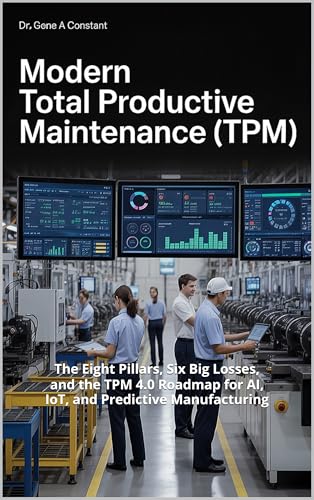
Modern Total Productive Maintenance (TPM) by Dr. Gene A Constant. This lesson comes from chapter three. Read the whole book free in the reader, or keep a copy.
Buy a copy — it funds a free seat
GSU is a 501(c)(3) nonprofit and book sales are its only income. A purchase is not a tax-deductible donation. This lesson is free and always will be.