Lesson 7 of 12 · Chapter 7
Mortared Stone Walls
Mortared stone is not dry-stack with glue added. It is a different system: stability by bedding, bonding and controlling where water goes. This lesson is fieldstone from the pile to the wall: sourcing, preparing, imposing ashlar order, and reading each stone before it is set.
Step one
Read the material
Five ideas. The first two happen before any mortar is mixed. The middle two are how the wall is built. The last is the decision you will make thousands of times.
Idea one
Sourcing, sorting and staging
Fieldstone is nature's inventory: irregular thicknesses, rounded edges, hidden seams. Know where yours comes from. On your own land, gathering is site work, so do not create drainage problems or take stones that are controlling erosion; creek stones are often rounded and slick, with few stable beds. From a supplier, ask what stone it is, whether it is one geology or a mix, whether it is washed, how consistent the sizes are, and see the actual pile. A blend of hard granite and soft sedimentary stone behaves unpredictably in freeze-thaw.
Reclaimed stone can be extraordinary, but it carries old mortar, soil and hidden fractures, and varies widely in thickness. Whatever the source, get more than you think you need. With brick you calculate modules; with fieldstone you calculate waste. The last ten feet of a wall built from scarcity always looks like scarcity.
Stage stone close but out of the work zone, sorted by size and thickness, with faces separated from core stones. Keep a bucket of chips and shims, but if you reach for it on every stone, your selection is the problem. Set aside a few feature stones so the wall reads composed, not random.
Idea two
Clean it, trim it, bed before face
Inspect like a mason. Tap it: a clear ring suggests integrity, a dull thud cracks. Lay layered stones on their natural bed. Keep flaky or porous stones out of the punished zones near grade. Reserve long stones for ties, flatter stones for levelling courses and caps, and chunky ones for the core if they will bed well.
Bond depends on cleanliness, not hope. Wash muddy stone with a stiff brush and water before it reaches the wall, without harsh acids, and do not lay it dripping or sun-baked. Knock loose old mortar off reclaimed stone, carefully, to make bearing points.
You are not sculpting; you are creating seats. Prioritize the bed, then the face. If one nub makes a stone rock, knock off the nub rather than building a thick mortar pillow, which shrinks, cracks and leaves voids. A good stone has a stable bed, a face that reads at the viewing distance, enough mass, and edges you can point. Before any mortar, dry-lay a small mock section to learn your stone mix's personality.
Idea three
Ashlar: courses, lines, joints, corners
Ashlar is a discipline of planes, heights and intention, and with fieldstone you can build an ashlar-like wall by imposing order on irregular stone. Random ashlar is random sizing under strict rules, not random placement.
Work in courses, sorting stone into rough height bins so each course is a calm band. Set level lines, string and line level or a laser, and treat them as a contract: you may rise a little within a course, but you return to the line by the end of the run. Hold a consistent joint range; joint thickness is the only consistent unit fieldstone gives you, and joints wandering from tight to huge read as improvisation.
Build corners first with quoins, larger, more rectangular stones alternating direction around the corner, set true and used as leads. Stagger vertical joints so none stack for more than two courses, while allowing occasional alignment for rhythm. Keep one joint finish throughout, with no shelves for water. Ashlar is slow at first; if you rush, you spend mortar instead of judgement.
Idea four
A mass, not a mask
Stop asking every stone to do every job. Leveling stones make stable beds for the course, face stones present the natural face, and bond or tie stones reach back into the wall so the face is not a freestanding veneer. Mortar gives bond, but a wall tied through its thickness lasts longer.
The common ashlar mistake is a beautiful face with a void behind it to fill later: stone wallpaper over a rubble core that settles, cracks, bulges and debonds. Build in lifts, bringing face and back up together, packing the core with solid stone and mortar as you go. Mortar is bedding and load transfer, not a way to suspend a hollow.
To set a stone, butter the stone and the wall, then set it with a small sliding motion to collapse voids; the squeeze at the edges is proof of contact. Tool at thumbprint hard, as with brick: too early smears the faces, too late crumbles. A long stone with a fine face is often best as a bond stone, beauty doing structural work.
Idea five
Reading the stone
Fieldstone was formed under pressure, cracked by frost and rounded by movement. Turn each stone in your hands and ask three questions. Where is its bed? Layered stone sits with its layers flat like pages on a table, never upright like books on a shelf, where water and frost have a pry line. Which faces are sound? Tap it and rub a corner; a face that sheds grit now will shed later. What is the wall asking it to do? The densest stones go low in the wet base; delicate showpieces go high or sheltered.
Make the stone stable first, then choose the best face among the stable orientations. If it has no stable bed, trim it or send it to the core. Trim for bearing: a few contact pads, not a polished plane, and watch how it breaks, because a stone that peels under the hammer may peel in winter.
Read the face for water. Avoid orientations that leave a cup facing up at a joint, a reservoir that becomes a pry bar, and set seams level or sloping out, never down into the wall like a wick. Watch for rotation: a stone that wants to move is held a while, then a hairline crack traces around it. Press each stone before you leave it. Repeat feature stones with restraint so they read as a motif, and never at the cost of bedding or ties.
The whole of chapter 7 is free to read or hear on the Stonemason's Discipline reader page.
Step two
Work it with your hands on it
The Stone Reader. Pick a stone from the pile, then decide how it sits: its layers, where it goes in the wall, how it is bedded, which way its face and seam point. The bench shows the stone in the wall and tells you how it will age, the way chapter 7 reads it.
The stone
Its layers
Where it goes
Its bed
Its face
Its seam
Hands on it, off the screen. Pick up ten stones from any pile, a garden bed or a supplier's yard. For each, find its bed, tap it and listen, rub a corner, and decide its role: base, field, high course, core or tie. Put them in five piles.
Then dry-lay a short run of the ten on flat ground as if it were one course. Where does the course wander? Which stones rock? That is your mock layout, and it has already taught you what the wall will need.
Step three
Prove you understood it
One question per idea, a new situation every time. Miss one and you are sent back to the idea it was testing.
All five solid.
You can source and sort fieldstone, clean and trim it with the bed before the face, impose ashlar order with courses, lines, joints and corners, build a mass rather than a mask, and read each stone for its bed, soundness, role and water. Chapter eight is fire: fireplaces and fire pits.
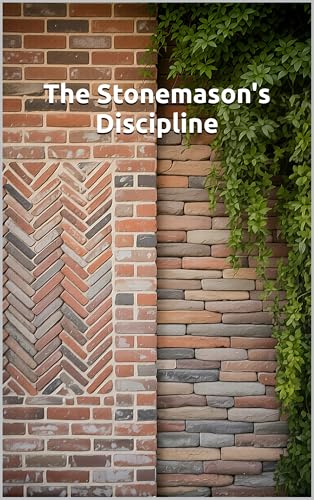
The Stonemason's Discipline
Lesson seven of twelve, from chapter seven. Written by our founder, Dr. Gene A Constant, and donated to the Foundation. Published by Global Sovereign University Press.
Buy a copy - it funds a free seatGSU is a 501(c)(3) nonprofit and book sales are its only income. A purchase is not a tax-deductible donation. As an Amazon Associate, GSU earns from qualifying purchases. This lesson is free and always will be.