Lesson 6 of 10 · Chapter 6
Your Neighborhood Heroes
Who decides about your park, your library and your crosswalk? In this lesson you meet the mayor, the town council and the school board, learn who decides what, see the everyday decisions that shape your town, and find safe ways to meet local leaders.
Choose how you want to learn
You can change this any time. Press Listen on any part to hear it read aloud. Grown-ups: read along with younger children.
- 1 · Who runs your town?
- 2 · The mayor
- 3 · The right door
- 4 · Everyday decisions
- 5 · Meet a leader
- 6 · The whole chapter
- 7 · Try it at home
- 8 · Your card
- 9 · Check yourself
Part 1
Who runs your town?
Your town is not run by one big boss. It is run by a team of local leaders.
Two you should know: the mayor and the town council.
Local leaders live near you. They shop at the same stores and drive on the same bumpy roads.
Many kids can name the President. But the leaders who might change your life tomorrow morning are often your mayor and your school board: parks, libraries, crosswalks, bus routes and school schedules.
The council is a group of elected leaders who vote on local laws, plans and budgets. It is like the Rules Team from Lesson 1, but for your town.
Local leaders are public servants: they work for the community, and that includes kids.
“Most towns are run by a team of local leaders who each have a job to do, kind of like the teams you met back in Chapter 1.”
“Not because local leaders are perfect, but because local government is where everyday life gets shaped in very real ways.”
Part 2
The mayor: a leader with limits
The mayor is often the leader people see most, at events, on the news, and when a storm hits.
But the mayor cannot fix everything by snapping their fingers.
The mayor works with the council.
A mayor may help set goals for the town, work with the council on plans and budgets, represent the town at events and in emergencies, and help the parts of town government work together.
In some towns the mayor is like a big boss who directs departments. In others the mayor is more like a team captain or the “face” of the town, while the council decides many things together.
Limits still apply: the mayor may need the council’s votes to pass a budget, must listen to the community, and must follow state rules. That is checks and balances from Lesson 1, close to home.
“That doesn’t make the mayor useless. It makes the mayor part of a system.”
“It teaches you not to guess. It teaches you to look up how your town is actually organized.”
Part 3
Knock on the right door
The town council and mayor look after town things: roads, parks, police and fire, and often the public library.
The school board looks after the public schools.
If you ask the wrong group, they may say, “That is not ours to decide.”
A school board is a group of elected community members who oversee the public schools. They vote on school rules, calendars, the school budget, and long-term plans like building repairs. They also hire the superintendent, who runs the district day to day.
Maya asked whether the library belonged to the town or the school. It was a public library, part of town services. Then she said, “We should confirm this,” and checked with the library: truth detective skills from Lesson 4.
Deciding is not the same as doing. The library director runs the library every day, but the money for staff comes from the town budget, decided by the council and mayor with input from the community.
“A town council and a school board are not the same thing.”
“Deciding was not the same as doing.”
“This is not just paperwork. It is power boundaries.”
Which door? Tap who decides each one. Get all eight to finish.
Part 4
Everyday decisions are big decisions
Maya and Jordan met Council Member Reyes and Mayor Ellis at the town fair.
Maya asked one calm question: “What is the plan to help the library stay open later for students?”
The leaders listened. They took her seriously.
Mayor Ellis named everyday decisions you only notice when they change: crosswalk timers and crossing guards, trash and recycling pickup, snow or storm cleanup. Council Member Reyes added parks, playground repairs, youth sports and summer programs.
When people argue about the budget, they are arguing about all of these at once. A parent says the park needs repairs, someone says the roads have potholes, the librarian needs staff, the firefighters need new equipment. All of them are real needs; the hard part is choosing priorities.
Change is often slower than people want. Not because it is impossible, but because it has to be fair, follow rules, and fit limited money.
“But Maya was starting to understand that in a community, everyday decisions were the big decisions, just wearing ordinary clothes.”
“It’s because we’re trying to do it fairly, with rules, and with limited money.”
Build a two-minute message. Put the parts of Maya’s message in order. Tap the first part, then the next, until all five are in place.
Part 5
How kids can meet local leaders
You can meet local leaders at community events, like fairs and parades.
Say your name, what you noticed, and one question. That is enough.
Always go with a grown-up when you meet leaders in person.
More ways: watch a meeting first to learn how it works. Start small: “Hi, we met you at the fair. Thanks for listening.” Email a question. Talk to the people doing the job, like the library director. Ask a trusted adult, like a teacher, “Who should we talk to about this?”
For public comment at a meeting: two minutes, a calm voice, one clear message, one specific request. Write it down and practice it, even to the toaster.
Bring facts as bricks: how many kids use the library after school, what time it closes, what the librarian said. Write them down exactly, so you never turn them into a rumor by accident.
“That means they work for the community.”
“Meeting local leaders wasn’t about being loud. It was about being ready.”
“You didn’t have to carry it alone.”
Helps or doesn’t help? Decide for each way of talking to a leader. Get all seven to finish.
Part 6
Read the whole chapter
Here is all of Chapter 6, “Your Neighborhood Heroes”, exactly as the book tells it. Press Listen to hear it read aloud, or open it and read along.
Open Chapter 6 (about 27 minutes to read)
Part 7
Try it at home
Do these with your family. Tick each one when it is done.
Part 8
Your “Who Decides?” card
Fill it in, then print it for the fridge. Nothing you type here leaves this device.
Who Decides?
Global Sovereign University · Civic Literacy for Kids, lesson 6
Before you meet a leader
- Know who decides.
- Bring one fact.
- Ask one clear question.
- Stay calm and kind.
- Go with a grown-up.
- Say thank you.
Part 9
Check yourself
7 questions. Pick an answer. If it is not right, read the hint and try again.
Lesson 6 complete.
You can name your town’s leaders, tell a town council from a school board, knock on the right door, and ask a leader one calm, clear question. Next: Lesson 7, How to Have a Great Argument.
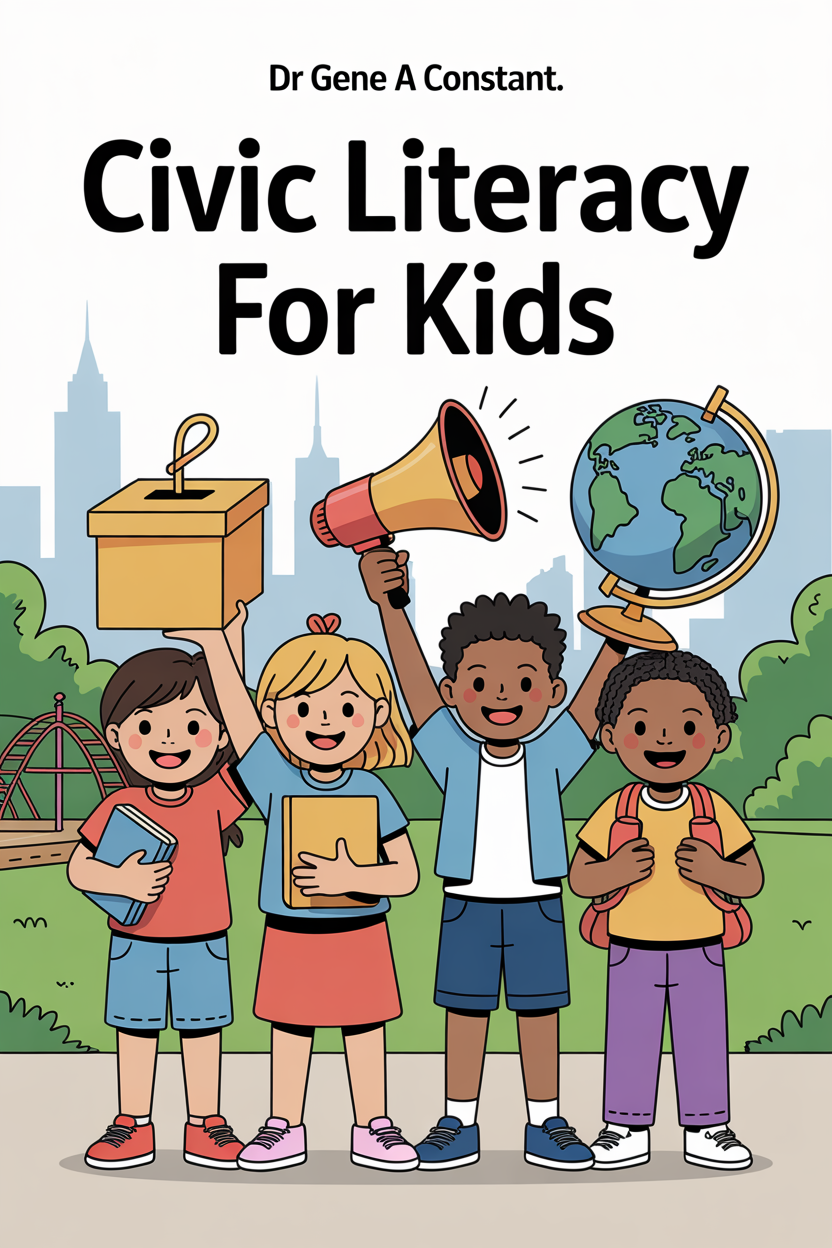
Civic Literacy for Kids by Dr. Gene A Constant. This lesson is chapter 6, and the whole chapter is on this page.
Keep a copy — it funds a free seat
GSU is a 501(c)(3) nonprofit and book sales are its only income. A purchase is not a tax-deductible donation. This lesson is free and always will be.