Lesson 1 of 10 · Chapter 1
The Classroom Store
You just became the manager of the Classroom Store. In this lesson you read big numbers by place value, compare and round them, add and subtract thousands with regrouping, and balance the register and make change, the way a real store manager does every day.
Choose how you want to learn
You can change this any time. Press Listen on any part to hear it read aloud. Grown-ups: read along with younger children.
- 1 · Place value
- 2 · Compare and round
- 3 · Adding
- 4 · Subtracting
- 5 · The register
- 6 · The whole chapter
- 7 · Try it at home
- 8 · Your card
- 9 · Check yourself
Part 1
Place value: where a digit sits
In a number, where a digit sits decides what it is worth. That is place value.
In 3,256 the 3 means 3 thousands, the 2 means 2 hundreds, the 5 means 5 tens, and the 6 means 6 ones.
You just got hired to run the Classroom Store. The delivery truck brought 3,256 pencils. Reading that number right is your first job.
Every place is worth ten times the place to its right: ones, tens, hundreds, thousands, ten thousands. So the same digit 5 can mean 5, 50, 500 or 5,000, depending only on where it sits.
You can write one number three ways. Standard form: 3,256. Expanded form: 3,000 + 200 + 50 + 6. Word form: three thousand, two hundred fifty-six.
Zeros hold a place even when nothing is there. 9,007 is 9,000 + 7: the zeros keep the 9 in the thousands place. One misplaced digit in an inventory record can mean ordering 900 pencils instead of 9,000.
“Place value means the position of each digit determines its value.”
“Each digit has a value based on WHERE it sits. The 3 is worth 3×1,000 = 3,000.”
“Understanding place value helps you read, write, compare, and round numbers accurately.”
What is the underlined digit worth? Tap the right value. Get five right to finish.
Part 2
Compare and round
To compare two numbers, start at the left. The first place that is different decides which number is bigger.
To round, look at the digit just to the right of the place you are rounding to. 5 or more: round up. 4 or less: round down.
4,256 and 4,265: thousands match (4), hundreds match (2), tens are 5 and 6. Five is less, so 4,256 < 4,265. You never even look at the ones.
Rounding 4,783 to the nearest hundred: the hundreds digit is 7, and the digit to its right is 8. Eight is 5 or more, so it rounds up to 4,800. Had it been 4,743, it would round down to 4,700.
Managers round to estimate. An estimate is your safety check: if your exact answer lands far from it, something went wrong.
“Compare from left to right, starting with the biggest place value:”
“The first difference determines which number is larger!”
“If the tens digit were 4 or less, we would round DOWN to 4,700.”
Compare with <, > or =, or pick the rounded number. Get five right to finish.
Part 3
Adding with regrouping
Add from right to left: ones, then tens, then hundreds, then thousands.
When a column adds to 10 or more, write the ones digit and carry 1 to the next column. That is called regrouping.
Always estimate first, so you know about where the answer should land.
1,347 + 2,456: ones 7 + 6 = 13, write 3 and carry 1. Tens 1 + 4 + 5 = 10, write 0 and carry 1. Hundreds 1 + 3 + 4 = 8. Thousands 1 + 2 = 3. Answer: 3,803 pencils, close to the estimate of 3,000.
With three numbers, add two at a time, or stack all three and add each column. With money, line up the decimal points first, then add the cents and the dollars.
“When a column adds to 10 or more, we 'carry' or 'regroup' to the next place value.”
“Always estimate first to check if your answer makes sense!”
“Key rule: Line up the decimal points!”
Add the restock. Type your answer and press Check. Three right to finish.
Part 4
Subtracting with regrouping
Subtract from right to left. If the top digit is smaller, borrow from the next place.
Borrowing is like breaking a ten-dollar bill into ten ones.
Check every subtraction with addition: answer + what you took away = what you started with.
6,000 − 3,456: you cannot take 6 from 0, so you borrow through the zeros. 6,000 becomes 5 thousands, 9 hundreds, 9 tens and 10 ones. Now 10 − 6 = 4, 9 − 5 = 4, 9 − 4 = 5, 5 − 3 = 2. Answer: 2,544. Check: 2,544 + 3,456 = 6,000.
Subtraction also helps you decide. If you have 2,248 pencils and your reorder point is 2,000, you are 248 above it, and the sale is not over. Order now, before the shelves run empty.
“This is like breaking a ten-dollar bill into ten ones.”
“If the check doesn't equal the original number, redo the problem!”
Subtract the sale from the stock. Three right to finish.
Part 5
Counting the register
Money uses decimals. The digits after the decimal point are cents.
When you add or subtract money, always line up the decimal points.
To make change, you can subtract, or count up from the price to the amount paid.
Balancing the register: start $1,234.56, add customer payments $6,789.34 to get $8,023.90, take away change given $3,456.78. The drawer should hold $4,567.12. If the count does not match, there is an error to find.
Counting up for a $67.89 purchase paid with $100: 1¢ makes $67.90, 10¢ makes $68.00, $2 makes $70.00, $30 makes $100.00. Change: $32.11.
“Money uses decimals. The digits after the decimal point represent cents.”
“If the actual count doesn't match, there's an error somewhere!”
Make change for the customer. Type the amount and press Check. Three right to finish.
Part 6
Read the whole chapter
Here is all of Chapter 1, “The Classroom Store”, exactly as the book tells it, with every worked example, all 80 practice problems and the Action Report. Press Listen to hear it read aloud, or open it and work along with a pencil.
Open Chapter 1
Part 7
Try it at home
Do these with your family. Tick each one when it is done.
Part 8
Your “Store Manager” card
Fill it in, then print it for the fridge. Nothing you type here leaves this device.
Store Manager’s Card
Global Sovereign University · Grade 4 Mathematics, lesson 1
The four steps
- Read carefully: what is given, what am I finding?
- Plan: which operation? Estimate first.
- Calculate: one step at a time, numbers lined up.
- Check: does it match my estimate? Does it make sense?
Part 9
Check yourself
6 questions. Pick an answer. If it is not right, read the hint and try again.
Lesson 1 complete.
You can read big numbers by place value, compare and round them, add and subtract with regrouping, and balance a register. Next: Lesson 2, The Festival Planner. Back to the class.
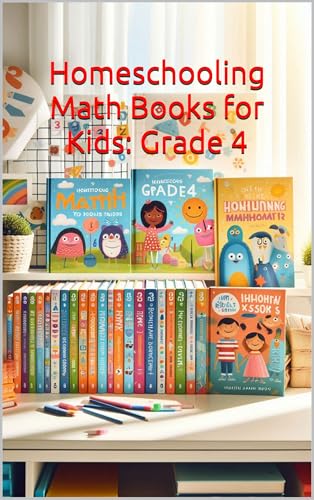
Homeschooling Math Books for Kids: Grade 4 by Dr. Gene A Constant. This lesson is Chapter 1, and the whole chapter is on this page.
GSU is a 501(c)(3) nonprofit and book sales are its only income. A purchase is not a tax-deductible donation. This lesson is free and always will be.