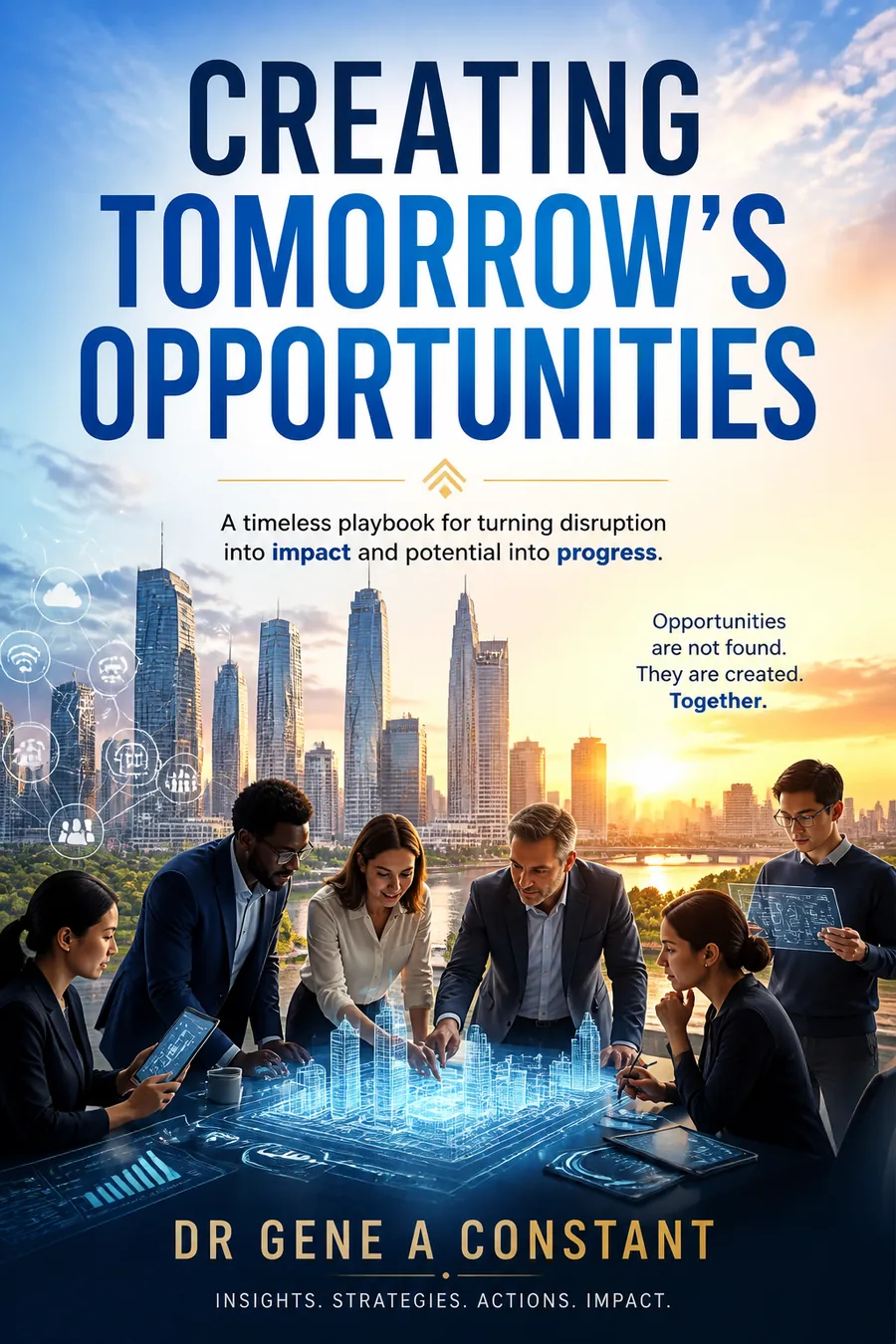
A declaration

I failed fifth grade. I started at JCPenney as a temporary clerk. Nobody looking at that boy would have bet on him. What saved me was not luck. It was learning, one skill at a time, and then finding the courage to use what I had learned where I stood.

Millions of adults today were moved through school on a calendar and never taught to mastery. They are not broken. They are owed. This hub exists to pay that debt, free, in the language they think in.

A better world is not built by a few brilliant people far away. It is built by ordinary people who decide to get good at something, act on it, and then look up and imagine what could be. That is the whole climb: mastery, then courage, then vision. Every step is free here, and none of it requires anyone's permission.

— Dr. Gene A Constant, DBA, Founding Chancellor
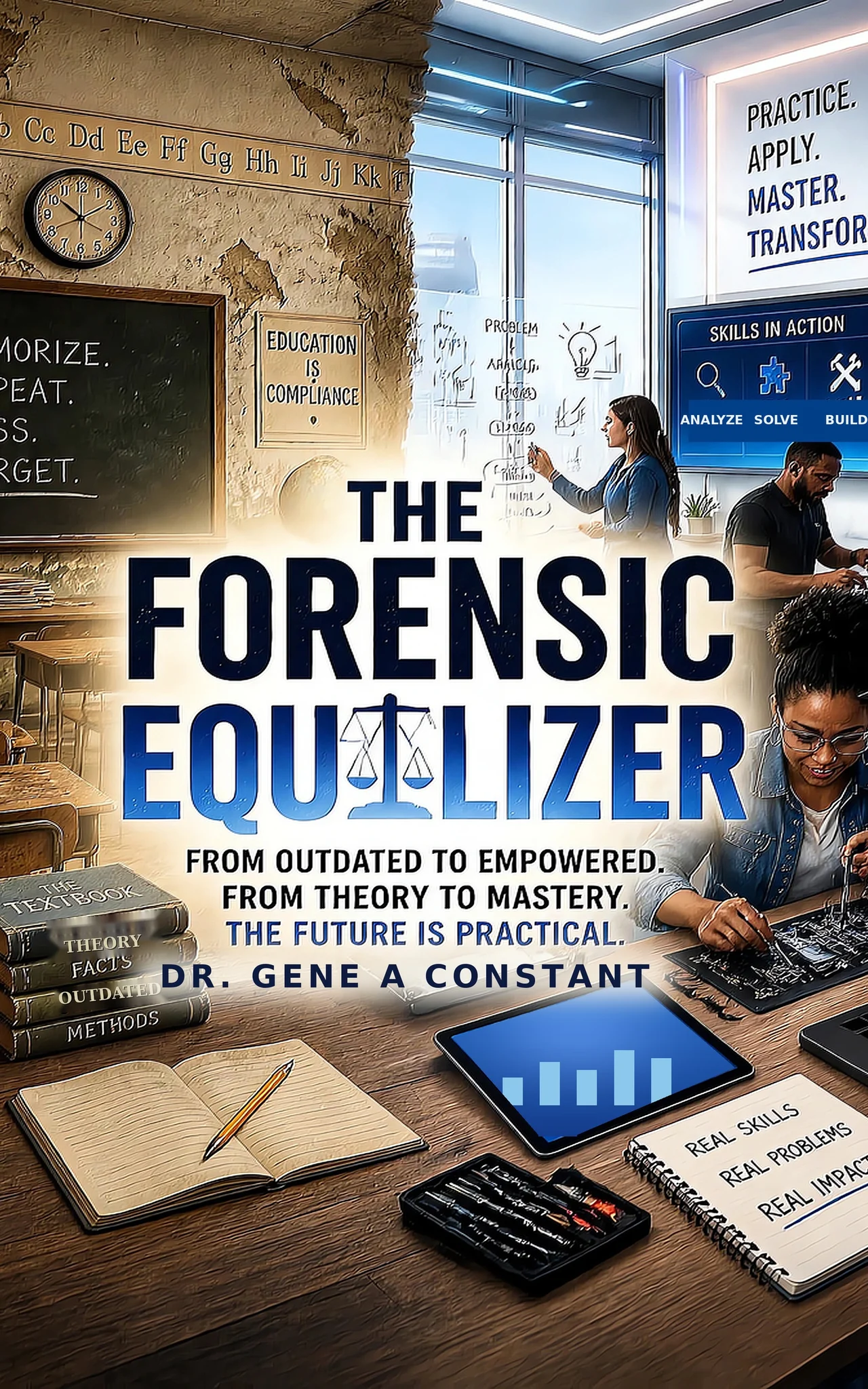
What the bedrock is made of

Technology · human augmentation

The foundation of tomorrow’s technology is built not only on silicon and code but also on the deliberate integration of human judgment and technical capability. Technology must function as human augmentation, designed to expand our ability to understand, connect, and decide rather than simply replacing labor. Artificial intelligence and automation become a permanent framework only when they reduce unnecessary friction and release human capacity for empathy, trust-building, and complex problem-solving. To build this infrastructure, we must move beyond predicting what systems can do and develop an anticipatory mindset that asks how technology changes human behavior and systems of trust.

Furthermore, AI acts as a crucial equalizer in this bedrock, providing tools like audio tutoring and language bridges that allow individuals to access complex information without facing institutional shame.

Economy · a new calculus of risk

The economic stability of the future relies on a new calculus of risk where continuous adaptation replaces rigid preservation. Financial resilience is driven by asymmetric risk, utilizing small, bounded experiments that limit downside exposure while producing valuable strategic learning. Tomorrow’s global market will be stabilized by intrapreneurs who master corporate diplomacy to align emerging opportunities with genuine business outcomes, such as risk mitigation and responsible growth. True fiscal stability requires organizations to manage capital across multiple horizons simultaneously: protecting the current core in Horizon 1, testing adjacent opportunities in Horizon 2, and exploring transformational possibilities in Horizon 3. This agile financial ecosystem replaces the illusion of permanent predictability with the capacity to sense, decide, and adapt at the speed of changing conditions.

The Three Horizons model was introduced by Mehrdad Baghai, Stephen Coley and David White in The Alchemy of Growth (1999).

Education · from completion to mastery

To sustain tomorrow’s society, education must move beyond the illusion that institutional completion equates to practical mastery.

  • Learners must be taught to practice forensic reading and mathematics. This equips them to dismantle complex systems into identifiable entities, conditions, and action drivers.
  • Youth must be guided from shame to strategy. They must learn that a misunderstood concept is not a personal defect but a specific system gap requiring inspection and repair.
  • The ultimate goal is system sovereignty. Individuals must possess the independent ability to verify information, ask exact questions, and navigate real-world consequences without surrendering their judgment to assumed authority.

— Dr. Gene A Constant, DBA, Founding Chancellor
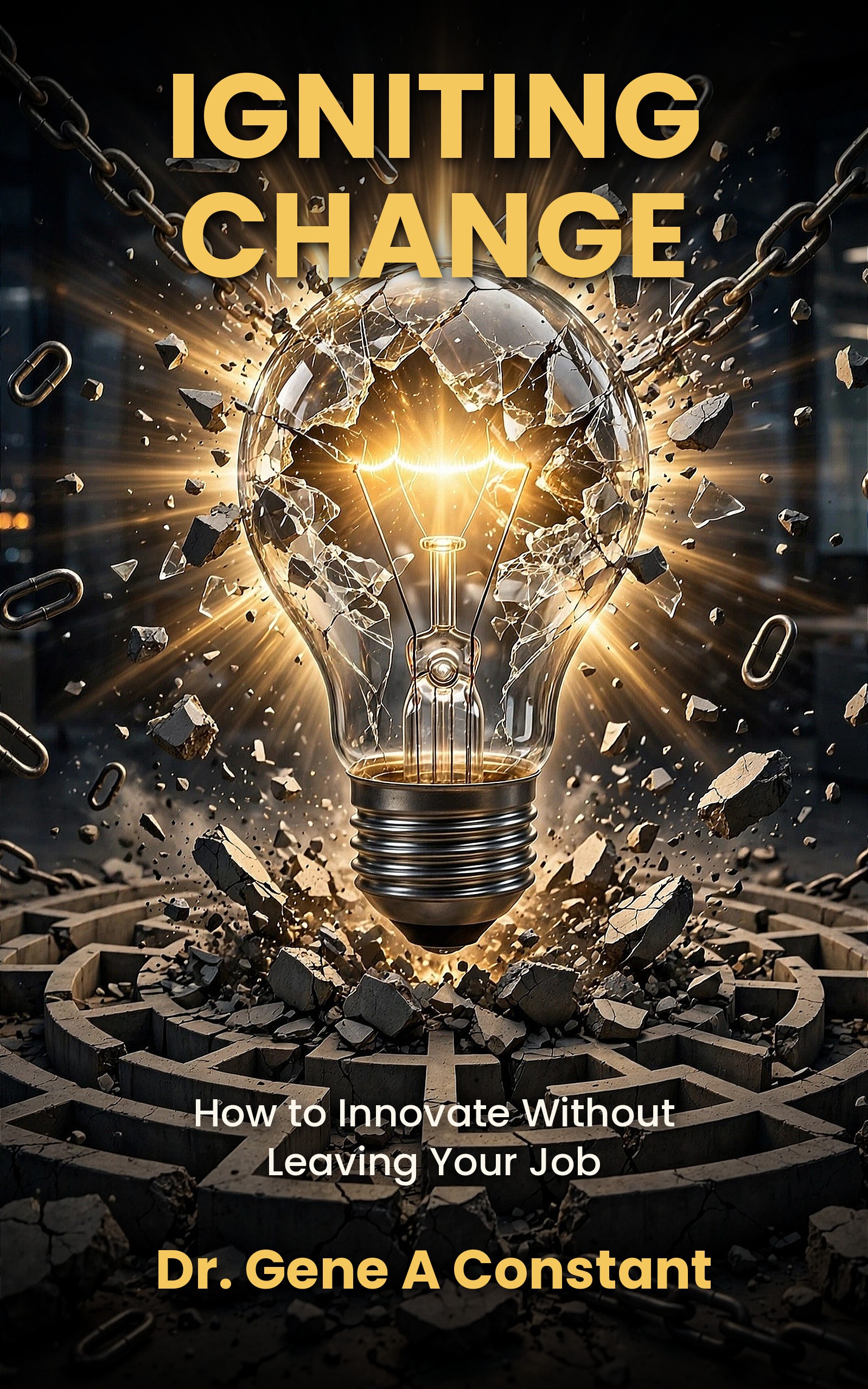
The question we are building on

How might we restructure current performance metrics to reward this kind of forensic, anticipatory learning rather than just short-term completion?

— Dr. Gene A Constant, Founding Chancellor

Schools count completion because completion is easy to count. A finished course says you sat through it. It does not say you can use it. Here is how Global Sovereign University answers the question: measure five things instead.

  1. Do you still know it later?Check the same skill again 30 and 90 days after the lesson, without warning, and count that result more than the end-of-lesson score. Cramming can pass a final test. It cannot pass a surprise check three months later.
  2. Can you use it on something new?Test with a document or problem you have never seen: a new lease, an unfamiliar work order. If the skill only works on the examples you practiced, it was memory, not mastery.
  3. Can you find your own mistake?Give credit when you can say exactly why you got something wrong, such as “I skipped the word unless.” A mistake is not a personal defect. It is a gap you can locate and repair, and locating it is a skill worth rewarding.
  4. Did you see it coming?Before you act, predict what will happen and say how sure you are. Reward honest confidence. A confident wrong answer should cost more than an honest “I’m not sure.” That measures judgment, not just correct answers.
  5. Did you check before you believed it?Give credit for checking a claim against its source before accepting it. That habit is what independence looks like: thinking for yourself instead of handing your judgment to whoever sounds most certain.

Coming to GSU

We are building two of these first. GSU’s certificate exams, graded on our own server, will add a surprise recheck weeks later. And our Mini-Workshops will ask “How sure are you?” before each answer.

Workplaces can use the same idea: count the small, careful experiments people try and what was learned from them, not only the wins.

One honest caution: any score that becomes a target soon gets gamed. So the measures should change from time to time, and the later checks should come without warning.

Three doors. One climb.

Start where you are. If reading a work order or a page of numbers still stops you, begin with Mastery. If you are steady at your work and see what could be better, begin with Courage. If you are ready to lead, begin with Vision.

The capstone, coming

The Architecture of Tomorrow will crown this climb: where the builder stops looking at one workplace and starts looking at the whole world. It joins this hub when it is published.

Accreditation notice: Global Sovereign University is not an accredited institution and does not grant degrees, academic credit, licenses, or industry credentials. Learners who pass GSU's online exams earn GSU certificates of comprehension.