Lesson 5 of 10 · Chapter 5
The Construction Crew
You are on the Construction Crew building a new playground. In this lesson you convert inches, feet and yards, find perimeter for fencing and area for surfaces and costs, convert weight and capacity, and work out how many bags and boards to order.
Choose how you want to learn
You can change this any time. Press Listen on any part to hear it read aloud. Grown-ups: read along with younger children.
- 1 · Inches, feet, yards
- 2 · Perimeter
- 3 · Area and cost
- 4 · Weight and capacity
- 5 · Ordering materials
- 6 · The whole chapter
- 7 · Try it at home
- 8 · Your card
- 9 · Check yourself
Part 1
Inches, feet and yards
12 inches make 1 foot. 3 feet make 1 yard. So 1 yard is 36 inches.
Going to a smaller unit, multiply: 8 feet = 8 × 12 = 96 inches.
Going to a bigger unit, divide.
54 inches in feet: 54 ÷ 12 = 4 remainder 6. That is 4 feet 6 inches. The remainder is the inches left over.
5 yards in feet: 5 × 3 = 15 feet.
A quick check: a smaller unit always gives a bigger number. 8 feet becomes 96 inches; 96 is bigger than 8 because inches are smaller than feet.
“Inches and Feet: 1 foot = 12 inches”
“Feet and Yards: 1 yard = 3 feet = 36 inches”
Convert the measurement. Five right to finish.
Part 2
Perimeter: the fence around
Perimeter is the distance around a shape. Add every side.
For a rectangle: P = 2 × length + 2 × width.
A 12 ft × 8 ft play area: 2(12) + 2(8) = 24 + 16 = 40 feet of fencing.
Work backward for a missing side. Perimeter 48 ft and length 14 ft: 48 = 28 + 2W, so 2W = 20 and the width is 10 ft.
A square has four equal sides, so its side is the perimeter ÷ 4. A triangle’s perimeter is its three sides added.
“Perimeter: The distance around a shape. Add all sides!”
“Rectangle formula: P = 2 × length + 2 × width (or P = 2L + 2W)”
Find the fence needed, or the missing side. Five right to finish.
Part 3
Area and what it costs
Area is the space inside, measured in square units.
For a rectangle: A = length × width.
Materials are sold by the square foot, so area tells you the cost.
A 15 ft × 12 ft room is 180 square feet.
Flooring at $4 per square foot for a 20 ft × 18 ft room: area 360 sq ft, cost 360 × $4 = $1,440.
Missing side: area 72 sq ft with width 8 ft means length 72 ÷ 8 = 9 ft. Perimeter buys the fence; area buys the floor.
“Area: The space inside a shape, measured in square units.”
“Cost: 360 × $4 = $1,440”
Find the area, or what it costs to cover it. Five right to finish.
Part 4
Weight and capacity
Weight: 1 pound = 16 ounces. 1 ton = 2,000 pounds.
Capacity: 1 gallon = 4 quarts = 8 pints = 16 cups.
Same rule as length: to a smaller unit, multiply; to a bigger unit, divide.
5 pounds = 5 × 16 = 80 ounces. 3 gallons = 3 × 4 = 12 quarts.
Going up: 48 ounces ÷ 16 = 3 pounds. 24 cups ÷ 4 = 6 quarts, because 1 quart = 4 cups.
Leftovers keep both units: 3,500 pounds is 1 ton 1,500 pounds.
“Weight: 1 pound = 16 ounces, 1 ton = 2,000 pounds”
“Capacity: 1 gallon = 4 quarts = 8 pints = 16 cups”
Convert the weight or the amount of liquid. Five right to finish.
Part 5
Ordering materials
Builders divide to find how many bags, boards or gallons to buy.
You cannot buy part of a bag. If anything is left over, buy one more.
Concrete: 1,200 lbs in 40-lb bags is 1,200 ÷ 40 = 30 bags exactly.
Paint: a 15 × 10 ft wall is 150 sq ft. One gallon covers 100 sq ft, so 1 gallon is not enough; buy 2.
Sand: 960 lbs in 80-lb bags is 12 bags. Round up whenever the division is not exact.
“CONCRETE: Need 1,200 lbs. Bags hold 40 lbs each. How many bags?”
“PAINT: Wall 15×10 ft. Gallon covers 100 sq ft. Enough with 1 gallon?”
How many must the crew buy? Three right to finish.
Part 6
Read the whole chapter
Here is all of Chapter 5, “The Construction Crew”, exactly as the book tells it, with every worked example, all 64 practice problems and the Action Report. Press Listen to hear it read aloud, or open it and work along with a pencil.
Open Chapter 5
Part 7
Try it at home
Do these with your family. Tick each one when it is done.
Part 8
Your “Construction Crew” card
Fill it in, then print it for the fridge. Nothing you type here leaves this device.
Construction Crew’s Card
Global Sovereign University · Grade 4 Mathematics, lesson 5
Conversion facts
- 1 foot = 12 inches; 1 yard = 3 feet = 36 inches.
- 1 pound = 16 ounces; 1 ton = 2,000 pounds.
- 1 gallon = 4 quarts = 8 pints = 16 cups.
- To a smaller unit, multiply. To a bigger unit, divide.
Part 9
Check yourself
6 questions. Pick an answer. If it is not right, read the hint and try again.
Lesson 5 complete.
You can convert length, weight and capacity, find perimeter and area, work out the cost of covering a space, and order the right amount of materials. Next: Lesson 6, The Sports League Manager. Back to the class.
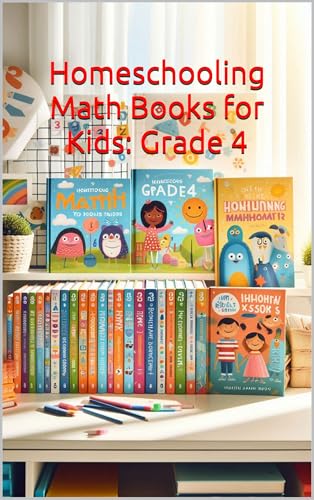
Homeschooling Math Books for Kids: Grade 4 by Dr. Gene A Constant. This lesson is Chapter 5, and the whole chapter is on this page.
GSU is a 501(c)(3) nonprofit and book sales are its only income. A purchase is not a tax-deductible donation. This lesson is free and always will be.