Lesson 7 of 10 · Chapter 7
The Savings Account
You open your first savings account. In this lesson you read money by decimal place value, round to the nearest dollar and cent, compare prices on the shelf, keep a bank ledger with a running balance, multiply prices and wages, and plan how long it takes to reach a savings goal.
Choose how you want to learn
You can change this any time. Press Listen on any part to hear it read aloud. Grown-ups: read along with younger children.
- 1 · Reading money
- 2 · Comparing prices
- 3 · Keeping a ledger
- 4 · Prices and wages
- 5 · Reaching a goal
- 6 · The whole chapter
- 7 · Try it at home
- 8 · Your card
- 9 · Check yourself
Part 1
Reading money: decimal place value
Money uses decimals. The point separates dollars from cents.
In $42.75: the 4 is $40, the 2 is $2, the 7 is 70 cents, and the 5 is 5 cents.
The first place after the point is tenths (dimes). The second is hundredths (pennies).
Tenths are dimes: 7 tenths is $0.70. Hundredths are pennies: 5 hundredths is $0.05.
To round to the nearest dollar, look at the tenths. $34.67 has 6 tenths, 5 or more, so it rounds up to $35.00.
To round to the nearest cent, look at the thousandths. Gas pumps and bank interest use three places: $8.943 rounds down to $8.94.
“7 is in the tenths place = $0.70 (70 cents)”
“5 is in the hundredths place = $0.05 (5 cents)”
What is the digit worth, or what does the amount round to? Five right to finish.
Part 2
Comparing prices on the shelf
To compare prices, line up the decimal points and compare from the left.
The first place that is different decides.
$24.95 and $24.59: the dollars match (24). Tenths: 9 against 5. So $24.95 is more, and $24.59 is the cheaper price.
Zeros at the end change nothing: $3.50 is the same as $3.5. To order prices with different lengths, write them with the same number of places: 5.600, 5.060, 5.066.
Stores price items at $29.99 instead of $30.00 because shoppers read the left digit first. Smart shoppers read every digit.
“Line up decimal points and compare left to right:”
“Rewrite with same decimal places: 5.600, 5.060, 5.600, 5.066”
Which price is lower, or are they the same? Five right to finish.
Part 3
Keeping a bank ledger
A ledger tracks every deposit (money in) and withdrawal (money out).
Add deposits. Subtract withdrawals. Line up the decimal points every time.
Start $245.80. Deposit $75.25: $321.05. Withdraw $50.00: $271.05. That last number is the balance, the money you really have.
Banks keep a running balance, a new total after every line, so a mistake shows up right where it happened.
Check a subtraction by adding back: $100.00 − $67.85 = $32.15, and $32.15 + $67.85 = $100.00.
“BALANCE: Start $245.80, deposit $75.25, withdraw $50.00. Final balance?”
“Line up decimal points:”
Work the ledger down to the new balance. Three right to finish.
Part 4
Prices and wages: multiplying decimals
To multiply a price: multiply as if there were no decimal point, then put the point back.
Count the decimal places in the numbers you multiplied. The answer gets the same number of places.
$2.45 × 6: 245 × 6 = 1,470. $2.45 has 2 decimal places, so the answer is 14.70, or $14.70.
1.5 × 2.5: 15 × 25 = 375, and 1 + 1 = 2 places, so 3.75.
This is how a paycheck is figured. $15.50 an hour for 8 hours: 1550 × 8 = 12,400, with 2 places, so $124.00.
“Step 1: Multiply as whole numbers: 245 × 6 = 1,470”
“Step 2: Count decimal places in factors: 2 (from 2.45)”
Price it out. Type the total in dollars and cents. Five right to finish.
Part 5
Reaching a savings goal
Saving the same amount every week adds up: multiply the weekly amount by the number of weeks.
To reach a goal, divide the goal by the weekly amount. If anything is left over, it takes one more week.
Save $12.50 a week for 8 weeks: $12.50 × 8 = $100.00.
Goal $75.00 at $12.50 a week: 75 ÷ 12.50 = 6 weeks exactly. Goal $80.00: 6 weeks gives $75.00, still $5.00 short, so it takes 7 weeks.
Write the goal down, track the balance each week, and the goal stops being a wish and becomes a plan.
“SAVINGS: Save $12.50 per week × 8 weeks. Total saved?”
Plan the savings. Three right to finish.
Part 6
Read the whole chapter
Here is all of Chapter 7, “The Savings Account”, exactly as the book tells it, with every worked example, all 64 practice problems and the Action Report. Press Listen to hear it read aloud, or open it and work along with a pencil.
Open Chapter 7
Part 7
Try it at home
Do these with your family. Tick each one when it is done.
Part 8
Your “Junior Banker” card
Fill it in, then print it for the fridge. Nothing you type here leaves this device.
Junior Banker’s Card
Global Sovereign University · Grade 4 Mathematics, lesson 7
Money rules
- Tenths are dimes; hundredths are pennies.
- Line up the decimal points to add, subtract or compare.
- Multiply, then count the decimal places.
- Goal ÷ weekly amount; round up the weeks.
Part 9
Check yourself
6 questions. Pick an answer. If it is not right, read the hint and try again.
Lesson 7 complete.
You can read money by place value, round it, compare prices, keep a ledger, multiply prices and wages, and plan a savings goal. Next: Lesson 8, The Delivery Driver, is being built. Back to the class.
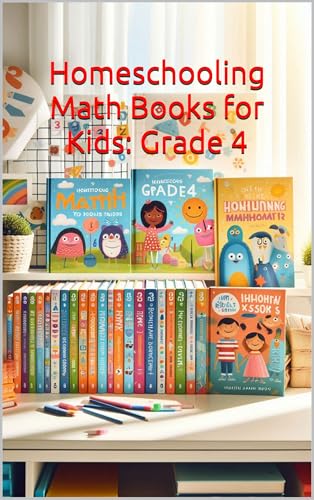
Homeschooling Math Books for Kids: Grade 4 by Dr. Gene A Constant. This lesson is Chapter 7, and the whole chapter is on this page.
GSU is a 501(c)(3) nonprofit and book sales are its only income. A purchase is not a tax-deductible donation. This lesson is free and always will be.