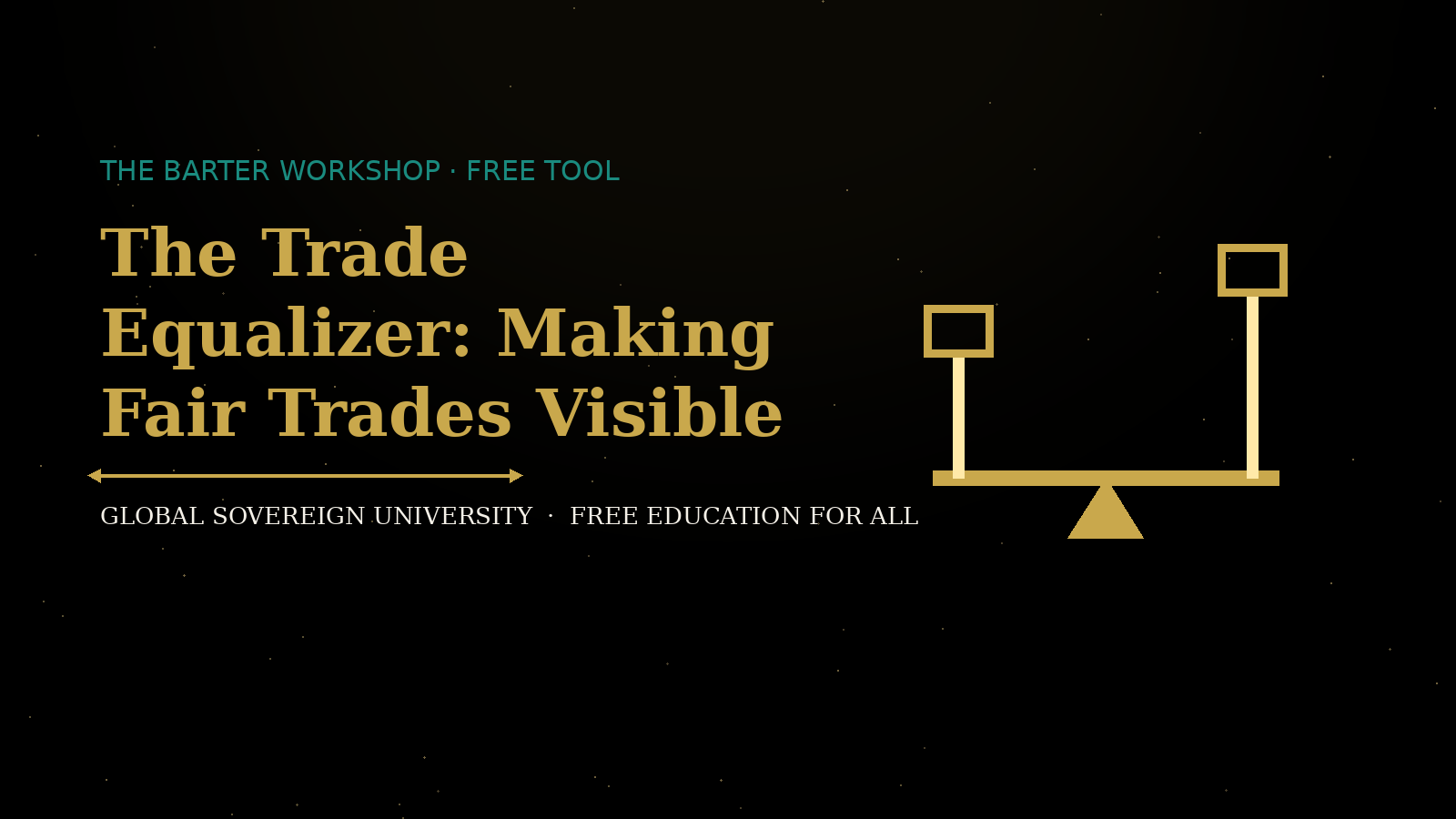
Every barter conversation eventually reaches the same narrow bridge: "So… does that feel even to you?" Two honest people, two private guesses, and no shared instrument between them. The Trade Equalizer — a free tool inside GSU's Barter Workshop — was built to widen that bridge. It puts both sides of a proposed trade on one screen and lets you weigh them together until the beam sits level.
How it works
Each party lists what they are bringing: goods with rough replacement values, labor with hours and a skill note, extras like delivery or timing. The Equalizer stacks the two columns side by side and shows the tilt plainly. No accounts, no login, nothing stored — it is a scale, not a marketplace. The conversation changes instantly: instead of two people defending guesses, you have two people adjusting a shared picture. "Add the hour of stacking and it levels." "Take one basket off and we're square."
Why a visible scale matters
- It moves fairness from feeling to sight. Tilt is hard to argue with and easy to fix.
- It protects the softer voice. The party less comfortable haggling no longer has to argue — the beam argues for them.
- It teaches valuation by repetition. After a dozen equalized trades, you carry the scale in your head.
Fairness should not depend on who talks better. Put the trade on the beam and let both parties look at the same truth.
The Trade Equalizer lives free inside the GSU Barter Workshop, beside the lessons on valuation and etiquette that make it sing. Bring your next trade to the beam — and watch "does that feel even?" become the easiest question of the day.







.jpeg)
.jpg)