Lesson 4 of 10 · Chapter 4
The Recipe Master
You are the Recipe Master in the school kitchen. In this lesson you switch between mixed numbers and improper fractions, add and subtract mixed numbers, and multiply fractions to double, triple and halve recipes.
Choose how you want to learn
You can change this any time. Press Listen on any part to hear it read aloud. Grown-ups: read along with younger children.
- 1 · Mixed and improper
- 2 · Adding mixed numbers
- 3 · Subtracting mixed numbers
- 4 · Multiplying fractions
- 5 · Scaling a recipe
- 6 · The whole chapter
- 7 · Try it at home
- 8 · Your card
- 9 · Check yourself
Part 1
Mixed numbers and improper fractions
A mixed number has a whole number and a fraction: 2 1/2 means 2 wholes and 1/2 more.
An improper fraction has a top bigger than its bottom: 5/2 means five halves.
2 1/2 and 5/2 are the same amount.
Mixed to improper: multiply the whole number by the bottom, then add the top. 2 1/2: 2 × 2 = 4, 4 + 1 = 5, so 5/2.
Improper to mixed: divide. 11/4: 11 ÷ 4 = 2 remainder 3, so 2 3/4. The answer is the whole number, the remainder is the new top, and the bottom stays.
Bakers use both: “2 3/4 cups” is easy to read, and “11 quarter-cups” is how you would measure it with a 1/4 cup scoop.
“A mixed number combines a whole number and a fraction: 2 1/2 means 2 whole things plus 1/2 more.”
“An improper fraction has a numerator larger than its denominator: 5/2 means five halves.”
Switch the number to the other form. Five right to finish.
Part 2
Adding mixed numbers
Add the whole numbers. Add the fractions. Put them together.
If the fractions add up to more than one whole, turn the extra into another whole.
2 3/4 + 1 2/4: wholes 2 + 1 = 3. Fractions 3/4 + 2/4 = 5/4, which is 1 1/4. So 3 + 1 1/4 = 4 1/4.
When the bottoms differ, match them first. 1 1/2 + 2 1/3: sixths fit both, so 1 3/6 + 2 2/6 = 3 5/6.
Morning and afternoon flour, 2 1/4 + 1 3/4, makes 3 4/4, which is exactly 4 cups.
“Step 1: Add the whole numbers: 2 + 1 = 3”
“Step 3: Convert improper fraction: 5/4 = 1 1/4”
Add the two amounts. Type the answer as a mixed number, like 4 1/4. Five right to finish.
Part 3
Subtracting mixed numbers
Subtract the fractions, then the whole numbers.
If the fraction on top is too small, borrow one whole and turn it into a fraction.
5 1/4 − 2 3/4: you cannot take 3/4 from 1/4. Borrow 1 from the 5, and 1 becomes 4/4. Now 5 1/4 is 4 5/4. Then 5/4 − 3/4 = 2/4 = 1/2, and 4 − 2 = 2. Answer: 2 1/2.
Whole numbers can lend too. 5 cups − 2 1/3 cups: 5 becomes 4 3/3, and 4 3/3 − 2 1/3 = 2 2/3 cups left.
“Problem: Can't subtract 3/4 from 1/4!”
“Step 1: Borrow 1 from the 5: 5 1/4 becomes 4 + 1 1/4 = 4 5/4”
Subtract what was used. Borrow when the top fraction is too small. Five right to finish.
Part 4
Multiplying fractions
To multiply fractions: multiply the tops, multiply the bottoms.
1/2 × 3/4 = 3/8.
A whole number is a fraction over 1: 6 = 6/1.
2/3 × 6: write 6 as 6/1. Then 2/3 × 6/1 = 12/3 = 4.
“Of” means multiply. Half of 2/3 cup is 1/2 × 2/3 = 2/6, which simplifies to 1/3 cup.
With a mixed number, make it improper first. 2 1/2 × 2: 2 1/2 = 5/2, and 5/2 × 2 = 10/2 = 5.
“Step 1: Multiply numerators: 1 × 3 = 3”
“Step 2: Multiply denominators: 2 × 4 = 8”
Multiply. Type a fraction, a whole number or a mixed number. Five right to finish.
Part 5
Scaling a recipe
To double a recipe, multiply every amount by 2. To triple, by 3. To make half, multiply by 1/2.
Every ingredient changes by the same amount, so the food tastes the same.
Double 1 3/4 cups of milk: 1 3/4 = 7/4, and 7/4 × 2 = 14/4 = 3 2/4 = 3 1/2 cups.
Triple 1 1/4 cups of butter: 5/4 × 3 = 15/4 = 3 3/4 cups.
A half batch with 2/3 cup oil: 1/2 × 2/3 = 1/3 cup. Change one ingredient and not the others, and the recipe stops working.
“DOUBLE BATCH: Original recipe: 1 3/4 cups milk. Doubled amount?”
“HALF BATCH: Full recipe uses 2/3 cup oil. Half batch needs?”
Read the recipe card and scale the ingredient. Three right to finish.
Part 6
Read the whole chapter
Here is all of Chapter 4, “The Recipe Master”, exactly as the book tells it, with every worked example, all 65 practice problems and the Action Report. Press Listen to hear it read aloud, or open it and work along with a pencil.
Open Chapter 4
Part 7
Try it at home
Do these with your family. Tick each one when it is done.
Part 8
Your “Recipe Master” card
Fill it in, then print it for the fridge. Nothing you type here leaves this device.
Recipe Master’s Card
Global Sovereign University · Grade 4 Mathematics, lesson 4
Kitchen rules
- Mixed to improper: whole × bottom + top.
- Improper to mixed: divide; the remainder is the new top.
- Borrow a whole as a fraction when the top is too small.
- Multiply tops, multiply bottoms.
Part 9
Check yourself
6 questions. Pick an answer. If it is not right, read the hint and try again.
Lesson 4 complete.
You can switch between mixed numbers and improper fractions, add and subtract mixed numbers with borrowing, multiply fractions, and scale a recipe up or down. Next: Lesson 5, The Construction Crew. Back to the class.
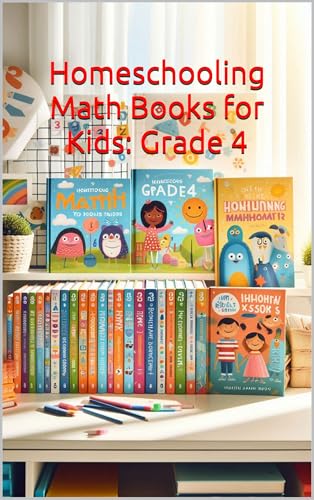
Homeschooling Math Books for Kids: Grade 4 by Dr. Gene A Constant. This lesson is Chapter 4, and the whole chapter is on this page.
GSU is a 501(c)(3) nonprofit and book sales are its only income. A purchase is not a tax-deductible donation. This lesson is free and always will be.