Lesson 9 of 10 · Chapter 9
The Garden Designer
You design gardens for Green Thumb Landscapes. In this lesson you find patterns in rows of plants, use variables to write formulas, solve equations on a balance, find the rule in an input-output table, and work out exactly what to order. Algebra starts here.
Choose how you want to learn
You can change this any time. Press Listen on any part to hear it read aloud. Grown-ups: read along with younger children.
- 1 · Garden patterns
- 2 · Formulas and variables
- 3 · Balancing equations
- 4 · Input-output rules
- 5 · Planning the order
- 6 · The whole chapter
- 7 · Try it at home
- 8 · Your card
- 9 · Check yourself
Part 1
Patterns in the garden
A pattern follows a rule. Find the rule by looking at how each number changes.
4, 7, 10, 13: each number is 3 more. So the next is 16.
Some patterns multiply: 3, 6, 12, 24 doubles each time, so the next is 48.
To jump ahead without writing every row, count the steps. Row 10 of 4, 7, 10, 13 is 9 steps after row 1, so 4 + 9 × 3 = 31.
Check differences first (subtract neighbors). If they are all the same, the rule is add. If not, try dividing neighbors: if every quotient is the same, the rule is multiply.
Gardeners use patterns to know how many plants each row needs before they buy a single seed.
“Look at differences between numbers: 7-4=3, 10-7=3, 13-10=3”
“Row 10: Start at 4, add 3 nine times = 4 + 27 = 31”
Find the next number, or the number in a later row. Five right to finish.
Part 2
Formulas and variables
A variable is a letter that stands for a number. It lets one rule work for any number.
If each flower needs w gallons, 12 flowers need 12 × w gallons.
To evaluate, swap the letter for its number, then do the math.
3n + 2 when n = 4: 3 × 4 = 12, then 12 + 2 = 14. Multiply before you add.
A formula is a variable you can trust: Cost = 6p means 6 dollars for each plant, so 15 plants cost 6 × 15 = $90.
Writing 3n means 3 × n. Writing 3(4) means 3 × 4.
“A variable is a letter that represents an unknown number.”
“Substitute: 3(4) + 2 = 12 + 2 = 14”
Put the number in for the letter and work it out. Five right to finish.
Part 3
Solving equations on a balance
An equation says two sides are equal, like a balanced scale.
n + 5 = 18 asks: what number plus 5 makes 18? Think 18 − 5 = 13, so n = 13.
Always check: put your answer back in.
Undo what was done to the letter. If 5 was added, subtract 5. If n was multiplied by 3, divide by 3: 3n = 24 means n = 24 ÷ 3 = 8.
Two steps work the same way, one at a time. 2n + 3 = 11: take away 3 to get 2n = 8, then divide by 2 to get n = 4.
Check: 2 × 4 + 3 = 11. The scale balances.
“What number plus 5 equals 18?”
“Check: 13 + 5 = 18 ✓”
What number makes the scale balance? Type the value of the letter. Five right to finish.
Part 4
Input-output rules
An input-output table is a machine: a number goes in, the rule changes it, and a new number comes out.
Pots 1, 2, 3, 4 cost $3, $6, $9, $12. Each output is 3 times the input, so the rule is × 3.
Test a rule on every row, not just the first. In 2, 4, 6, 8 → 7, 9, 11, 13, the rule ×3 works for nothing, but +5 works for every row.
Some machines do two steps, like ×3 then −1: 7 goes in, 21, then 20 comes out.
Written as an equation, the pot rule is y = 3x: x is the number of pots and y is the cost.
“Pattern: Each output is 3 times the input”
“Rule: Cost = 3 × Pots (or y = 3x)”
Find the rule in the table, or what comes out. Five right to finish.
Part 5
Planning the garden order
Real gardeners use all of this at once: a formula for cost, an equation to work backward, a pattern to plan rows.
Shrubs cost $15 each. The cost equation is C = 15n, so 9 shrubs cost $135.
Working backward: you started with some plants, added 12, and now have 35. The equation is n + 12 = 35, so you started with 23.
A pattern that adds 5 each row, starting at 8, has 8 + 11 × 5 = 63 plants in row 12.
“COST: Shrubs cost $15 each. Write cost equation. Find cost of 9 shrubs.”
“EQUATION: Started with some plants, added 12, now have 35. How many at start?”
Work out the order. Three right to finish.
Part 6
Read the whole chapter
Here is all of Chapter 9, “The Garden Designer”, exactly as the book tells it, with every worked example, all 60 practice problems and the Action Report. Press Listen to hear it read aloud, or open it and work along with a pencil.
Open Chapter 9
Part 7
Try it at home
Do these with your family. Tick each one when it is done.
Part 8
Your “Garden Designer” card
Fill it in, then print it for the fridge. Nothing you type here leaves this device.
Garden Designer’s Card
Global Sovereign University · Grade 4 Mathematics, lesson 9
Algebra rules
- Pattern: subtract neighbors for +, divide for ×.
- Evaluate: swap the letter for its number; multiply before adding.
- Solve: undo what was done to the letter, then check.
- Input-output: test the rule on every row.
Part 9
Check yourself
6 questions. Pick an answer. If it is not right, read the hint and try again.
Lesson 9 complete.
You can find and extend patterns, evaluate formulas, solve equations and check them, find input-output rules, and plan a real garden order. Next: Lesson 10, The Business Plan. Back to the class.
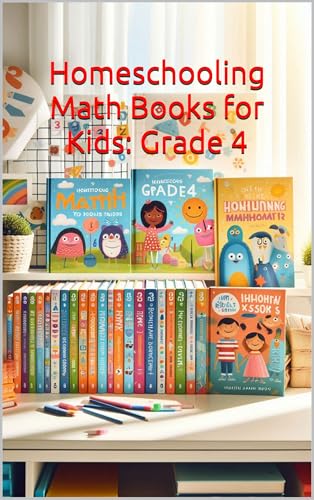
Homeschooling Math Books for Kids: Grade 4 by Dr. Gene A Constant. This lesson is Chapter 9, and the whole chapter is on this page.
GSU is a 501(c)(3) nonprofit and book sales are its only income. A purchase is not a tax-deductible donation. This lesson is free and always will be.