The Privacy Blueprint · Six Rooms
The Portrait You Didn’t Know You Were Building
Six rooms about how scattered pieces become a person.
Move slowly. Each room is a reminder that data feels empty until someone connects it.
Enter the hall ↓Room 01 · From Chapter 1
The Scattered Puzzle
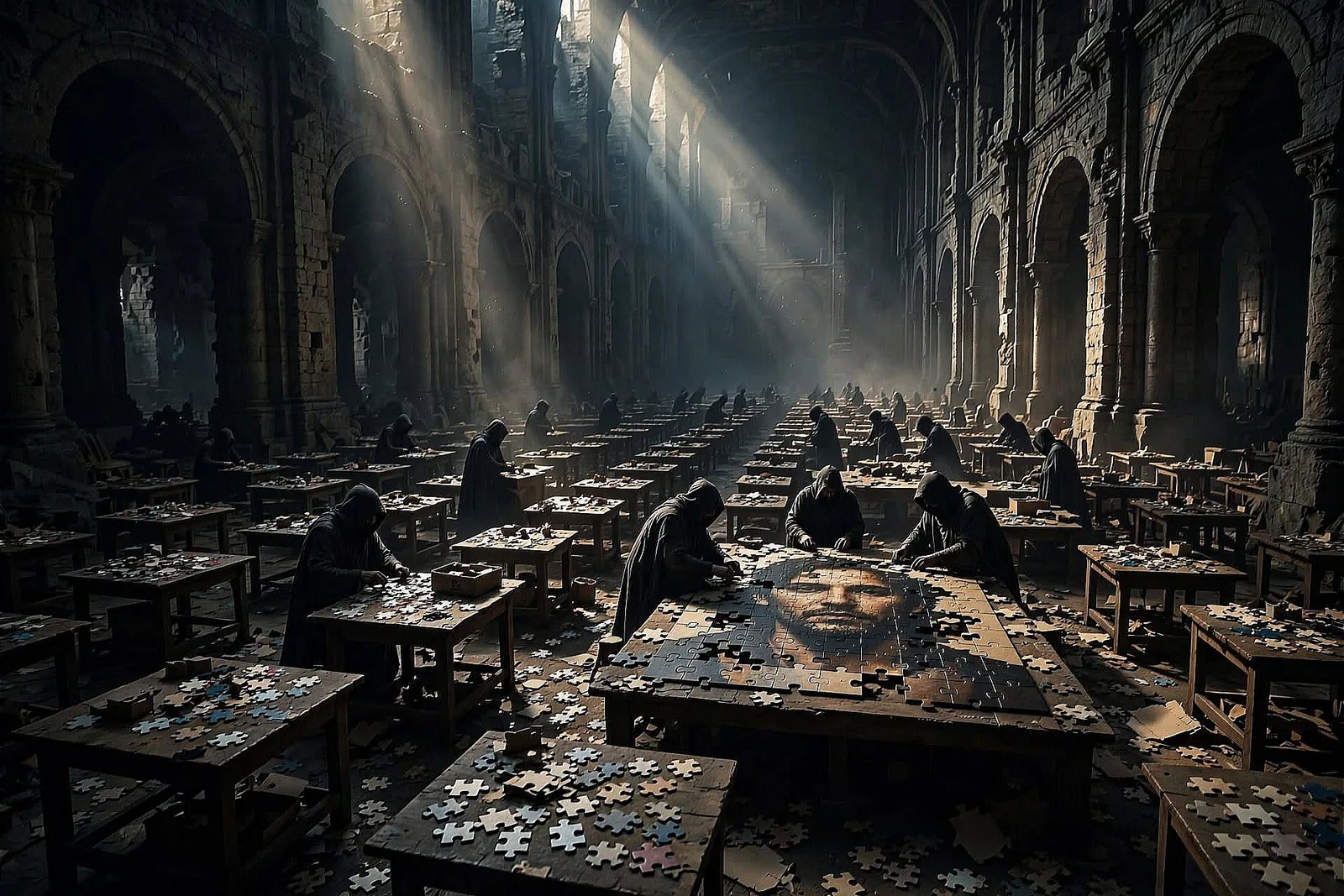
In a vast, dim hall, strangers you will never meet sit at small tables, sorting.
No single piece says anything.
A name here. A town there. A birthday, a pet, a photo from three years ago.
They do not need all of you. Just enough pieces touching to see a face.
From the book, Chapter 1
“This is why privacy is not simply about secrecy. It is about control.”
Room 02 · From Chapter 3
The Ghost, Not the Vanishing

He sits where the light is small and the night is large.
Each check is a thread snapping in the dark.
Privacy is not hiding. It is choosing what no longer connects.
Reduction is a form of creation.
From the book, Chapter 3
“Remember that this is the Ghost Protocol, not the Vanishing Protocol.”
Room 03 · From Chapter 5
The Front Door
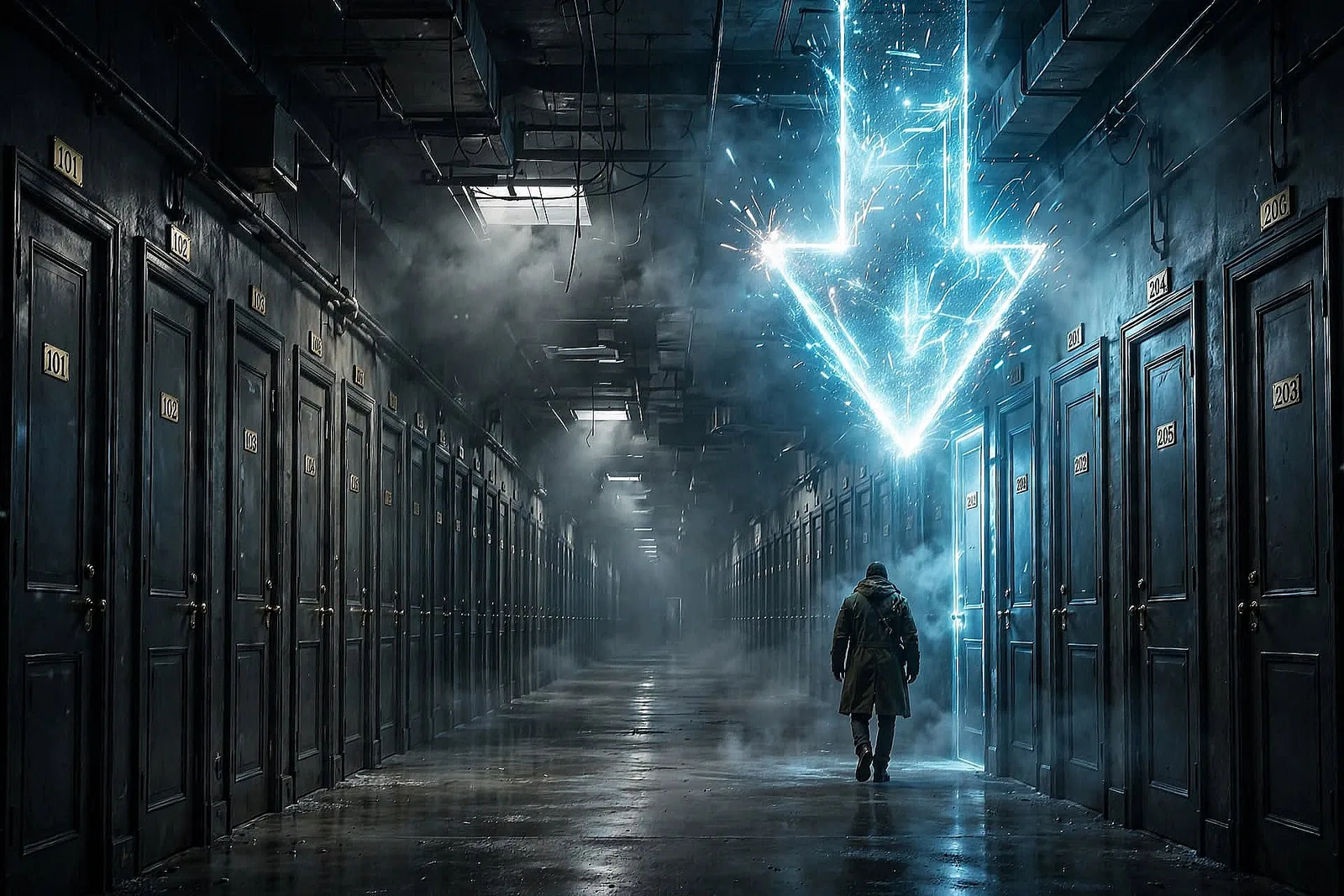
Every door looks the same until the light chooses one.
Algorithms do not watch everyone equally. They sort, rank, and point.
The arrow is never random. It follows the shape of your fragments.
To be singled out is not to be special. It is to be legible.
From the book, Chapter 5
“Search engines are not the source of every exposure, but they are often the front door.”
Room 04 · From Chapter 6
Three Telephones
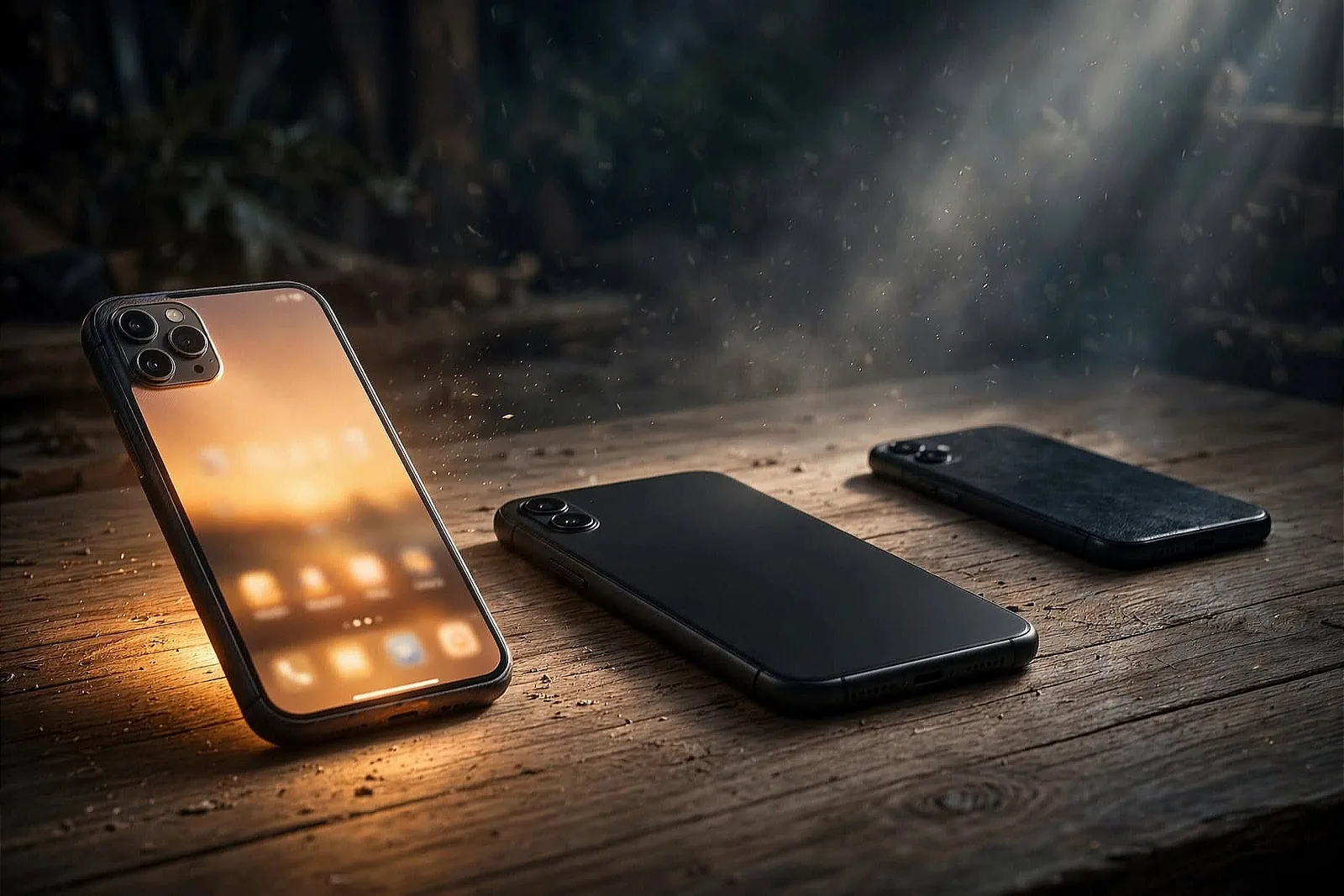
One glows because you fed it. One stays dark because you didn’t.
The third, set apart and dim, is the one you left alone.
Consent is not a button. It is the distance you keep.
Every device is a decision.
From the book, Chapter 6
“That is the practical meaning of sovereignty: you decide how people reach you, what they are allowed to ask for, and when the conversation ends.”
Room 05 · From Chapter 9
The Birthday Photograph
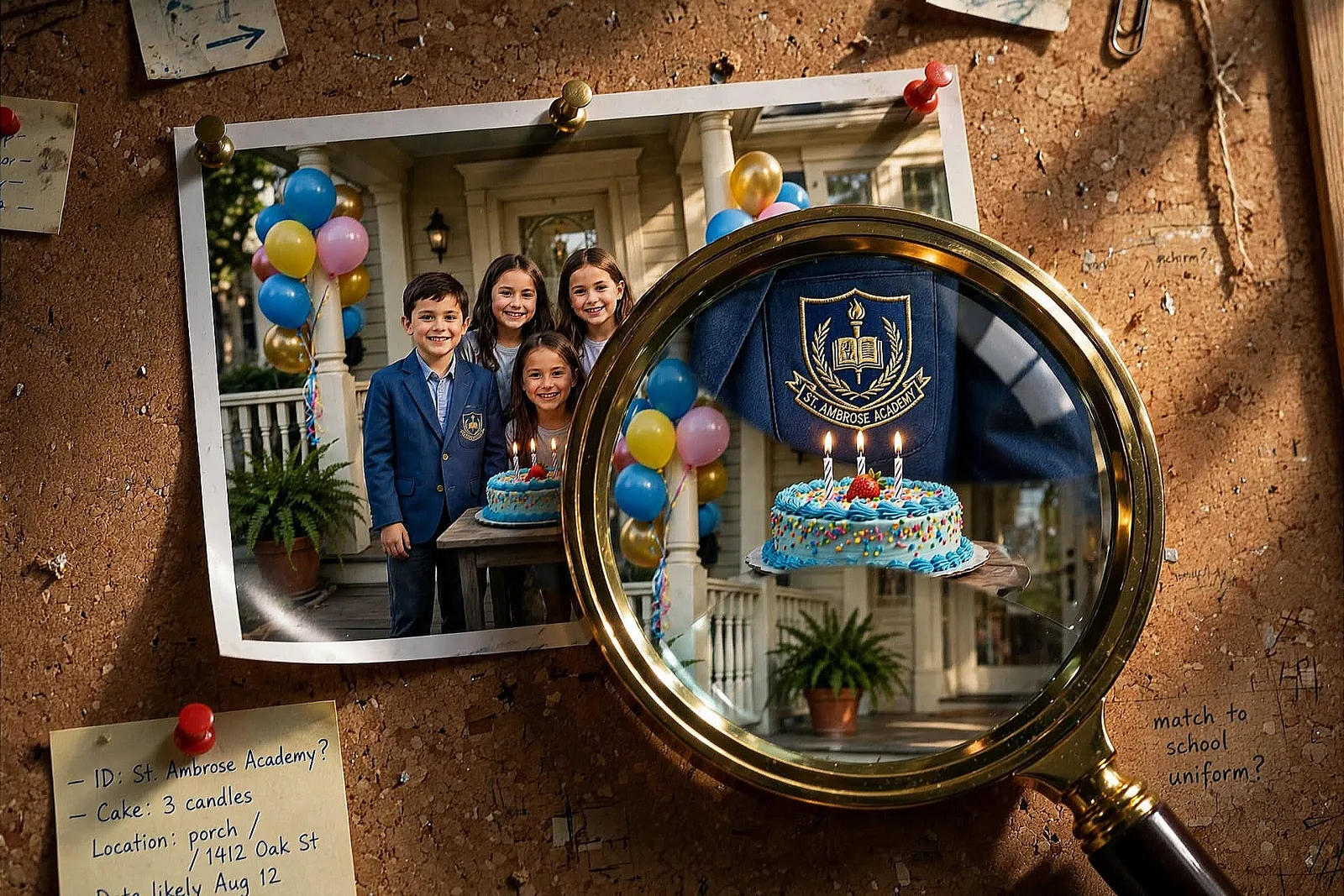
The magnifying glass doesn’t look at the child. It looks at the crest on the shirt, the street number behind the cake.
We pin what we love to the board. Others read what we didn’t mean to show.
The most dangerous information feels the most innocent.
What you didn’t think to hide is what they use.
From the book, Chapter 9
“Your past does not need to remain an open database simply because a platform once convinced you to create a profile.”
Room 06 · From Chapter 12
The Daily Pause
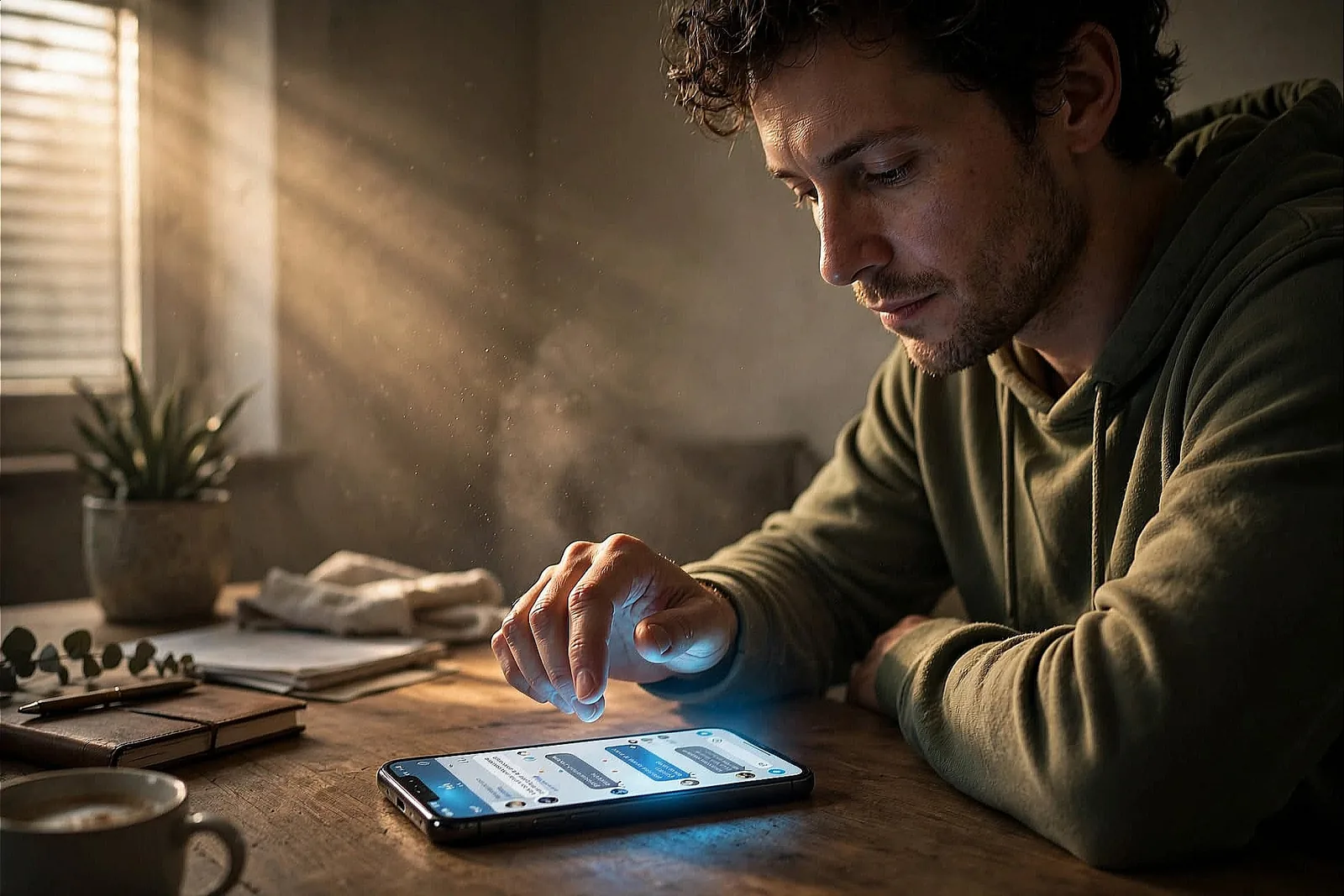
In the quietest room, the phone lights up.
No sound. No urgency. Just a small sun asking to be touched.
The finger hovers. It does not press. Not yet. Maybe not ever.
Power is not in posting, or not posting. Power is in the pause before.
From the book, Chapter 12
“You remain connected to the world, but no longer open to it by default.”
The portrait stays unfinished if you let it.
Each room is one chapter of The Privacy Blueprint, a calm, step-by-step plan for taking your scattered profile apart and keeping it from coming back.
Also From GSU · Reading and Math
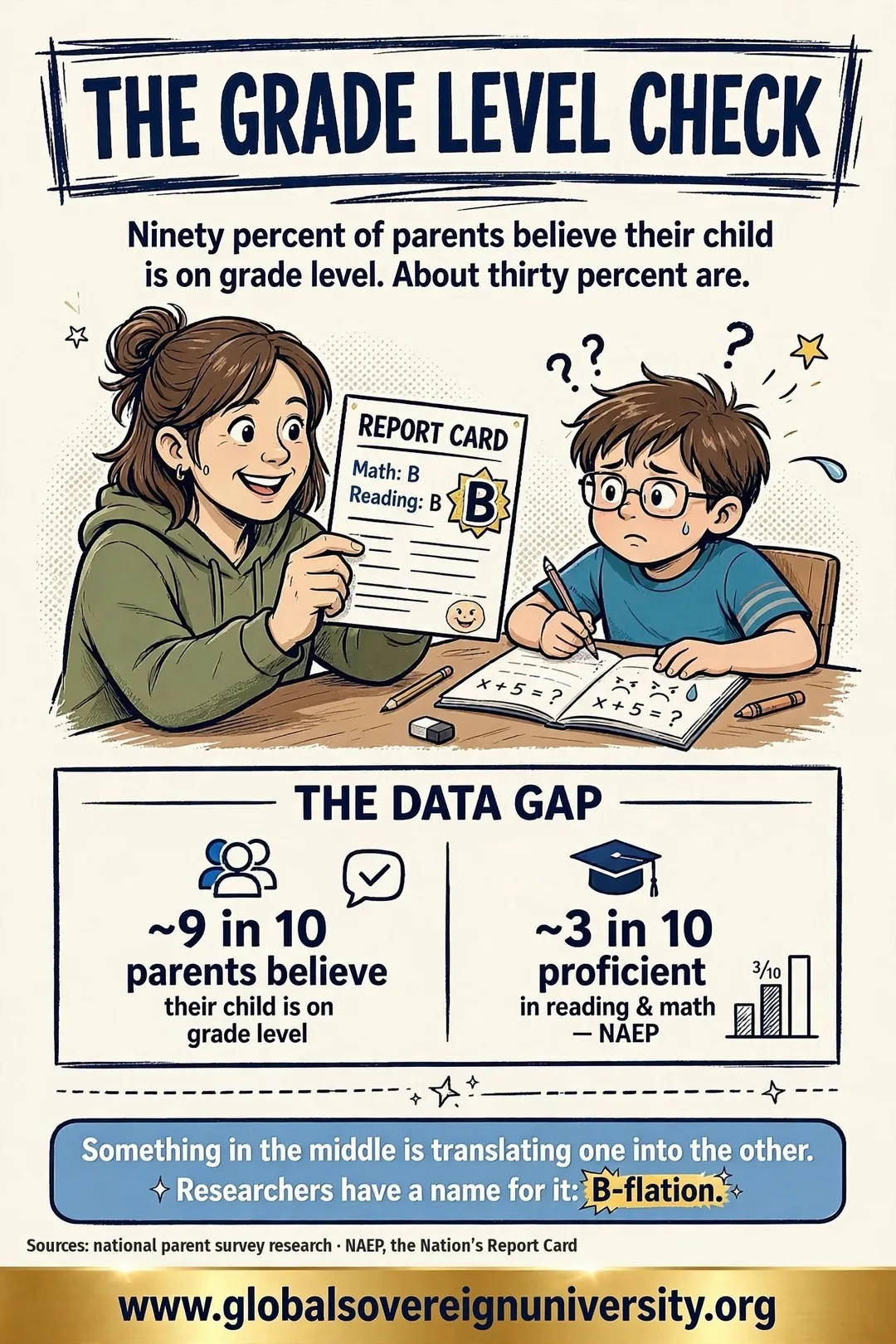
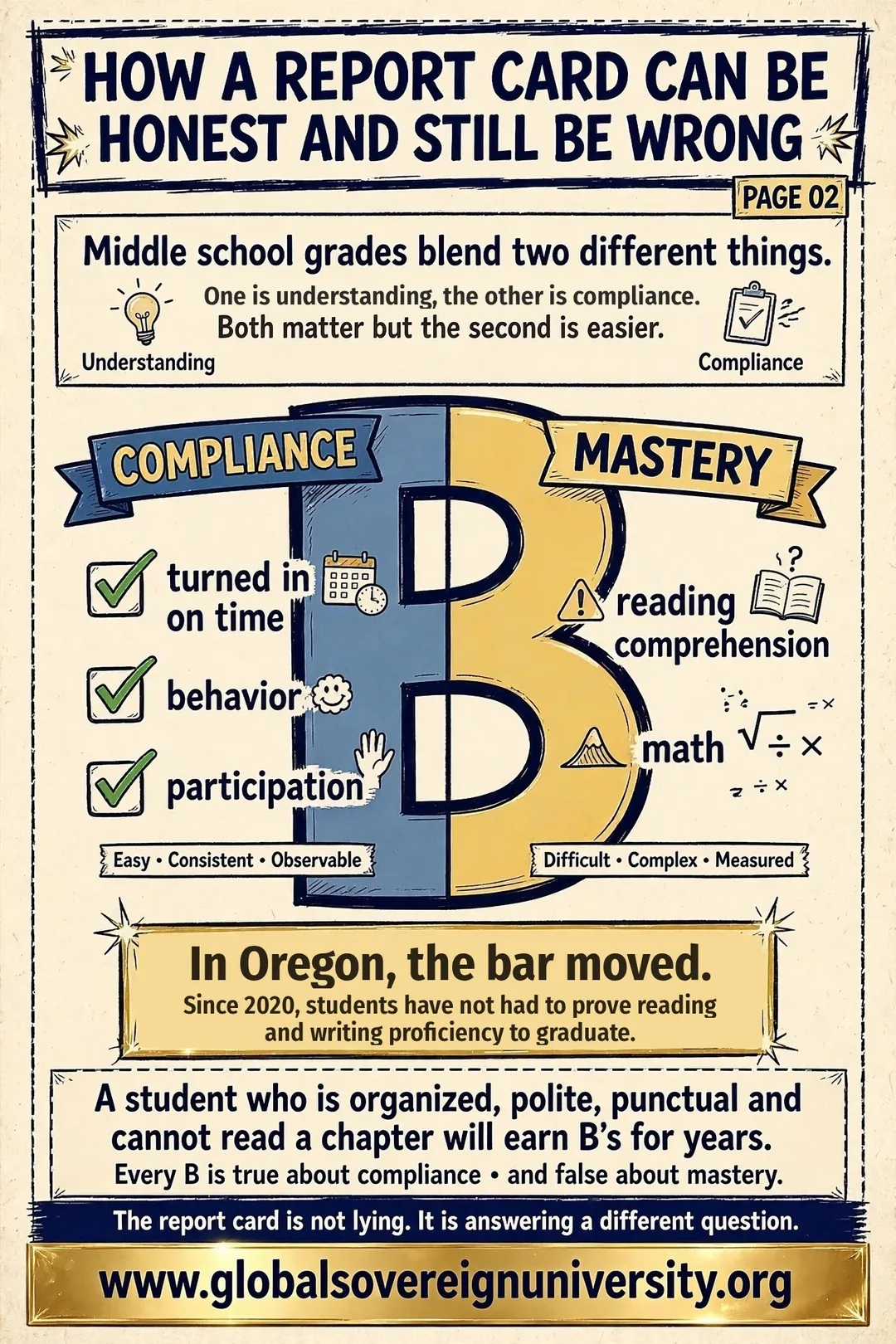
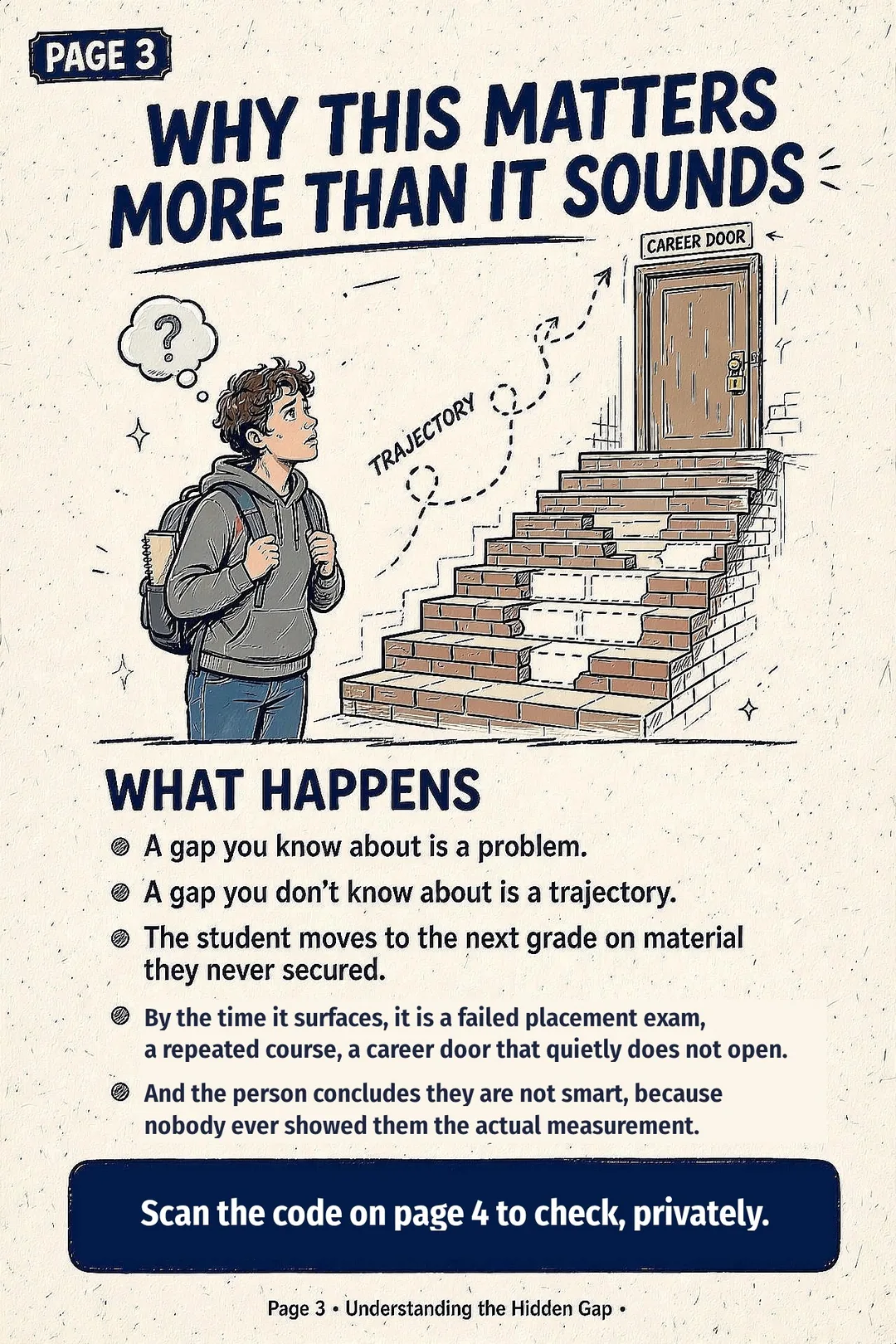
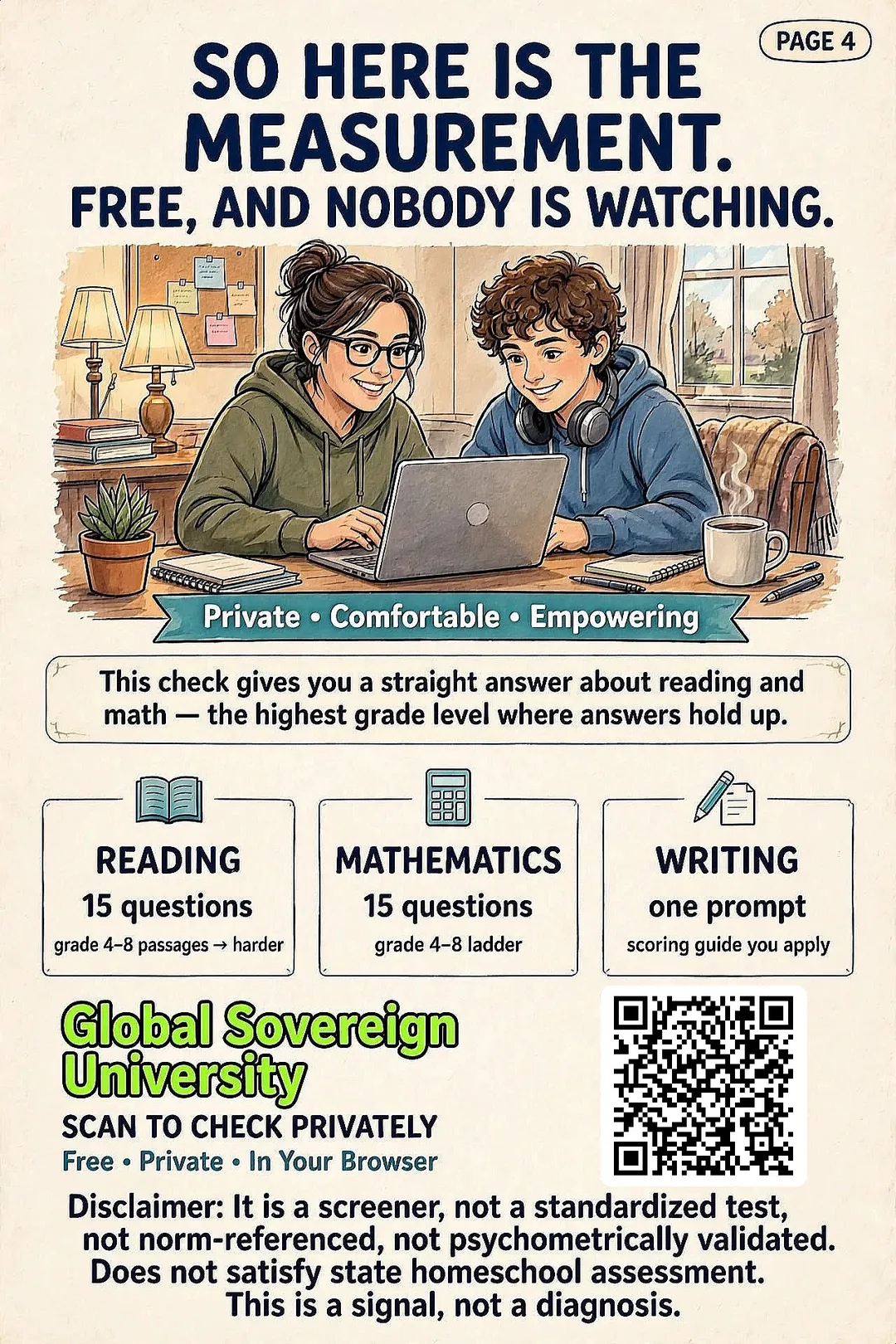
The Grade Level Check
A report card can be honest and still be wrong. These four pages explain why, and the last one opens a free, private check of reading and math, grades 4 to 8. No sign-up.
Also From GSU · Reading
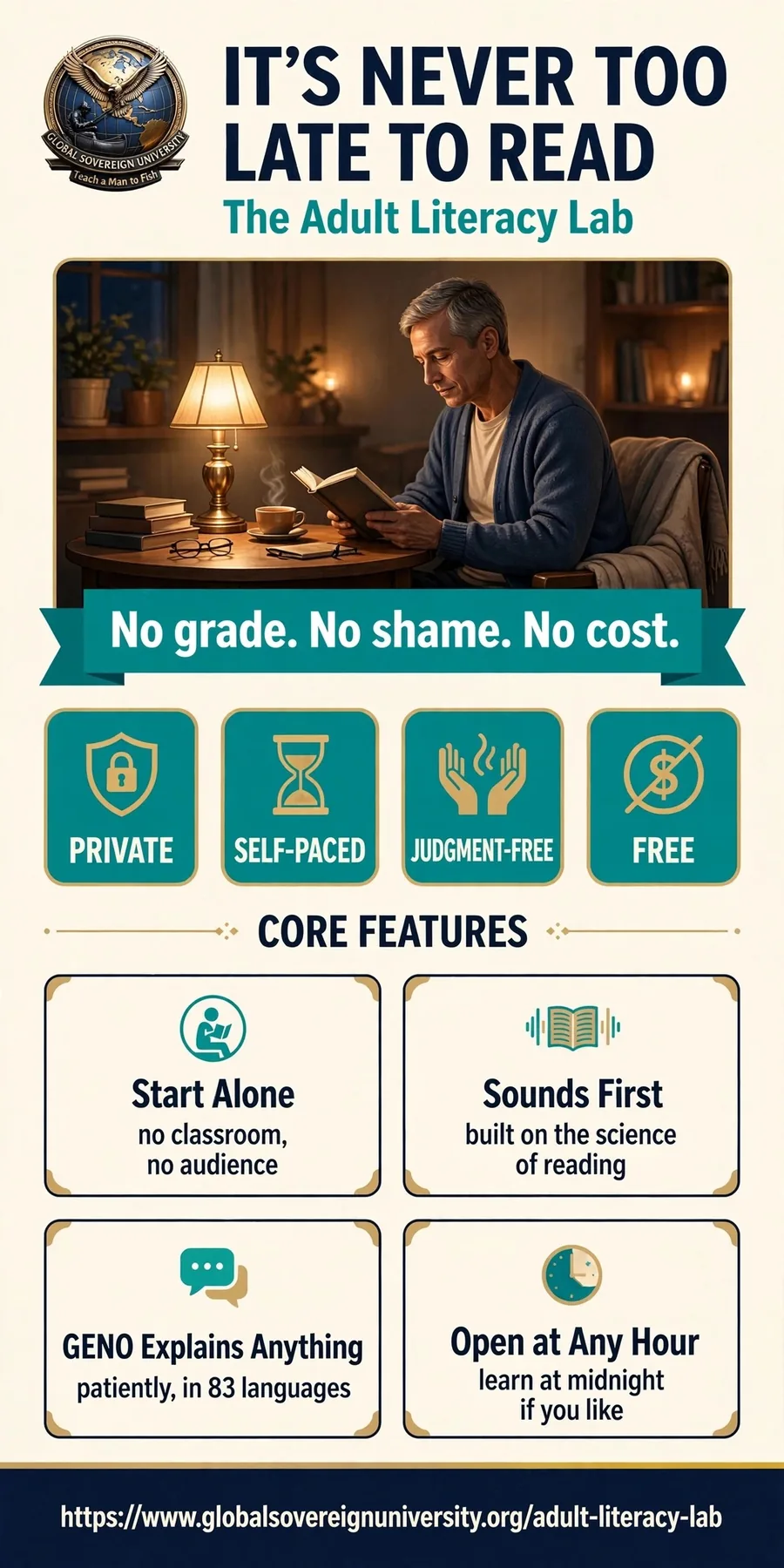
It’s Never Too Late to Read
The Adult Literacy Lab is for grown-ups who never got the reading foundation they deserved. Start alone, with no classroom and no audience. Learn the sounds first, built on the science of reading. GENO explains anything, patiently, in 83 languages, at any hour. No grade. No shame. No cost.
Also From GSU · The Fourth Door
The Barter Bookshelf
Where mastery becomes currency. Every book on the Reading Room shelf can be read, heard, or discussed with GENO. The Barter Bookshelf adds a fourth door: once you have mastered a book, teach an hour of what you know and receive an hour of what someone else knows. Hour for hour. Mind for mind.
I · Read
Open any book on the Reading Room shelf. Free to read, free to hear read aloud.
II · Master
GENO walks you through it chapter by chapter until you truly know it: not memorized, understood.
III · Teach
Offer an hour of tutoring on the book you mastered.
IV · Trade
Get matched with a peer who mastered a book you want to learn. Hour for hour.
Global Sovereign University is a 501(c)(3) nonprofit and book sales are its only income. A purchase is not a tax-deductible donation.