Book 1
Modern TPM
Paperback on IngramSpark. Ebook at the GSU Bookstore.
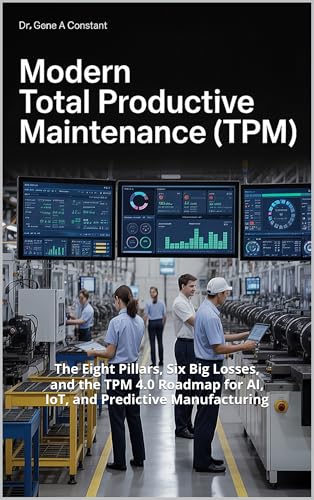
The foundation of the series: the six big losses, Overall Equipment Effectiveness, the eight pillars, and the move to sensors and prediction. Start here if TPM is new to you.
Total Productive Maintenance began with one idea: a breakdown is not fate, it is waste. Run a pump for a year, sort the ways parts really fail, and learn to see failure coming, all free, right here.

Then one from each book in the series:
Book 12's four, Book 5's three, Book 6's Pilot Board, Book 7's Zero-Energy Walk, Book 8's SOP Bench, Book 9's Living Register, Book 10's Gap Walk and Book 11's Loss Log are full pages of their own; each opens in this window.
Every plant uses one of these, whether it chose to or not. The Twin Room lets you run four of them on the same pump, and the Warning Window shows why watching condition works.
Each step needs better information than the one before it.
Each book stands alone. Read together, they form a complete course in keeping people, machines and organizations running at their best. Every title is being built or rebuilt to the current GSU standard.
The foundation of the series: the six big losses, Overall Equipment Effectiveness, the eight pillars, and the move to sensors and prediction. Start here if TPM is new to you.
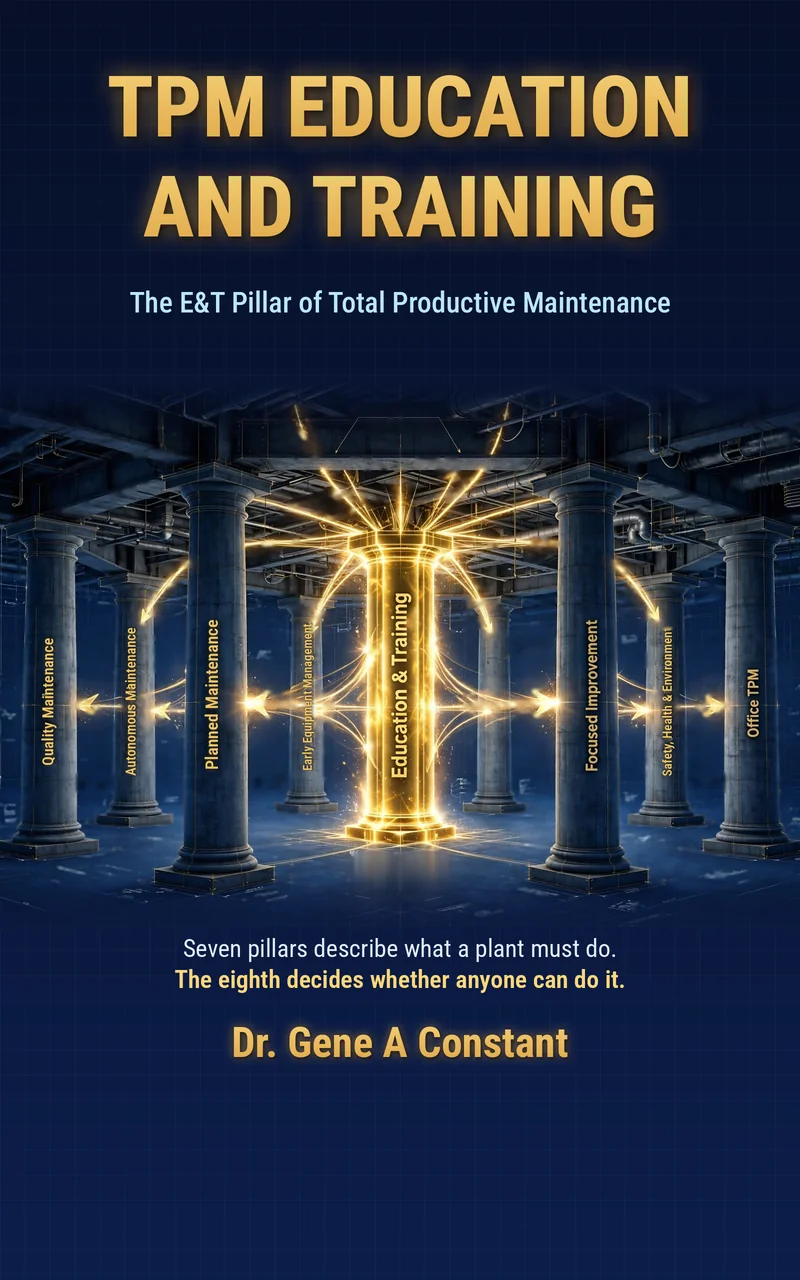
TPM succeeds or fails on people. How to build skills that stick, turn experienced workers into teachers, and prove training changed what happens on the floor.
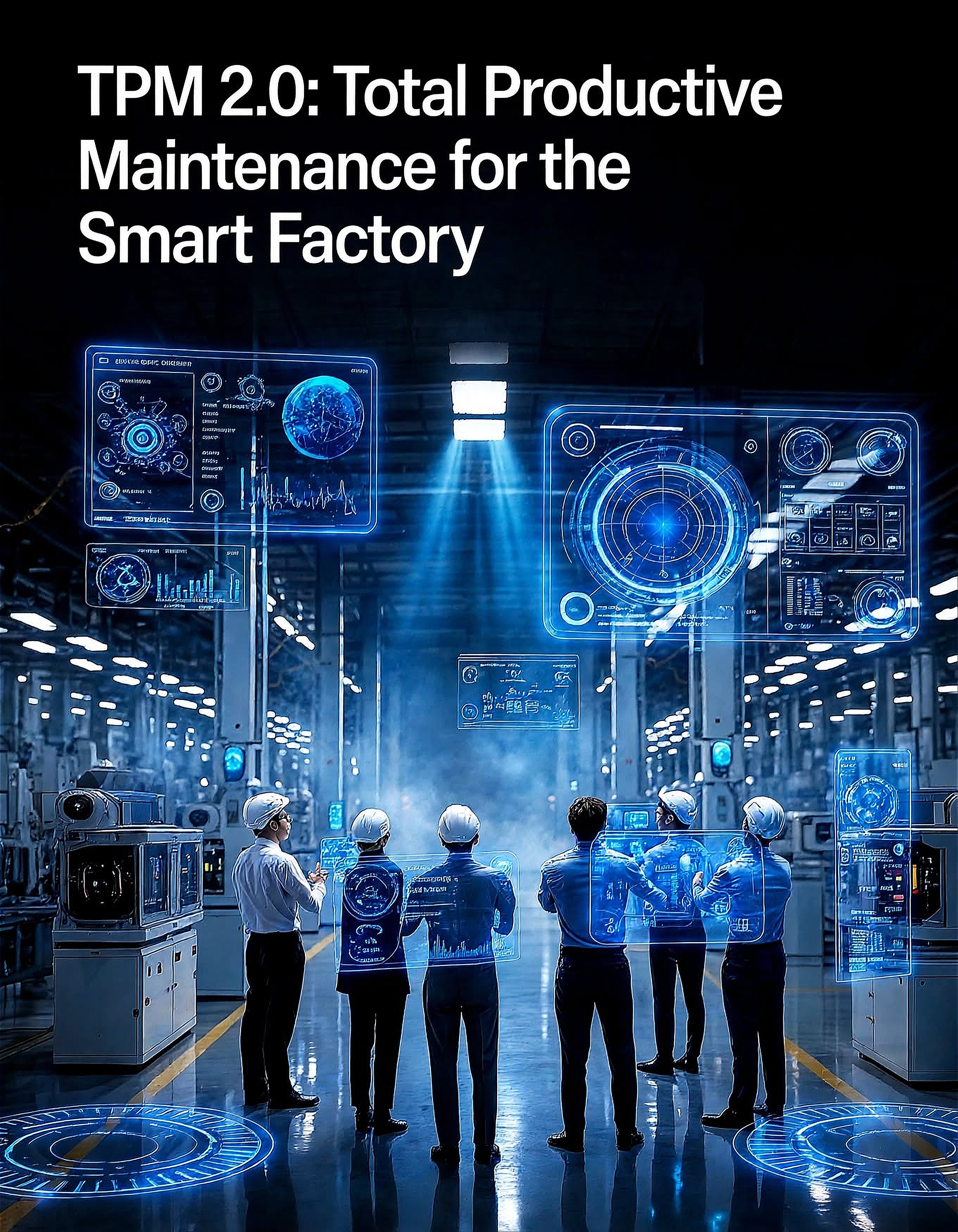
Digital twins, condition-based monitoring and risk-based reliability: the eight pillars rebuilt for connected plants. The Twin Room, the Sorter and the Warning Window on this page come from this book.
TPM thinking applied to artificial intelligence itself: model drift, guardrails that work like mistake-proofing, and human and AI teams that stay reliable.
The seven steps that move daily care of the machine into the hands of the people who run it, from the first clean to the digital twin, on one carton packer, PK-2. The Tag Hunt, the Sound Bench, the Steward’s Bench, the Seven-Step Walk and the Climber’s Passport on this site come from this book.
Paperwork that waits, approvals that stall and work done twice are the office's breakdowns. All eight pillars translated for knowledge work, the seven office wastes, and a thirty-day pilot you can run on one workflow. The Pilot Board, the Approval Maze, the Eight Pillars Card, the Skill Map and the Drift Watch on this site come from this book.
Zero accidents, zero harm, zero pollution, built into daily work rather than added after an incident. The Zero-Energy Walk, Report or Shrug, the Tag Hunt, the Steward’s Bench and the Warning Window on this site come from this book.

Defects often begin as a condition of the machine. One charter joins maintenance and quality, from the risk register and FMEA to the four-part visual SOP and the checks that prove the work was done. The SOP Bench, the Condition Chart, the Risk Ranker, the Failure Pattern Sorter and the OEE Machine on this site come from this book.
Compliance is not the finish line. How to see risk before it becomes a defect or a breakdown: identify it, rank it, treat it, run FMEA and root cause analysis, keep a living risk register, and align the work with ISO 9001. The Living Register on this site comes from this book.
The ISO 9000 family in plain language, updated for the 2026 edition of ISO 9001: the seven principles, the requirements clause by clause, measuring quality with evidence, and the road to certification, followed through one machine shop. The Gap Walk and the Audit Trail on this site come from this book.

TPM carried into teaching and learning: count the six losses in a class for one week, find the tallest, and fix that one. Eleven chapters, a Field Card at the end of each, and all eight pillars rebuilt for the classroom. The Loss Log and the Class Hour on this site come from this book.
The architectural shift from machines that are maintained to machines that report: one asset identity, sensors where the consequence justifies them, a reflex at the edge, and the Digital Thread that keeps the twin honest. Walked on one bottleneck conveyor, CV-14. The Retrofit Planner, the AR Checklist Builder, the Cyber-Physical Skill Ladder and the Field Cases Bench on this site come from this book.
Study the books lesson by lesson, with a hands-on bench in every lesson.
The short course: losses, pillars and the habits that stop breakdowns.
The whole of Book 1, chapter by chapter, ending with a certificate of comprehension.
The Twin Room and the Warning Window are teaching models with illustrative numbers, built to show how the ideas behave, not to predict any real machine. Global Sovereign University is a tuition-free 501(c)(3) nonprofit; book sales are its only income.